Business

Home Business

3 African Businessmen Who Lost it All and Made Dramatic Comebacks

0

KEY POINTS

  • Within 24 hours, Otedola lost over $480 million due to the oil price crisis. He also lost $280 million due to Naira devaluation and another $160 million when his stocks crashed.
  • Before his comeback, Masiyiwa hit rock bottom after losing his fortune in funding a case against the government.
  • Abdulsamad Rabiu bounced back after pulling off a near-impossible coalition with competitors to compete for market shares with the prominent market leader.

There is a popular saying that – maintaining success is a more difficult task than attaining it. For someone to attain billionaire status, they have to work harder than everyone else.

Then, to maintain this status, one has to triple the workload, discipline, and dedication that gave them that success in the first place. There are many millionaires and billionaires across the globe who learned the hard way and lost all their fortunes before a twinkle of an eye.

It is normal for businessmen and women to experience turbulence, but when they lose their fortunes – only a few are able to walk their way back to the top. There are many examples of businessmen who lost their fortunes and never made a comeback – not only in Africa but the world at large.

However, this article will be focusing on African businessmen who lost it all and made dramatic comebacks. Their stories give hope and offer a new perspective on the definition of failure.

Check out 3 African billionaires who hit rock bottom but picked themselves up and rebuilt their businesses from the ground up.

Femi Otedola

Femi Otedola is a name we still hear around the billionaire club today because of his doggedness and sheer determination to succeed. In 2008, the Nigerian billionaire experienced a business tornado that was capable of adding him to the list of people who fell from the top.

At that time, Otedola’s company, Forte Oil, was the number one diesel supplier and a big name in the Nigerian market. He had more than 500 retail petroleum stations across the country and had the potential to expand even further.

In 2008, Otedola – who was looking to further tighten his grip as the biggest importer of diesel in Nigeria, controlling over 98% of the market share at that time, ordered one million tons of diesel.

But unfortunately, while his shipment was still at sea, heading for Nigeria, the international oil price dropped from $146 per barrel to $34 per barrel overnight.

To add salt to the injury, the Nigerian economy, which was affected by the fall in oil price, took a decision to devalue the Naira and increase interest rates on loans. Within the space of 24 hours, Otedola lost over $480 million due to the oil price crisis.

He also lost another $280 million as a result of the naira devaluation, and his interest debt rose to a staggering $320 million. As if that was not enough, he lost another $160 million when his stocks crashed in the financial market.

With a debt of over $ 1.2 billion, Otedola was kicked out of the Forbes list of billionaires.

“After I lost the money, something that struck me was that my father had always been my role model in life and the first thing I had to do was to protect his name. He had a policy; honesty was the best policy, so I had to protect that name and his integrity,” Otedola recalled.

So, he remained determined to take the bull by the horn and fight his way back to the top by making strategic decisions. He was able to get his bank to write off $400 million, and he was left with a total of about $800 million to pay.

The next step was to value and sell a huge part of his assets, especially his real estate and shares in several multinationals, and pay off the debt. He sold some of his shares at African Petroleum (AP) and was left with only 34 percent before rebranding it to Forte Oil.

He would go on to further make some key strategic decisions and pay off his debts while slowly but steadily building his business empire back up. In 2014, Otedola shocked the world when Forbes released its list of African billionaires and enlisted Otedola with a net worth of $ 1.8 billion.

Strive Masiyiwa

The name – Strive Masiyiwa is a household name across Africa for many reasons, but his association with Econet Wireless ranks tops the list. Currently, the Zimbabwean billionaire is worth about $3.8 billion, according to Forbes’s latest ranking.

But this did not come overnight; indeed, Mr. Masiyiwa has been up and down – and up the ladder. In the eighties, Strive owned a hugely successful engineering company in Zimbabwe, and as his fortunes grew, he decided to invest in the telecommunication industry in Africa – which was taking shape at that time.

He decided to start his own telecoms company in Africa – Econet Wireless, but the government of Zimbabwe, led by former president Robert Mugabe refused to grant him the license to start the company and operations in Zimbabwe.

But the businessman refused to accept the decision and took the government to court – starting a legal battle that lasted for many years and nearly rendered the African billionaire bankrupt.

He hit rock bottom and lost his fortunes as he continued to fund the case against the government’s decision. After five years of the legal battle, which also ended up affecting his other business operations in the country, the constitutional court ruled in his favour, and Strive Masiyiwa launched Econet Wireless which saw his fortunes rise again.

Today, Strive has an almost permanent spot on the Forbes list of African billionaires and is credited for pioneering the introduction of telecommunication in Africa. He is still in control of over 50 percent of shares in Econet to date.

Abdulsamad Rabiu

Abdulsamad Rabiu is the Chairman of BUA Group. His name appeared on the Forbes list of billionaires for the first time in 2013 after some impressive business decisions that saw his fortunes increase above the one billion dollars mark.

However, the status was short-lived after his name was removed from the list a few years later. The reason for this was that the Nigerian billionaire experienced a huge decline in his worth owing to a devaluation in the Naira in 2017 that affected his finances.

Rather than make negative business decisions to protect what he had left, the Chairman of BUA Group began to make strategic business decisions, including branching into the viable cement market. He raised his cement production capacity by building factories.

Today, with a production capacity of 11 million metric tons, his company, BUA Cement, is the second-largest cement producer in Nigeria. One of his biggest and most successful decisions was merging Kalambaina Cement, a subsidiary company of BUA Cement, with Cement Company of Northern Nigeria (CCNN) – a company that traded on the floor of the Nigerian Stock Exchange.

As a controlling shareholder, his fortunes rose, and he became the third richest man in Nigeria – taking him back to the Forbes list in 2020.

According to the latest Forbes report, Abdulsamad is now the second richest man in Nigeria, behind Aliko Dangote, with an estimated worth of about $ 6.5 billion.

Ugandan Court Rules that Using a foreign trademark in a business attracts payment of VAT

0

Some companies usually do business using foreign trademarks licensed under franchise arrangements. This allows a locally registered entity to locally use a trademark owned by a foreign company, usually for a fee and subject to certain standards as specified.

Considering the nature of the arrangement, which on the face of it, offers a business advantage to the local entity; there has always been an issue as to whether the local/ Ugandan company is considered imported a service into Uganda?

This issue was the subject of a ruling by the Tax Appeals Tribunal in the case of Apollo Hotel Corporation Ltd v Uganda Revenue Authority TAT Application No. 68 of 2018.

The facts were that in 2008, Apollo Hotel Corporation Ltd (the Applicant) entered into an international license agreement with Sheraton International Inc. a company incorporated in the United States of America. The agreement granted the Applicant the right to operate its hotel in Kampala under the trademarked brand name “Sheraton” and also to use Sheraton International’s centralized reservation system by paying franchise fees to Sheraton International. URA raised a tax assessment of VAT amounting to Ugx. 398,418,285 on the franchise fees. Apollo objected to the assessment and the matter was left for determination by the Tribunal.

The main issue was whether the use of the brand name “Sheraton” and the provision of the centralized reservation system amounted to a supply of an “imported service” for purposes of VAT?

Tax Appeal’s Tribunal in their ruling dated 27th August 2021, dismissed the Application holding that;

i. The use of the trademarked brand name “Sheraton” and the provision of the centralized reservation system amounted to a supply of an imported service.

ii. That VAT was only due on the principal service namely, the right to operate the hotel under the trademark name “Sheraton” using the centralized reservation system.

In reaching its holding, the Tribunal relied on the case of Sagar Ratna Restaurants Pvt Ltd & Ors v The Value Added Tax Officer Where the Delhi High Court in India found that the use of the trademark McDonald’s amounted to a service and not goods for purposes of VAT. The Tribunal thus concluded that the use of the brand name Sheraton under the agreement amounted to service and not goods.

The Tribunal also invoked the destination principle which provides that services supplied from a foreign jurisdiction and consumed in one’s own jurisdiction are considered as imported services. The Tribunal thus reasoned that the Sheraton brand and reservation system was supplied for use in Uganda by Sheraton International Inc. and was used by the Applicant in Uganda. It follows that these services were imported services for the reason that they were supplied from a foreign jurisdiction and consumed in Uganda.

Effect of the decision.

The above decision by the Tribunal sets a precedent that all companies in Uganda which are running businesses using foreign trademarks by paying franchise fees must charge VAT on payments to those foreign persons. The principle in the decision is of wide application and will most likely affect all businesses operating under the franchise arrangements in Uganda.

This decision is a great win for URA in its attempt to tax the digital economy and intangible intellectual property rights. The use of the centralized reservation system which is located in the United States of America is similar to the running of most digital platform-based businesses. This poses a challenge for taxation under the permanent establishment principle which provides for taxation only when an entity has a physical presence in a foreign jurisdiction. The decision provides a window for the taxation of the digital economy.

ADB Purchases Steel Bridges to Replace Infrastructure Destroyed in Cyclones

0
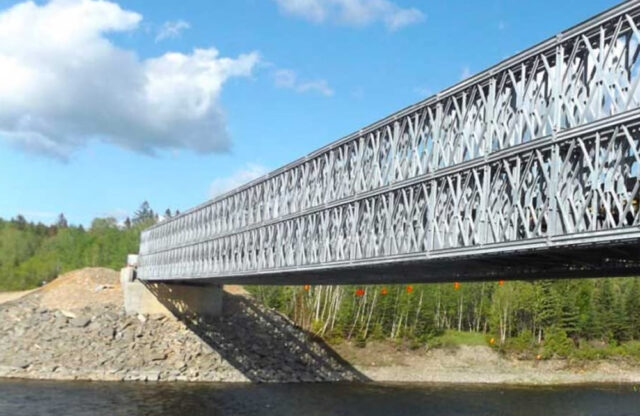
Steel Bridge

The African Development Bank has finalized the purchase of 26 modular steel bridges to replace infrastructure that was destroyed in weather disasters in Mozambique.     

The modular bridges are due to be installed in coming months after the appointment of local contractors. The goal is to restore transport connections to the isolated regions of Manica, Sofala, Nampula and Cabo Delgado. An estimated 500,000 people are expected to benefit.

With a service lifespan of up to 100 years, the bridges will provide a temporary solution in areas that are vulnerable to extreme weather while the government invests in climate-smart permanent bridges.

“We are delighted to be able to deliver this important contribution to Mozambique and respond to the recent climate disasters while investing to building back better,” said Pietro Toigo, the African Development Bank’s country manager for Mozambique. “The Bank will remain at the forefront of the fight to mobilize climate finance for adaptation and contribute to climate justice for the African continent.”

The bridges are funded under the Post Cyclone Idai and Kenneth Emergency Recovery and Resilience Program, which was approved in the wake of these two cyclones that struck Mozambique, Zimbabwe and Malawi in 2019 and affected around 3 million people in the three countries.

The program is being implemented over four years, ending in December 2023, at a total cost of UA 70.86 million ($100 million) of which UA 66.01 million is to be paid by the Bank and the remainder by the affected governments. The funding was provided by the African Development Fund, the concessional arm of the African Development Bank Group.

Central Mozambique has been hit by extreme climate events in recent years. Cyclones Idai and Kenneth passed through the same region of the country in March and April 2019, also affecting neighboring countries. Disaster struck again with Tropical Storm Chalane in December 2020 and Cyclone Eloise in January 2021.

Mozambique is regarded as one of the world’s most climate-stressed countries. In its 2018-2022 Country Strategy Paper for Mozambique, the African Development Bank identifies climate change as a key development challenge, and has directed roughly $120 million to strengthening the country’s climate resilience.

The Growing Potential of Forex Trading in Africa

0

The forex industry in Africa has been growing significantly. It has been estimated that the number of forex traders across the continent ranges from 1.3 to 1.8 million. This growing user base is comparable to those in other parts of the world.

Undoubtedly, the Forex market has always been an attractive place for traders and investors to start and it is due to not one but multiple factors like high liquidity, ease of entry, global nature, high volatility, access to demo accounts and high-profit potential.

But the question is what led to the popularity of the forex market in Africa and whether the forex market in Africa will continue to expand. Let’s find out the answer!

Reasons Behind the Rise of Forex Trading in Africa

  1. Impact of Coronavirus: In 2020, Covid-19 took hold in the world, including Africa. As there were restrictions on movement, people were confined to their homes. Economies were shut, and there was job insecurity. That’s when people started to look for alternative ways to generate income, preferably from home. Amidst all this chaos, people started to gain interest in forex trading. The primary driving force was the heightened volatility in the markets due to the ongoing pandemic. Additionally, the war in Ukraine has only exacerbated the already volatile market which created a fertile breeding ground for those seeking to profit from the movements in the market, regardless of whether they are positive or negative.
  2. Access to the Internet and Mobile Phones: The technological landscape of the African continent is rapidly evolving. Smartphones and tablets have become the go-to devices for communication, entertainment, and almost everything, including trading. The increasing accessibility of the internet has only further compounded this trend, with wireless technology enabling countries to rapidly expand their online infrastructure and increase the reach of the digital world. Brokers operating in this space have been quick to capitalise on these developments and have designed their trading platforms to be as mobile-friendly as possible. MT4 and MT5 are prime examples of how easy trading platforms are to use. You can easily place, monitor and exit trades on the move using the mobile version of these trading platforms.
  3. Africa Can Benefit From Lesser-known Markets: The savvy traders know that being aware of the fundamentals like political climate in the country, economic health and infrastructure development can pay off big time as this can help them make the most out of the price movements. The best part of trading in the lesser-known pairs and currencies is that movements can be much more stark and pronounced, which makes it easier to time the market in many cases.
  4. Better Financial Education: As the African continent hurtles towards an economically empowered future, there has been a remarkable increase in the financial literacy of its people. Various literacy initiatives and better schooling have played a pivotal role in this regard. There has also been an influx of talent from abroad, contributing a lot towards it. Forex platforms themselves have also played quite a critical role in educating traders by offering a wealth of resources that help them to learn the ropes of the market.

Future of Forex Trading in Africa

Africans, in general, are becoming more active in the forex markets due to the increasing rate of internet penetration and other factors, which indicates that we can expect the trend of forex trading to accelerate in the near future. However, there are people who think that the forex market in Africa has reached its saturation point.

In reality, the market still has massive potential for growth. Currently, the forex market is enjoying stability, which is seen as an excellent foundation for continued growth, but the changing regulatory controls may have an impact on future growth. But certainly, there’s a lot of room for growth in forex activities in Africa.

How New African Traders Can Start Forex Trading?

As we know, forex trading is a financial activity that involves the buying and selling of currencies with the intention of making a profit from fluctuations in currency rates. Therefore, you have to be strategic and know when to make your move and when to hold back. The basic idea is simple: you buy a currency when you expect its value to increase relative to another currency, and you sell it when you anticipate it will decline. The difference between the entry and exit prices determines the profit or loss of your trade.

So, let’s understand how you can start trading forex and what you will need before starting:

Learn About the Markets: Mastering the fundamentals of forex trading is essential to survive and consistently make profits in the market. There are two main approaches to trading, or we can say to speculate the direction of the market: technical analysis and fundamental analysis. Technical analysis involves using chart patterns, candlesticks, moving averages, and other technical tools to identify trading opportunities based on price movements. In contrast, fundamental analysis takes a longer-term approach and relies on macroeconomic indicators such as employment data, retail sales, and interest rates to identify potential trades. To get started with online Forex trading, it’s important that you understand these concepts thoroughly, as well as learn and practice risk management in trading.

Create a Trading Account: In order to place trades in the market, you have to create a trading account with a reliable broker, as only then will you be able to get access to the market. It is one of the most important decisions, and you must take it carefully, as choosing the right or wrong broker will make all the difference in your trading account. Make sure to check the broker’s regulations, terms and conditions, and other important features as you may not want to end up with a fraud company as this may risk your trading capital.

Find a Trading Strategy: The market has so many trading strategies. Scalping, Day Trading, Swing Trading and Position trading are just a few of them. Each strategy has different rules, and you must make sure that it completely suits your trading style because that’s the only way to get the maximum benefits from your trading strategy. In order to have a solid strategy, you must have accurate information of the trades you intend to enter into. For that, trading tools will be of great help, as they help find the right data you need to smartly enter a trade to make profits with a minimum amount of risk. For instance, if you have a day job, you should try scalping, as it demands a lot of time and concentration. Scalping is a short-term strategy where traders have to enter and exit trades within a time frame of a few minutes, which is hardly possible for a person who is busy with their full-time job. So, in this case, you may choose swing or position trading. Therefore, make sure that your strategy suits your trading style.

Choose a Trading Platform: Here comes another important decision. Trading platforms are equipped with charts, indicators and other trading tools that help you monitor and analyse the market. Therefore, you must find a trading platform that is user-friendly, intuitive and responsive. You should also check different order types and other necessary features to ensure that the platform offers everything that you will need during trading. But you should know that your broker should support the trading platform of your choice otherwise, you can’t connect your trading platform with your brokerage platform. Typically, MT4 and MT5 are the most preferred platforms that most traders and brokers love. So you can choose any based on your preference. Most beginners prefer to trade on MT4 due to its simple design and limited features, but you are free to choose any, given that you are comfortable trading on it.

Understand the Risks Involved: Forex trading is prone to numerous risks: market risk, operational risk, risk of ruin, leverage risk, liquidity risk, emotional risk and risk of financial loss. If you want to protect your account from these risks, you must fully understand what they mean and what measures you can take to prevent your account from these losses.

There has been a tremulous shift in Africa’s economic and financial landscape. Access to the internet, increased literacy rates, and political and social turmoil impact are crucial factors in driving this change. As more and more Africans started developing an interest in the forex market, they started investing their time in gaining a deeper understanding of this complex financial world. This has made Africans better equipped to make sound financial decisions and confidently navigate the markets. This development can be seen as a course towards Africans’ brighter and more prosperous future.

Hitachi Energy to Connect Gulf of Suez Wind Farm with Egypt’s National Power Grid

0
Hitach Energy

Hitachi Energy is delivering to Vestas, a global supplier of wind turbines1 and engineering, procurement and construction (EPC) contractor, a grid integration solution to connect the 250 megawatt Gulf of Suez 1 wind farm in Egypt, owned by the New and Renewable Energy Authority (NREA), to the national power grid. 

The solution will collect all the power generated by the 70 Vestas wind turbines and feed it safely and reliably into the high-voltage power grid for transmission across the country, helping to advance Egypt’s energy system to be more sustainable, flexible and secure. It will ensure the power is transferred constantly at the correct voltage and frequency, even under variable wind conditions when the power generated fluctuates.

Gulf of Suez 1 is part of the Egyptian government’s plan to produce 20 percent of its installed capacity from renewable sources by 2022 and 42 percent by 2035. The wind farm will generate around 1,000 gigawatt-hours of clean energy and avoid the emission of 560,000 tons of carbon dioxide a year, while producing enough renewable energy to power almost 300,000 Egyptian homes.

“We are proud to be contributing to Egypt’s efforts to transition to renewable energy,” says Niklas Persson, Managing Director of Hitachi Energy’s Grid Integration business. “Our grid integration and power quality solutions and expertise ensure variable energy sources like wind power are transferred smoothly and reliably into national power transmission systems, advancing a sustainable energy future for all.”

Hitachi Energy worked closely with Vestas to determine the most safe and reliable grid integration solution for the plant. The solution includes a gas-insulated substation of modular pre-assembled and pre-tested design for fast and simple installation.

Hitachi Energy is one of the world’s leading grid integrators of renewable energy, typically connecting around 2 gigawatts of wind power alone to power transmission systems annually. Our expertise and scope of supply covers the complete value chain from power consulting and system studies to design and engineering, project management, manufacture, installation, commissioning and service – all in compliance with grid code regulations and local requirements and standards.

Gulf of Suez 1 is one of several wind farms either in operation or under development in the Gulf of Suez, where wind speeds are ideal.

How Do Neobanks Make Money

0

We live in a digitally advanced world where everything is within your reach. Gone are those days when you had to wait outside the bank or the ATM to get some cash.

Everything has gone digital! While there is an option of doing online banking, there are some new players on the field: neobanks.

Neobanks are digital-only fiscal services platforms, and they’re fairly new. And it’s not only US neobanks, but different nations have also embraced the new digital financial platform.

Wait a minute! You may be wondering how neo-banks make money. But let’s start with what neobank is.

Understanding the Concept of Neobank

A neo bank is a new variant of financial services. It’s an online-only bank for customers, so all the operations are carried forward digitally.

In traditional banking, you have physical branches, but neobanks are different. There is no physical branch, and all the focus is on improving user experience.

Neobanks operate online, but you must know they are mostly fintech companies and not actual banks.

How Does a Neobank Make Money?

A traditional bank has many ways to make money. They offer services like lending which gives them a chance to earn interest. The question is – how would neobankss make money? Although lending is not a form of revenue source, they can count on interchange fees, which specifically come from debit cards.

Let’s say a customer uses a debit card at a grocery store or swipes it at a hotel, there will be an interchange fee. This fee is the transaction cost that a merchant prays every time the customer uses the debit card.

Neobanks need to improve their transactional relationship with customers to increase their overall revenue. That’s the catch!

Why are Neobanks Garnering Attention?

Neobanks is garnering attention because they are offering online banking convenience. But these neobanks have a limited audience which may change shortly considering the concept is getting popular.

The modern and digital-only approach of neo-banks is gaining momentum and more people are getting interested in understanding the perks of neo-banks.

Four Compelling Reasons to Opt For Neobank

Since the concept is new to you, and you are interested to know whether or not neo-banks can help with gaining financial benefits, let us unravel the four reasons you must opt for the new-age banking.

#1 The UI is straightforward and quite friendly

It’s all about creating a convenient experience for the users. Opening the applications and websites aren’t a hassle.

#2 Opening an Account is Easy

Even though account opening in any traditional bank is simple. You just have to fill the application form and submit all the documents in the branch near you. Now, the thing about neobanks is that you can use your smartphone to open an account. It just takes a few simple steps to set up a US Neobanks account.

#3 Affordability is the Key

Since there are no physical bank branches, neobanks save all the overhead costs. There is no annual maintenance charge or any withdrawal fee. You save a lot of money and can utilize it elsewhere.

#4 It’s Ideal for MSMEs

The whole process of approval, disbursal procedure, and application seems a bit too overwhelming with a traditional bank. Fortunately, neobanks can be advantageous for micro, small, and medium enterprises.