Home Blog Page 6

Climate Crisis Mitigation Plans Discussed in Africa-Wide Virtual Conference

0
Africa Conference

On September 14, national leaders from Africa came together in a virtual forum to discuss how best to adapt to the extreme weather events global heating has brought to the continent.

While Africa may only be responsible for just 3% of global carbon emissions, it is suffering from a much larger-than-fair share of the problems as global temperatures increase.

World leaders from Ghana and Nigeria, with guidance from United Nations officials also present, met last Tuesday to discuss how best to deal with the growing reality that the climate crisis is going to hurt Africa likely worse – and sooner – than in most other continents on the planet.

For further details on the event, please see the article, “Africa Virtual Conference Focuses on Impacts of Global Heating,” available via the Trillions Intelligence Network.

Ugandan Court Rules that Using a foreign trademark in a business attracts payment of VAT

0

Some companies usually do business using foreign trademarks licensed under franchise arrangements. This allows a locally registered entity to locally use a trademark owned by a foreign company, usually for a fee and subject to certain standards as specified.

Considering the nature of the arrangement, which on the face of it, offers a business advantage to the local entity; there has always been an issue as to whether the local/ Ugandan company is considered imported a service into Uganda?

This issue was the subject of a ruling by the Tax Appeals Tribunal in the case of Apollo Hotel Corporation Ltd v Uganda Revenue Authority TAT Application No. 68 of 2018.

The facts were that in 2008, Apollo Hotel Corporation Ltd (the Applicant) entered into an international license agreement with Sheraton International Inc. a company incorporated in the United States of America. The agreement granted the Applicant the right to operate its hotel in Kampala under the trademarked brand name “Sheraton” and also to use Sheraton International’s centralized reservation system by paying franchise fees to Sheraton International. URA raised a tax assessment of VAT amounting to Ugx. 398,418,285 on the franchise fees. Apollo objected to the assessment and the matter was left for determination by the Tribunal.

The main issue was whether the use of the brand name “Sheraton” and the provision of the centralized reservation system amounted to a supply of an “imported service” for purposes of VAT?

Tax Appeal’s Tribunal in their ruling dated 27th August 2021, dismissed the Application holding that;

i. The use of the trademarked brand name “Sheraton” and the provision of the centralized reservation system amounted to a supply of an imported service.

ii. That VAT was only due on the principal service namely, the right to operate the hotel under the trademark name “Sheraton” using the centralized reservation system.

In reaching its holding, the Tribunal relied on the case of Sagar Ratna Restaurants Pvt Ltd & Ors v The Value Added Tax Officer Where the Delhi High Court in India found that the use of the trademark McDonald’s amounted to a service and not goods for purposes of VAT. The Tribunal thus concluded that the use of the brand name Sheraton under the agreement amounted to service and not goods.

The Tribunal also invoked the destination principle which provides that services supplied from a foreign jurisdiction and consumed in one’s own jurisdiction are considered as imported services. The Tribunal thus reasoned that the Sheraton brand and reservation system was supplied for use in Uganda by Sheraton International Inc. and was used by the Applicant in Uganda. It follows that these services were imported services for the reason that they were supplied from a foreign jurisdiction and consumed in Uganda.

Effect of the decision.

The above decision by the Tribunal sets a precedent that all companies in Uganda which are running businesses using foreign trademarks by paying franchise fees must charge VAT on payments to those foreign persons. The principle in the decision is of wide application and will most likely affect all businesses operating under the franchise arrangements in Uganda.

This decision is a great win for URA in its attempt to tax the digital economy and intangible intellectual property rights. The use of the centralized reservation system which is located in the United States of America is similar to the running of most digital platform-based businesses. This poses a challenge for taxation under the permanent establishment principle which provides for taxation only when an entity has a physical presence in a foreign jurisdiction. The decision provides a window for the taxation of the digital economy.

IMF Rewards Tanzania for Joining Great COVID Conspiracy?

0
Tanzania Covid Times

After Tanzania’s COVID realist President died under mysterious circumstances and his COVAXist Vice President took over, money has started flooding into the country.

The International Monetary Fund (IMF) just approved a disbursement of US$189.08 million under the Rapid Credit Facility (RCF) and a purchase equivalent to US$378.17 million under the Rapid Financing Instrument (RFI) for a total of $567.25 million.

According to the IMF, this emergency funding is intended to help finance Tanzania’s urgent balance of payment needs resulting from the collapse in tourism. The collapse in tourism was caused by the needless COVID lockdowns and travel restrictions imposed in other countries and not by any impacts of the virus within Tanzania itself, which has reported only 1,367 infections and 50 coronavirus-related deaths since the plandemic began.

The IMF claims that the funds will “help finance the interventions needed to mitigate the severe socio-economic impacts of the pandemic and help catalyze support from development partners.”

According to the IMF, Tanzania faces an “urgent balance of payment need of about 1.5% of GDP as the authorities implement a comprehensive plan to mitigate the effects of the pandemic and preserve macroeconomic stability in the face of a reported third wave of the virus caused by vaccines.”

This kind of contradicts the Bank of Tanzania (BoT) Monetary Policy Statement in 2020 that reports a deficit reduction in the current account to $333.3 million from the $1,620.2 recorded in the corresponding period of 2018/19. Tanzania also reported 4.8% economic growth in 2020, which is substantially better than most countries around the globe.

Tanzania had previously opted out of the COVID craziness and exposed the conspiracy for what it is, that is, until the country’s President died and was replaced by someone more compliant. Since Tanzania has become proCOVAX, it has been getting more loans and cash handouts.

While heavily reliant on tourism and foreign aid, in recent years the country had expanded exports of gold and cashews to become less reliant on tourism. While the demise of the tourism industry has certainly had substantial impact on the country’s ability to service it foreign debt and has had some impact on the micro level, not so much has changed for the average Tanzanian and the country continues to enjoy strong economic and social development.

Central Bank of Nigeria Selects Technical Partner For Digital Currency Project

0
Central Bank of Nigeria

The Central Bank of Nigeria (CBN) has announced the formal engagement of the global Fintech company, Bitt Inc., as the Technical Partner for its digital currency, named eNaira, which is due to be unveiled later in the year.

This development was disclosed in Abuja by the Governor of the Central Bank, Mr. Godwin Emefiele, who listed the benefits of the Central Bank Digital Currency (CBDC) to include increased cross-border trade, accelerated financial inclusion, cheaper and faster remittance inflows, easier targeted social interventions, as well as improvements in monetary policy effectiveness, payment systems efficiency, and tax collection.

Project Giant, as the Nigerian CBDC pilot is known, has been a long and thorough process for the CBN, with the Bank’s decision to digitize the Naira in 2017, following extensive research and explorations. Given the significant explosion in the use of digital payments and the rise in the digital economy, the CBN’s decision follows an unmistakable global trend in which over 85 percent of Central Banks are now considering adopting digital currencies in their countries.

The CBN’s selection of Bitt Inc, from among highly competitive bidders, was hinged on the company’s technological competence, efficiency, platform security, interoperability, and implementation experience.In choosing Bitt Inc, the CBN will rely on the company’s tested and proven digital currency experience, which is already in circulation in several Eastern Caribbean Countries. Bitt Inc. was key to the development and successful launch of the central bank digital currency (CBDC) pilot of the Eastern Caribbean Central Bank (ECCB) in April 2021.

Africa’s Mountain Forests Store More Carbon than Expected But Deforestation is Increasing

0
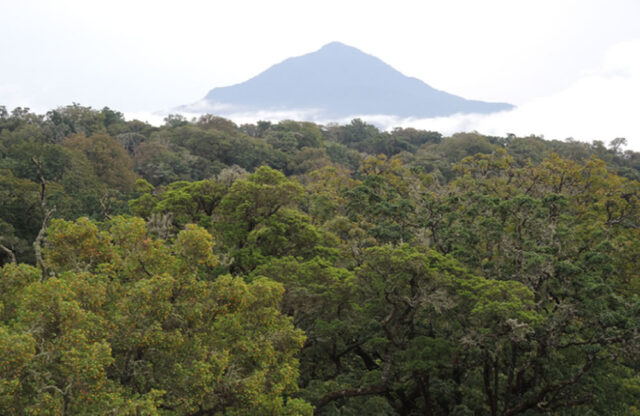
Montane Forest in Cameroon

Researchers have discovered tropical forests in Africa have been sequestering far more carbon than previously known. As they are also rapidly now being cleared for multiple uses, their days in helping save the planet may be numbered.

Scientists at the University of York who have been investigating what are called Africa’s montane forests, those forests located in the tropics, recently discovered those ranges have been acting as a much bigger carbon sink for the planet than earlier investigations had shown.

The current calculations show those ranges are drawing in an estimated 150 tons of carbon per hectare. Put another way, that means every hectare of montane forest left standing in Africa saves the equivalent of CO2 emissions produced by a group of 100 homes consuming electricity at normal average rates for a year.

The data used in the study came from extensive forest inventory data from the AfriMont and AfriTRON plot networks, which cover information provided within 13 countries in Africa. The data is available at afritron.org and is curated at www.forestplots.net.

The study, just published in the journal Nature, found that African mountain forests store more carbon per unit area than the Amazon rainforest and are similar in structure to lowland forests in Africa. Existing guidelines for African mountain forests – which assume 89 tons of carbon per hectare – greatly underestimate their role in global climate regulation.

The international team also investigated how much tropical mountain forest had been lost from the African continent in the past 20 years. They found that 0.8 million hectares have been lost, mostly in the Democratic Republic of the Congo, Uganda and Ethiopia, emitting over 450 million tonnes of CO22 into the atmosphere. If current deforestation rates continue, a further 0.5 million hectares of these forests would be lost by 2030.

Lead author Dr Aida Cuni-Sanchez, from the University of York’s Department of Environment and Geography and at Norwegian University of Life Sciences, said: “The results are surprising because the climate in mountains would be expected to lead to low carbon forests.

“The lower temperatures of mountains and the long periods they are covered by clouds should slow tree growth, while strong winds and steep unstable slopes might limit how big trees can get before they fall over and die.

“But unlike other continents, in Africa we found the same carbon store per unit area in lowland and mountain forests. Contrary to what we expected, large trees remain abundant in mountain forests, and these large trees (defined as having diameters over 70 cm) store a lot of carbon.”

Scientists measured 72,000 trees in 44 mountain sites in 12 African countries, from Guinea to Ethiopia, and south to Mozambique. In each mountain site they established plots where they recorded the diameter, height, and species of every tree.

Researchers said that better knowledge about how much carbon mountain forests store is especially important for the ten African nations where the only tropical forests they have are those found on mountains.

“While we know what makes African forests special, we don’t yet know why they are different. It is possible that in Africa, the presence of large herbivores such as elephants plays an important role in mountain forest ecology, as these large animals disperse seeds and nutrients, and eat small trees creating space for others to grow larger, but this requires further investigation,” Dr Cuni-Sanchez added.

Co-author Dr Phil Platts, from York’s Department of Environment and Geography and the IUCN’s Climate Change Specialist Group, said: “About five per cent of Africa’s tropical mountain forests have been cleared since 2000, and in some countries the rate exceeds 20 per cent. Besides their importance for climate regulation, these forests are habitats for many rare and endangered species, and they provide very important water services to millions of people downstream”.

Most African nations have committed large amounts of land to forest restoration under the Bonn Challenge. Although forest restoration is important to mitigate climate change, avoiding deforestation is a greater priority.

Co-author Dr Martin Sullivan, at the Department of Natural Sciences, Manchester Metropolitan University, added: “Previous carbon estimates for tropical mountain forests in Africa were much lower than the values we report in our study.

“We hope that these new data will encourage carbon finance mechanisms towards avoided deforestation in tropical mountains.  As outlined in the Paris Agreement, reducing tropical deforestation in both lowland and mountain forests must be a priority.”

Co-author Dr Gerard Imani, at the Department of Biology, Université Oficielle de Bukavu in DR Congo, added: “Carbon finance mechanisms could help improve conservation interventions on the ground – even within protected areas, deforestation, forest degradation and defaunation remain a challenge.”

The paper, “High aboveground carbon stock of African tropical montane forests,” by Aida Cuni-Sanchez, Martin J. P. Sullivan, and Etienne Zibera, was published in the 25 August 2021 issue of Nature.

In Africa, War is the Major Cause of Hunger

0
Africa War

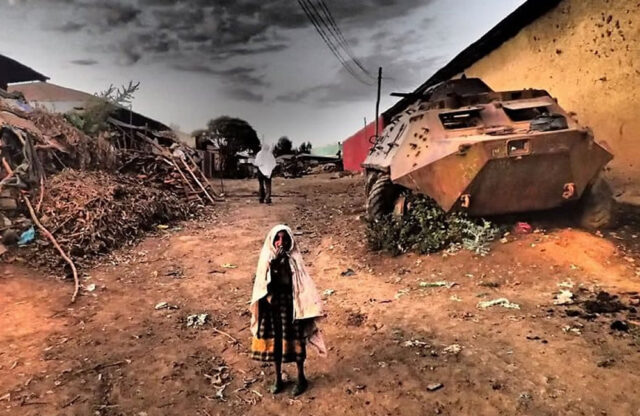
A new study, just published in the journal Nature Food, says that increased hunger in sub-Saharan Africa is caused by long-running wars, not the climate. Rising widespread, long-term violence has displaced people, raised food prices and blocked outside food aid.

For years, it seemed the world was making progress eliminating hunger. Then, starting in 2014, the trend slid back slowly and reversed in many nations; now, some 700 million people—nearly 9 percent of the world’s population—go to bed hungry, according to the UN.

One of the hardest-hit regions is sub-Saharan Africa. Here, many people reflexively blame droughts stoked by climate change. However, a new study looking at the question in granular detail says that is not the case: long-running wars, not the weather, are to blame.

The study, just published in the journal Nature Food, finds that while droughts routinely cause food insecurity in Africa, their contribution to hunger has remained steady or even shrunk in recent years. Instead, rising widespread, long-term violence has displaced people, raised food prices and blocked outside food aid, resulting in the reversal.

To reach their conclusions, the researchers analyzed 2009-2018 data from the Famine Early Warning System, a USAID-funded network that provides information to governments and aid organizations about looming or ongoing food crises in dozens of countries. The system shows that the number of people requiring emergency food aid in monitored countries surged from 48 million in 2015 to 113 million in 2020. The system is not designed to quantify the different factors behind the emergencies. But Anderson and his colleagues were able to tease these out for 14 of Africa’s most food-insecure countries. The nations reach in a band from Mauritania, Mali and Nigeria in the west, through Sudan, Chad and other nations, to Ethiopia, Kenya and Somalia in the east. The study also took in several nations further south, including Mozambique and Zimbabwe.

Not surprisingly, the researchers found that periodic, well-documented droughts have been behind food crises across large areas. However, the overall effects of drought did not increase during the study period; of anything, they went down in some areas. When drought did hit, farmers usually bounced back in the next planting season, within a year or so. Animal herders took twice as long to recover, because the areas where they live saw with more extreme conditions, and it took people time to rebuild their hard-hit livestock herds.

Amid the usual ups and downs of rainfall, violence has been responsible for the progressive increase in hunger, the study found. Long-term conflicts ranging from repeated terrorist attacks to pitched combat between armies have caused shortages lasting year after year, with no end in sight, the authors say.

This has been especially the case in northeast Nigeria, where the Boko Haram guerrilla army has waged a relentless hit-and-run campaign against the government and much of the populace for the past decade. Also in South Sudan, where a messy, multi-sided civil war that started in 2013 continues to sputter along. Sudan and Somalia also have seen warfare-induced increases in hunger, but in those nations, droughts have been the more dominant factors, the study found. In most cases, pastoralists are again the most affected by violence as they are with drought, because they are more likely to live in the most violence-prone areas.

The latest casualty is Ethiopia, where hunger has arced upward across the country in recent years, mainly due to below-average rainfall. But civil war erupted in the country’s Tigray region last year, greatly adding to the misery. The study did not examine this new conflict, but a recent UN report said that more than 5 million people in the region urgently need food aid, and many are already seeing out and out famine. “This severe crisis results from the cascading effects of conflict, including population displacement, movement restrictions, limited humanitarian access, loss of harvest and livelihood assets, and dysfunctional or nonexistent markets,” a top UN official said. On top of that, the drought in Ethiopia is projected to continue through this year.

The researchers looked into a third possible cause of hunger: locusts. Again,  not surprisingly, locusts affect food security in some years by damaging forage and crops—but not on a scale large enough to account for the increase in hunger during the study period. (The study did not look at the unusually large waves of locusts that swept much of East Africa in 2019-2020; these may have had more drastic results.)

One further factor the researchers looked at: whether the onset of drought contributed to flareups of violence, and thus more hunger. One of the report’s coauthors, climatologist Richard Seager of Columbia’s Lamont-Doherty Earth Observatory, connected the dots in this regard in a widely cited 2015 study arguing that one spark for the ongoing Syrian civil war was a multi-year drought that drove many people off their land, into cities. This does not seem to be the case for the African countries, he said. The authors write, “We found no systematic relation between drought and either frequency of conflict or deaths related to conflict. Conflict may be affected by environmental stress in some cases but the relationship across Africa in recent decades is complex and context-specific.”

While warfare has been the predominant driver of hunger in some countries, that does not mean others have completely escaped the violence that can disrupt food supplies. For instance, over the last decade, much of Mali has been subject to on and off attacks by separatist and Islamist insurgents who at times have taken entire cities. Since 2015, the once largely peaceful nation of Burkina Faso has seen hundreds of attacks by rebels and jihadists, including a raid on a village in early June this year that killed more than 100 people.

Chapman’s Pygmy Chameleon Facing Extinction Due to Deforestation

0
Chapman Pygmy Chameleon

Urgent conservation measures are needed to save a Critically Endangered species of chameleon which has been found clinging to survival in patches of rainforest in Malawi.

Chapman’s Pygmy Chameleon (Rhampholeon chapmanorum), which grows to a length of just five-and-a-half centimetres, was first described in 1992 and is believed to be one of the world’s rarest chameleons. It was feared extinct due to the destruction of its native forest in the Malawi Hills, much of which has been cut down for agriculture.

But a survey carried out in 2016 by a team from the South African National Biodiversity Institute and the Museums of Malawi – the results of which are now being published for the first time – has found populations of the tiny reptiles in surviving patches of forest.

They estimate that the forest – and with it chameleon numbers – has shrunk by 80 per cent since the 1980s. A genetic (DNA) analysis also suggests that the animals are trapped in their forest patches, unable to move between them to breed. Without this interbreeding, genetic diversity will be lost over time and this poses another serious threat to the species’ survival.

The study, published in Oryx—The International Journal of Conservation, was led by Professor Krystal Tolley from the South African National Biodiversity Institute and the University of the Witwatersrand.

It was her assessment work in 2014 which led the IUCN (International Union for Conservation of Nature) to list Chapman’s Pygmy Chameleon as Critically Endangered on its Red List of Threatened Species. Comparing satellite images of the Malawi Hills with those taken in the 1980s revealed dramatic forest loss, with the area where the chameleon was first described having been completely cleared. What remained had become fragmented – small patches of forest, cut off from each other.

Fearing the chameleon may have become extinct, Prof. Tolley and her fellow researchers turned to crowdfunding website, RocketHub, to raise the money needed to survey the remaining patches for any surviving populations.

Chameleon enthusiasts responded to the appeal, donating $5,670 which included a $1,000 donation from the Scion Natural Science Association, and was enough for the researchers to survey two of the remaining forest patches in the Malawi Hills and an area 95 km away near Mikundi, where 37 of the chameleons had been released in 1998 to try to safeguard the species.

The chameleons were found in all three locations and Prof. Tolley described the survey team’s jubilation at discovering that the species was still present.

Samples taken from the chameleons were then analysed to see if their genetic diversity had also been reduced. While this was not evident, the researchers believe this may be because such effects take time to show.

They did see evidence that the flow of genes between the fragmented populations had been disrupted. In effect, each forest patch is now home to a small, isolated population, unable to breed with chameleons in neighbouring patches. This will reduce genetic diversity over time and increases the extinction risk for the species as a whole.

The researchers suggest including the remaining forest as part of the nearby Matandwe Forest Reserve so it can be proclaimed as a Key Biodiversity Area, and introducing strong measures to ensure its protection. They also recommend more and thorough surveys of the chameleons to monitor their population and genetic diversity and call for the involvement of local landowners in protecting the Mikundi forest and its population as some insurance against the loss of the chameleon’s natural range in the Malawi Hills. Overall, they say a comprehensive and properly funded action plan needs to be drawn up and enacted to prevent the species becoming extinct

New Study Shows Egypt Will Import More Water than Water Supplied By the Nile

0

Egypt may face extreme water shortages in the next ten years due to population and economic growth.

The study published in Nature Communications shows a historical reconstruction of where the water supply in Egypt is going under conditions of population growth and a developing economy.

The research also provides recommendations of ways Egypt can sustain and leverage water supply for a more sustainable future.

Agriculture is an important sector of the Egyptian economy and for millennia the Nile supplied Egypt with more water than needed. Approximately 90% of the water from the Nile goes towards Egypt’s agricultural production, but as the population grew and the economy expanded, demand on water also increased.

“When you have more people, you need more food, but also as the economy gets better and trade connections improve, the nature of people’s diets also changes”, says Catherine Nikiel, PhD student in Civil and Environmental Engineering and lead author in the study.  “You have people who might start consuming more meat and consuming just different things than they did in the past, which impacts their agriculture.”

The historical reconstruction allowed the researchers to take a granular view into the past and future trends of consumption to see where the water demand is increasing.

Starting in the 1970s, once Egypt started using all the water the Nile could provide them, they started importing more food. A large proportion of their crops of wheat and maize are really water intensive to grow, need a lot of area, and can’t support efficient irrigation methods. Egypt eventually started importing as much corn and wheat as they grew. The researchers then began to see how much Egypt is importing versus how much they are using to project that within the decade, they will be importing as much virtual water as they’re pulling in from the Nile.

“We know that their imports are rapidly increasing so at what point does that balance shift, where they’re actually more dependent on external water than on internal water,” says Nikiel.

The researchers also present recommendations on how Egypt can leverage water resources.

“By shifting production from high water use low-cost crops such as corn, maize, and wheat to higher value lower water requirement crops like fruits and vegetables, which are very profitable on the market, and better suited to really high efficiency irrigation methods and selling those for profits to import maize and wheat, they can potentially shift that balance even further,” adds Nikiel.

The researchers illustrate that the future of water in Egypt is reliant on external cooperation with its neighbors and its own ability to optimally manage internal demand and use of water. The study claims, “Adaptations are ultimately in Egypt’s best interest, as they allow for continued growth and prosperity with more careful management of resources. Egypt has the chance to be an example for other developing water scarce nations, and a leader in the Nile Basin. If changes are not made it will soon serve as an ecological cautionary tale with implications for the entire region.”

“Past and future trends of Egypt’s water consumption and its sources” is published in Nature Communication and may be read online. Co-author of the study includes Elfatih A. B. Eltahir, H. M. King Bhumibol Professor of Hydrology and Climate, and Professor of Civil and Environmental Engineering.

Financing Agreement Reached for Ghana’s Western Railway Line Project

0

Construction of 100km section of the Western Railway Line in Ghana (running from Takoradi port to Huni Valley) will move forward now that Deutsche Bank and Investec, Swedish Export Credit Corporation (SEK) and Export Credit Agency (EKN) as well as Export Credit Insurance Corporation of South Africa (ECIC) have agreed to finance the construction.

Known as the Takoradi-Kumasi railway line, The Western Railway line runs for a total of 339 kilometers from the port of Takoradi in western Ghana to Kumasi in southern Ghana.

Financing for the project is comprised of two loans in favor of the Ministry of Finance of Ghana. The first, backed by EKN, is an approximately US$ 618 Million loan that will cover  the bulk of the cost.

Arranged and structured by Investec, the second loan of about US$ 89 Million will cover the down payment on the EKN backed financing. It is backed by ECIC and funded by a syndicate of Investec Bank Ltd, Rand Merchant Bank, a division of FirstRand Bank Limited, Nedbank Limited (London branch) and Sanlam life Insurance Limited (acting through its Sanlam Capital Markets division).

The Deutsche Bank acted as mandated lead arranger (MLA) for each loan.

The engineering, procurement and construction (EPC) contract for this project was awarded to Amandi Investment.

Bluebird Finance & Projects is acting as the lead financial adviser for the EPC.

Tight Window of Opportunity for Ethiopian Farmers Could Be Missed Without Funding

0

Impending occasional rains in hunger-stricken northern Ethiopia provide a slim chance for farmer to get a yield in the ground and restart local food production, yet without funding this tight window of opportunity could be missed.

Following a visit to Ethiopia to assess the situation, FAO Director of Emergencies and Resilience, Rein Paulsen said: “Many farmers have been stripped of productive assets like seeds, animals, or tools due to looting, or saw their sources of credit disappear and seed markets disappear. As a result, local food production has been brought to a virtual standstill,” he said.

“The rural communities who play a critical role in keeping northern Ethiopia fed, urgently need support if they are going to manage to get seeds in the ground ahead of the impending short rains.

Each seed they plant represents a brick in a firewall against famine. But to get them those seeds, we need more financial support and improved access,” Paulsen added.

In addition to lost agricultural assets, the state of core basic services across northern Ethiopia is impeding relief efforts. Electricity and fuel are lacking, cash and credit are not to be found, and there is only one functional road in and out of the region, noted Paulsen.

FAO has urgently appealed for $30 million to reach nearly 1.2 million of the most food insecurity people in northern Ethiopia. To date, just $6.2 million have been pledged.

On top of cereal seeds, the Organization also aims to distribute fast-growing vegetable seeds and poultry starter kits so that families have a low cost and easy to maintain source of backyard produce and meat and eggs.

Alarming trends in food insecurity driving up needs

The conflict commenced at the peak of what would have been the main Maher season harvest, before many households had the opportunity to harvest their crops. An estimated 90 percent of the harvest was lost, while 15 percent of the region’s 17 million life-sustaining livestock were reported looted or slaughtered.

The most recent Integrated Food Security Phase Classification (IPC) analysis, determined that at least 353 000 people in the region were already experiencing famine-like (Catastrophe) levels of acute food insecurity in Tigray state alone. The IPC is a global, multipartner initiative, comprised of 15 UN agencies, regional organizations, and international non-governmental organizations, that facilitates improved decision-making through the provision of consensus-based food insecurity and malnutrition analysis. (Learn more about IPC indicators for acute food insecurity.)

All told, over 60 percent of the population in Tigray and the neighbouring zones of Amhara and Afar, more than 5.5 million people, are now coping with Crisis, Emergency, or Catastrophe levels of hunger (IPC 3, 4 and 5) and are at high risk of quickly sliding into starvation without support.

Agriculture reboot critical, but underfunded

Although the majority (80 percent) of people in northern Ethiopia depend on subsistence agriculture, so far very little financial support has been allocated to agricultural interventions that can help at-risk families resume productive activity and produce food for themselves and their communities.

The crises in Ethiopia is part of a disturbing wave of surging acute food insecurity around the globe, driven by  a toxic mix of pre-existing threats like conflict, climate shocks, and economic disruptions compounded by the COVID-19 pandemic.

In addition to northern Ethiopia, some communities in southern Madagascar, South Sudan, and Yemen are in likelihood enduring famine-like or “famine-likely conditions.” Around 41 million people globally are now in emergency levels of food insecurity and at high risk of plummeting into famine if hit with another external shock.