Home Blog Page 5

Endangered Species at Risk as Chinese Traditional Medicine Sales Boom in Africa
0
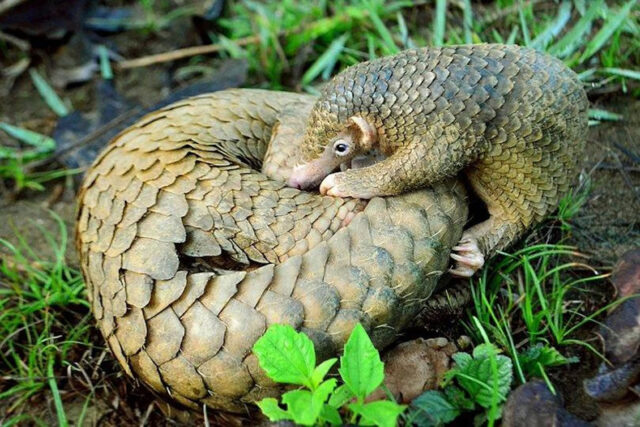
Pangolin Curled Up

As China spreads its backwards culture into Africa, the market for African versions of traditional Chinese medicines has exploded. With that has come the mass killing of native African species for their body parts.

Traditional Chinese Medicine (TCM) is an odd part of the Chinese economic invasion of the world. It brings with it beliefs in medical treatments which originated in some cases millennia ago, long before understanding even of basic anatomy and how to treat illnesses even of the simplest kinds were well understood. While there are some aspects to it that are valid and highly useful, there are also aspects that are based on erroneous beliefs and are highly destructive.

In Africa, relying on traditional medicines created by their own ancestors is a fundamental part of the culture of some nations. They are also made from a variety of animal parts to gain their supposed medicinal power, just as TCM are.

So, it is an easy sell to bring TCM into the continent, as well as to market it in a similar way, arguing for the long-term historical relevance of old knowledge, even if what the Chinese are peddling in these medicines has no real healing power.

Bringing in the medicines also involves, for the companies China is establishing on the continent to make and sell them, locally sourcing ingredients like those in the traditional medicines fabricated in Asia. As it turns out, these “authentic” reconstructions of CTMs – now being sold to yet another massive potential market of the uneducated in Africa – serve also to include many unproven ingredients which are either toxic, include parts from endangered species, or both. By doing so, they are endangering the lives of those species on an even broader scale than ever before while also putting the lives of those who take the medicine at risk.

That is the conclusion of Lethal Remedy, a just published report by the United Kingdom-based Environmental Investigation Agency (EIA).

The spread of Chinese Traditional Medicine manufacture, use, and sale is embedded in China’s global Belt and Road business initiative, a strategic venture under which China is attempting to integrated much of the global business market within just a few days’ shipping time of the PRC (People’s Republic of China).

As the report notes, “Major TCM companies and countless clinics of already been established across Africa, with further plans to construct full supply chains for sourcing to sales.”

The invasion of Africa which this involves has been managed carefully on multiple levels, including:

  • Signing official agreements between African nations and the PRC to develop TCM products and sales.
  • Working to get individual countries to pass local laws endorsing the making and use of TCM products in the countries there. Namibia and South Africa are noted as key examples.
  • Taking advantage of the pandemic panic among the peoples of Africa to create an effective marketing campaign for these non-medicines as something to take while potentially dying of the coronavirus. These campaigns also include treatments to be taken despite having no evidence of the presence of the coronavirus.

In terms of statistics, currently it is known that some 21,000 medical professionals and at least 2,000 people now claiming to be trained practitioners of TCM are present on the continent. 45 countries provide the bases of operation for these people, in countries such as Cameroon, Malawi, Tanzania, Uganda, Zambia, and Zimbabwe.

These have been established over decades in some locations, with a boom period in recent years. It is part of China’s explicit marketing plan for the region.

Though the so-called medicines have mostly no ability to ease pain, slow the spread of disease, or cure anything, the poor and uneducated are an easy target for the Chinese marketing assault which has made TCM sales so successful.

According to the EIA report, the TCM makers have pulled multiple pages out of their use of ingredients such as body parts and bodily fluids from species ranging from Chinese tigers to the Asian pangolin, transplanting them into the local market by replacing them with similar elements from lions and the scales of the African variant of the pangolin.

Common to both traditional African medicine (TAfM) and TCM are parts of species such as the rhino, hedgehog, tortoise, and pangolin.

The elephant, in its Asian form at least, may not be listed among the ingredients lists in the global Pharmacopeia, but the EIA notes that there are at least four registered patent medicines which use elephant ivory as shavings or powder, to treat everything from sore throats, seizures, and boils. Elephant skin is also used by traditional Chinese medical practitioners to help heal routine wounds, ulcers, and even hemorrhoids. Some of the Chinese manufacturers even source these parts all the way from endangered African elephants, in the form of ivory, elephant skin, and hair. That is also all happening legally – except for the ivory – as written into the Convention on International Trade in Endangered Species (CITES), with Botswana, Namibia, South Africa, and Zimbabwe all noted as legally authorized to export such materials.

For the TCM makers setting up shop in Africa, direct access to those elephant parts plus availability of ingredients from the other common parts, whether endangered or not, makes the African market appealing as a new source of mass exploitation of animals even if it pushes many of them close to extinction in the process.

Among other creatures being taken in the wild and sometimes bred just for body parts and bodily fluids for the African form of TCMs are seahorses, the tokay gecko, leopards, African rhinos (for their horn), saiga (for their horn), local endangered versions of tortoise, hedgehog, and porcupine.

For African nations which are in dire need of hard currency, inviting the Chinese in to take advantage of their people and to make and sell products which can kill off animals while posing a genuine danger to those taking the medicines is taken by many countries as a fair exchange, despite the damage it does to all. South Africa and Namibia, just as two examples, have gone so far as to formally recognize traditional Chinese medicines as legitimate treatments within those countries’ treatment protocols. Other countries, such as South Africa, have now legalized captive breeding of wild large cat species such as lions or leopards, for the purpose of harvesting their parts for TCMs.

In South Africa, a November 2019 memorandum from the Northern Cape government uncovered by the Environmental Investigation Agency authorizes the sale of Rhino horn “in order to expedite the process of legalizing commercialization …for medicinal purposes.”

Besides the obvious evils of potentially wiping out endangered species, marketing useless medicines made of those species, and encouraging the public to take these medicines at a high risk to themselves, there is yet another reason the EIA warns that theses medicines should be blocked from manufacture and banned for sale. That is the potential risk of spreading zoonotic diseases, illnesses such as the coronavirus which likely was derived from similar viruses found in Chinese bats and crossed species to infect humans, broadly across Africa.

None of this will stop without the African governments themselves stepping up and demanding the end of foisting these dangerous and exploitative concoctions known as traditional Chinese medicines on the people. With those governments more than happy to be bribed with money and more from Beijing to allow this to happen, no one should count on those governments doing anything about this anytime soon.

With total sales of traditional Chinese medicine in 2021 estimated to hit 75.3 billion Chinese yuan (US $11.81 billion) by the end of 2021, with an estimated annual compound sales growth rate of about 5 percent just in China’s core home market, and with high gross margins, no one should look to the PRC to do anything on their end to stop this abuse of nature and the public who happily consume these fake medicines.

One of the factors that is allowing TCM to flourish in Africa is the predatory nature and failure of western medicine and its forced vaccination program. Many Africans simply don’t trust western medicine or the evil billionaires behind it. At the same time, practitioners skilled in TCM can often more accurately diagnose ailments, even if they can’t prescribe an effective treatment.

HeidelbergCement Signs Agreement with Tanzanian Cement Producer

0
Heidelberg Cement

HeidelbergCement, one of the world’s largest integrated manufacturers of building materials and solutions, has signed an agreement to acquire 68 % of the shares in the Tanzanian cement producer Tanga Cement.

Through its subsidiary Tanzania Portland Cement, the largest cement producing company in the country, HeidelbergCement already has a good market position in Dar es Salaam in the Eastern part of Tanzania.

As part of this transaction, HeidelbergCement secures an important limestone quarry with measured resources for at least 30 years on top of its already existing reserves. The quarry and the associated cement plant with a capacity of 1.3 millions tonnes of Tanga Cement are located in the Northern part of Tanzania.

The closing of the transaction is subject to the fulfillment of customary conditions precedents (especially the clearance by several local authorities), which have to be fulfilled or waived within an agreed timeframe.

As of today, closing of the transaction is expected in the second quarter of 2022. Upon closing, HeidelbergCement will make a public tender offer to acquire the remaining outstanding shares in Tanga Cement, following Tanzanian law and in alignment with the respective local authorities.

Both companies, Tanzania Portland Cement und Tanga Cement, are publicly listed.

Saskatchewan Signs MOU with Senegal on Educational and Research Cooperation

0
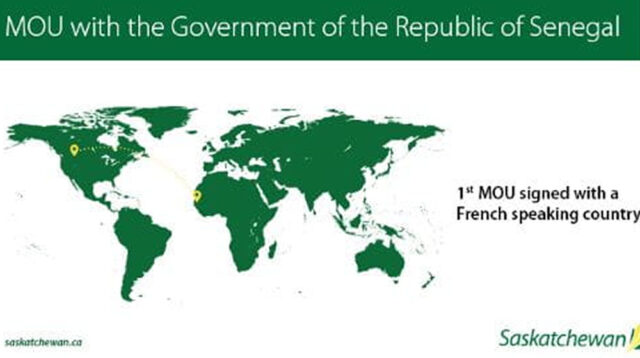
MOU Senegal

The Government of Saskatchewan and the Government of the Republic of Senegal signed a Memorandum of Understanding (MOU) to strengthen ties between educational institutions and advance cooperation in research and the exchange of students and academics between the two jurisdictions.

“Our government values this partnership with Senegal and is proud to be signing the first MOU in the history of our province with a French speaking country,” Advanced Education Minister Gene Makowsky said. “Our province is committed to building relationships with countries around the world to strengthen intellectual and cultural linkages through research, dialogue and exchange.”

International students bring a global perspective to Saskatchewan and create opportunities for research and innovation. This MOU has an objective to collectively develop recruitment marketing strategies in French speaking countries to promote the development of the Fransaskois community, while also increasing the visibility of Saskatchewan’s French programs on the world stage.

“I welcome the signing of this cooperation agreement with the Government of Saskatchewan, which bolsters the strong cooperative relationship maintained by Senegal and Canada,” Minister of Advanced Education, Research and Innovation, Government of the Republic of Senegal Cheikh Oumar Anne said. “I hope that it will become a foundation on which we can build new academic and scientific relationships between our institutes of higher learning and research, and through which we can promote the Francophonie in our respective institutions.”

Recently, the Government of Saskatchewan announced its International Education Strategy, which includes a number of initiatives related to global engagement, capacity building and leadership. This will enhance the province’s profile over the next five years to attract key international markets and to help position the province as a destination of choice for international students.

The International Education Strategy, developed in partnership with the post-secondary sector, will assist institutions to attract international students in innovative ways, while meeting commitments outlined in Saskatchewan’s Growth Plan. A key component of the strategy will include supporting the growth and sustainability of French post-secondary programs in Saskatchewan through targeted recruitment in key French language markets.

Between the province’s two universities and Saskatchewan Polytechnic, Saskatchewan’s post-secondary institutions have 568 active agreements with international post-secondary partners.

USTDA Announced Grant Funding to Advance Internet Access in Nigeria

0
Internet Access

The U.S. Trade and Development Agency announced grant funding for a feasibility study to help Nigerian company Ekovolt Telco Limited expand internet access for underserved communities in the Niger Delta region.

The study will include a pilot project to test fixed wireless broadband technology as a solution. Ekovolt selected Georgia-based Vernonburg Group LLC to conduct the study.

“Quality internet infrastructure is critical to Nigeria’s economic growth. This is why USTDA is prioritizing partnerships with companies like Ekovolt,” said Amb. Vinai Thummalapally (ret.), USTDA’s Acting Director. “Through our Access Africa initiative, USTDA is connecting high-quality U.S. solutions to support the deployment of critical broadband infrastructure in Nigeria and communities all across Africa.”

USTDA’s study will assess market demand and determine the technical and commercial viability of expanding last-mile fixed wireless broadband access across nine states in Nigeria’s Niger Delta region. The study will also include a test deployment of Motorola’s 4G LTE technology as a potential solution for expanding connectivity for up to 550,000 users.

“We are excited to partner with USTDA to create a more inclusive digital economy in the Niger-Delta region,” said Emeka Ebo, Ekovolt’s Managing Director. “This partnership and collaboration with U.S. technology companies including Motorola provides the platform to adopt, test and deploy innovative wireless technologies. This will help us promote local digital solutions that improve access to healthcare, literacy and commerce.”

This project advances the Biden-Harris Administration’s Build Back Better World partnership. It also supports Access Africa, USTDA’s initiative to advance the development of inclusive, secure, and sustainable ICT infrastructure across Africa, and the U.S. government’s Prosper Africa initiative to substantially increase two-way trade and investment between the U.S. and Africa.

Worldwide Walkouts November 3 to Protest Against Government Overreach

0

The people will push back against the fascist vaxcists tomorrow.

Organizations and individuals will be “walking out” of work by calling in sick or taking a personal day to protest the unprecedented loss of freedom that has occurred since the COVID pandemic began. While this won’t solve the problem, it will help bring attention to the problem and demonstrate that not everyone is willing to accept the tyranny.

Worldwide Walkouts will demand a return to freedom and democratic principles. Citizens around the globe are protesting loss of liberty, illegal mandates and tyrannical government overreach.

Robert F. Kennedy, Jr., Children’s Health Defense Board Chair and Lead Counsel said, “No government in history has ever surrendered power in the absence of a demand. We need to tell these governments and their friends in the technocracy, the Silicon Valley billionaire boys club, the mainstream media, and the pharmaceutical industry that we will no longer tolerate their trampling of citizens’ rights.”

Emboldened by reports of a recent walkout of Southwest employees — which led the airline’s management to drop plans to put unvaccinated employees on unpaid leave — nurses, doctors, teachers, police officers, firefighters and other workers are expected to participate in the protest.

EU Stops Funding of World Health Organization (WHO) in DR Congo

0
Congo Health

The WHO is supposed to help people but often does far more harm than good and the EU finally has the courage to stop funding some of the harm.

Last month, an independent investigation commissioned by the WHO issued its report on the sexual abuse committed by WHO staff between 2018 to 2020. Investigators identified 83 alleged perpetrators but focused on only 80 of the cases of sexual abuse during the global health agency’s response to an Ebola outbreak in the Democratic Republic of the Congo (DRC). The WHO had long known about the abuse but to defuse the scandals and divert attention away from itself, it commissioned others to investigate while it went about business-as-usual. It did not want the abuse scandals to diminish its push for the mass injection of humanity with the potentially deadly concoctions promoted as COVID vaccines.

The EU didn’t stop funding just because of the abuse but because the WHO had only fired 4 of the perpetrators and none had been arrested for their crimes. The WHO’s institutional support for abuse had not been addressed and NONE of the sexual predators have faced any real measure of justice.

Like the Catholic Pope responds when confronted by the crimes of his church, WHO Director-General Tedros Adhanom Ghebreyesus called the document “harrowing” reading and offered his apology to the victims and survivors, but nothing else.

The sexual abuse in (DRC) is merely a symptom of a rotten organizational culture that has caused immense suffering and death around the world by acting as an enforcer and marketing arm of the criminal pharmaceutical & vaccine industry.

A legal case against the WHO is being prepared by the Berlin Corona Committee (Siftung Corona Ausschuss) for lying about the coronavirus, lying about the COVAX (COVID vaccines) and promoting needless and massively damaging restrictions.

While the EU’s measures are temporary and likely for PR purposes only, the funding pause at least brings some measure of attention to the true nature of the WHO. Thinking people might choose to do more research and come to the conclusion that 1. the WHO is not really a health organization, and 2., the organization is an extension of the World Economic Forum and is carrying out the anti-human agenda of its members.

While the world does need an international health network, it does not need the WHO.

NIH Awards Nearly $75M To Catalyze Data Science Research in Africa

0
Training Network

The National Institutes of Health is investing about $74.5 million over five years to advance data science, catalyze innovation and spur health discoveries across Africa.

Under its new Harnessing Data Science for Health Discovery and Innovation in Africa (DS-I Africa) program, the NIH is issuing 19 awards to support research and training activities.

DS-I Africa is an NIH Common Fund program that is supported by the Office of the Director and 11 NIH Institutes, Centers and Offices.

Awards will establish a consortium consisting of a data science platform and coordinating center, seven research hubs, seven data science research training programs and four projects focused on studying the ethical, legal and social implications of data science research. Awardees have a robust network of partnerships across the African continent and in the United States, including numerous national health ministries, nongovernmental organizations, corporations, and other academic institutions.

“This initiative has generated tremendous enthusiasm in all sectors of Africa’s biomedical research community,” said NIH Director Francis S. Collins, M.D., Ph.D. “Big data and artificial intelligence have the potential to transform the conduct of research across the continent, while investing in research training will help to support Africa’s future data science leaders and ensure sustainable progress in this promising field.”

The University of Cape Town (UCT) will develop and manage the initiative’s open data science platform and coordinating center, building on previous NIH investments in UCT’s data and informatics capabilities made through the Human Heredity and Health in Africa (H3Africa) program. UCT will provide a flexible, scalable platform for the DS-I Africa researchers, so they can find and access data, select tools and workflows, and run analyses through collaborative workspaces. UCT will also administer and support core resources, as well as coordinate consortium activities.

The research hubs, all of which are led by African institutions, will apply novel approaches to data analysis and AI to address critical health issues.

The research training programs, which leverage partnerships with U.S. institutions, will create multi-tiered curricula to build skills in foundational health data science, with options ranging from master’s and doctoral degree tracks, to postdoctoral training and faculty development. A mix of in-person and remote training will be offered to build skills in multi-disciplinary topics such as applied mathematics, biostatistics, epidemiology, clinical informatics, analytics, computational omics, biomedical imaging, machine intelligence, computational paradigms, computer science and engineering.

Military Coup Topples Sudan Government

0
Sudan Riots

Yesterday the senior military leadership in Sudan arrested the prime minister and seized control of the country in what is already — for the citizens at least — a bloody takeover coup.

It represents the end of a power-sharing relationship between civilian and the military in the African nation which has lasted for over two years.

It will also mean the return to authoritarian rule – for a while at least — after the people forced out the former dictator Omar Hassan al-Bashir in 2019.

Though the news came as a shock for the world, the overthrow looked more likely last month, after a previous coup attempt failed.

Since that time both the civilian as well as military sides were shoring up their alliances. Last week several cabinet ministers led protests in Khartoum and other major metropolitan areas, against even the prospect of a coup. In parallel, the army strengthened its hand by bringing together an odd alliance of leaders consisting of local warlords, heads of militia, those who still backed previous dictator al-Bashir, and the current military establishment.

The coup took place relatively swiftly and reportedly relatively quietly. The military, headed by General Abdel Fattah al-Burhan arrested Prime Minister Abdalla Hamdok, industry minister Ibrahim al-Sheikh, several other ministers, Governor Ayman Khalid of the state which includes the capital of Khartoum, and other officials within the government. No one seriously injured or killed as those officials were taken, according to current reports.

In doing so, the military dissolved the “sovereign council” which managed a power-sharing arrangement between the civilian leadership represented by Hamdok and the general’s senior team. That council was formed in 2019 after former military officer Omar Hassan al-Bashir himself had led the country for three decades.

Al-Bashir himself took power in 1989 when, as a brigadier general in the Sudanese army, he also led a military coup. In a disturbing replay of history, al-Bashir seized power by kicking out the democratically elected government headed up by then prime Minster Sadiq al-Mahd.

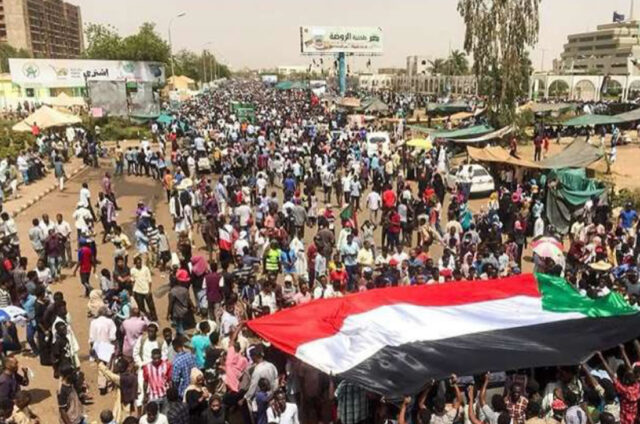
News of the coup spread quickly in the nation. Fearing a return to a dictator state run by a military team, protesters came out by the thousands in the country’s capital city of Khartoum to demand the return of Prime Minister Hamdok to power.

Those protesters were also aware that the sovereign council was supposed to have turned the full reigns of leadership of the country to a civilian within just a few months. The coup was broadly seen as an attempt to keep that from ever happening.

The military leadership responded in force, with shots fired by security forces deployed to attempt to restore calm. As of late yesterday, reports from the health ministry said at least seven protesters had been killed in the skirmishes. An estimated 140 protesters were wounded.

The government also shut off the internet to the country, as a means to keep protesters from coordinating their efforts.

In statements released yesterday, General Abdel Fatttah al-Burhan said the takeover of the government was unavoidable. He described the sovereign council as unworkable, with the civilian and military representatives constantly arguing over governance decisions.

In a public statement, he attempted to reassure those who felt the military would keep control of what it had seized.

“The armed forces will continue completing the democratic transition and the handover of the country’s leadership to a civilian, elected government,” he said.

The statement also said the constitution would be rewritten to address changes his group felt were needed. Those changes are to include creating a new governmental entity responsible for writing and passing laws.

Rather than achieving its purpose, the general’s statements only served to intensify the protests. Citizens against the coup spread out within both the capital of Khartoum and its sister city of Omdurman. They blocked streets to keep the security forces out, even as those forces tried to de-escalate matters by using tear gas this time rather than guns to get people to leave.

“The people are stronger, stronger,” the protesters chanted back at them in defiance. “Retreat is not an option!”

As the tear gas appeared to be failing to stop the protests, the security forces apparently once again returned to firing into the protesters.

Protests are reportedly intensifying close to the military headquarters where the ruling junta is situated.

The coup has been greeted with condemnation from the United Nations, the European Union, the United Kingdom, and the United States. The return to instability in a country which under al-Bashir was ravaged and ransacked by its leadership is considered a threat once again to peace extending well beyond the borders of Sudan.

Josep Borrell, foreign affairs head for the EU, said the European bloc had “utmost concern” about what had happened.

Speaking for the Biden-Harris administration, Jerry Feltman, U.S. special envoy for the Horn of Africa, said the White House was “deeply alarmed at reports of a military takeover of the transitional government.”

Soon after Feltman’s remarks, Karine Jean-Pierre, a spokeswoman for Joe Biden, issued a more explicit message about the seizure of the government.

“We reject the actions by the military and call for the immediate release of the prime minister and others who have been placed under house arrest,” she said in a meeting with reporters.

The U.S. has also responded to the military coup by suspending the $700 million it was planning to send to Sudan. It was at least in part intended to support the transition to a full democratic state.

An open election for the new government was also originally intended to happen in 2023. Even though the new military in its statement says that will still happen, most experts on the situation say the current situation is far too volatile to be certain of what will happen.

Meanwhile the largest party in the country, Umma, said there was little choice but to take the streets and continue protests.

The Sudanese Professionals Association (SPA), the largest of the nation’s pro-democratic political groups, also made a strong call to the people to rise up to reject the military takeover.

“We urge the masses to go out on the streets and occupy them, close all roads with barricades, stage a general labor strike, and not to cooperate with the putschists and use civil disobedience to confront them,” the SPA said in a social media post yesterday.

South African Government Urged To Step Up Its Support for the Air Transport Industry

0

The International Air Transport Association (IATA), a trade association of the world’s airlines based in Montreal, Quebec, called on the South African government to step up its support for the air transport industry amid the COVID-19 crisis to facilitate the recovery of industries supported by aviation such as travel and tourism and unlock the job opportunities and other economic benefits they provide.

“South Africa’s air transport and tourism sector’s contribution to GDP all but evaporated with the COVID-19 crisis which coincided with the closure of one airline and the deep restructuring of two others. In 2019 aviation supported 364,000 jobs in South Africa. Because of COVID-19, about 298,000 of those jobs have been put at risk. It’s a significant impact for over 80% of jobs to be lost if connectivity is not restored. As South Africa’s foreign trade and tourist markets begin coming back online, it is crucial that steps are taken to ensure no more jobs or opportunities are lost,” said Kamil Al Awadhi, IATA’s Regional Vice President for Africa and Middle East.

Key priorities to support and sustain the recovery of South Africa’s air transport and tourism sectors include:

  • Financial Support and Relief to the air transport industry: South Africa’s entire airline industry requires support and financial relief if it is to fulfil its role as an economic enabler and job creator.  Government has several levers at its disposal to assist all carriers and service providers, both public and privately-owned.  Besides cash or financial guarantees, they include reductions, waivers and discounts on user charges and taxes on air travel and aviation and wage subsidies.
  • Adopting an inter-operable digital platform for COVID-19 testing and vaccination certificates: As passenger numbers increase in the recovery, digitally managing travel health credentials will be essential to avoid queuing and crowding at airports. IATA Travel Pass and the African Union’s Trusted Travel Pass are both tools that can help governments efficiently and conveniently verify traveler health credentials.
  • Increasing intra-Africa connectivity: The African Union’s Single African Air Transport Market (SAATM) is intended to unlock travel and economic benefits within the continent. An IATA-commissioned econometric study found that the full implementation of SAATM across the continent would create 14,500 new jobs for South Africa and add US$283.9 million to its GDP.

IATA also urged the South African government to ensure the effective functioning of the South African International Air Services Licensing Council to enable the granting of operating licenses for new routes and increased frequencies on existing routes to South African carriers.

Black Soldier Fly Sanitation Startup in Kenya to Produce Food for Fish and Livestock

0
Black Soldier Fly

Sanergy, a U.S.-owned company based in Nairobi, Kenya, just received a $2.5 million investment from the Japan International Cooperation Agency (JICA) for a unique “circular economy” sanitation operation.

The company operates by first gathering organic waste from public markets, restaurants, and local farms, along with excrement to create a biowaste mass.

Then it adds larvae from black soldier flies to the mix. They feed on the waste and break it down without the need for added chemicals or toxic materials.

The resulting biowaste is then converted into multiple forms. Among them are:

An Insect Feed called KuzaPro

An organic crop fertilizer. It is currently being sold and distributed throughout Kenya.

Biomass briquettes for use in industrial boilers and other heating solutions.

Sanergy began its first test organics recycling facility in Kenya’s capitol of Nairobi in 2015. That facility processes around 12,000 tons of biowaste annually. It also produces insect feed along the same lines as the new investment will make possible. In 2021 it is the largest insect feed plant in East Africa

The company was launched in 2009 by three Massachusetts Institute of Technology students. Their goal was to provide a more hygienic and affordable solution to sanitation even for those living in Nairobi’s urban slums.

Sanergy is positioned well for growth in this type of industry. With its urban base in Nairobi on its way to growing to a population of 5.94 million in 2030, according to investor JICA the amount of biowaste it produces should increase from 1,848 tons/day to 3,990 tons per day. That represents a 116% increase in less than a decade.

In announcing its new investment in Sanergy, Shohei Hara, JICA’s director general of Private Sector Partnership and Finance, expressed excitement about the opportunities for the new enterprise.

“We are thrilled to expand Sanergy’s pioneering circular economy model which solves multiple social problems, such as waste management, sanitation, agricultural productivity and food security, that most countries in Africa commonly face,” he said.

“JICA will continue to develop partnerships with wider stakeholders in tackling with these social problems,” Hara continued.