Home Blog Page 8

African Development Bank Board Approves Water Policy

0

The Board of Directors of the African Development Bank Group has approved a new policy on water, prioritizing water security and the transformation of water assets to foster sustainable, green and inclusive economic growth in regional member countries.

The policy aims to promote Africa-wide attainment of a minimum platform of water security, with a special focus on areas of fragility, as well as assist African countries and sub-regional groups harness and sustain water resources productivity potential to support development.

The new Water Policy is anchored around four principles:

Principle 1: attaining water security at household, national and regional levels should be recognised as a key outcome fundamental for inclusive growth. The Bank seeks to promote the attainment of water security in all its regional member countries and sub-regions.

Principle 2: equitable social welfare and economic growth. The Bank will continue to advocate for an integrated approach to water development and management by striking a sustainable balance in the social, economic and environmental spheres.

Principle 3: promoting sustainable and equitable access to water services as an enabler for the Sustainable Development Goals.

Water is a key enabler for many of the United Nations Sustainable Development Goals, The Bank considers water to be essential for life, health, dignity, empowerment, environmental sustainability, peace and prosperity. The new policy aims to vigorously promote water security to advance the SDGs agenda.

Principle 4: transboundary water resources management and development should be recognised as a significant requirement to achieve seamless regional economic integration. The Bank will actively seek to use the transboundary nature of water to enhance regional integration and promote conflict resolution.

In its assessment of the policy, the Bank’s Board commended the Bank’s water, policy and strategy departments for leading the policy-preparation process.

The Bank will establish an internal coordination mechanism for water-related interventions to be overseen by a committee with adequate capacity, resources and appropriate skills.

Since 2010, the African Development Bank has invested an estimated $6.2 billion in water supply and sanitation services delivery.

COVID-19 has exposed vulnerabilities caused by under-investment in water, sanitation and hygiene services, also known as WASH. Despite these challenges, the active water sector portfolio stood at $4.3 billion, comprised of nearly one hundred national projects implemented in 40 countries, and 6 multinational projects.

Is Africa Where the Next Climate Crisis Showdown Will Happen?

0
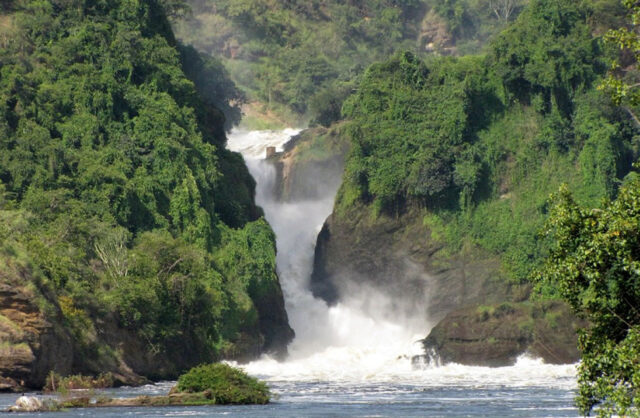
Murchison Falls Game Park

This week French energy giant Total became the latest global target for the Fridays for Future Climate Strikes, when protesters attacked it for human rights violations, greenwashing, and ecocide connected with its destructive fossil fuel projects across Africa.

Total was under attack throughout the past week in protests across Africa for its leadership position in driving three major threats to global warming and the environment. Though the company has been involved in African fossil fuel projects for some time, the latest attacks were for the company’s new triple-threat leadership of the East African Crude Oil Pipeline Project, the Tilenga Development Project which will ravage the environment through major drilling in dozens of locations throughout Uganda, and the Mozambique Liquefied Natural Gas project.

The East African Crude Oil Pipeline Project (EACOP), if it is allowed to be built, will bring 230,000 barrels of crude oil every day from drilling areas in western Uganda’s Lake Albert region to Tanga, the Tanzanian port city located on the Indian Ocean. If the protesters fail in their efforts to force Uganda’s hand to stall the pipeline, it will feature the world’s largest electrically heated pipeline and will run almost 900 miles (1,450 kilometers) across much ecologically sensitive terrain. The total cost of this project is estimated at $3.5 billion.

According to environmentalist studies, the pipeline will impact some 770 square miles (2,000) square kilometers of currently protected land in the region. An estimated one-quarter of that land is currently the home of endangered species such as African savanna elephants, lions, and eastern chimpanzees. Within Tanzania, the pipeline also travels through seven forest preserves and the Wembere Steppe, an important biodiversity habitat, as well as now at-risk marine areas near the Tanga port.

Despite the obvious toxic nature of the project, Total says the EACOP development will “generate a positive net impact on biodiversity,” something even Total’s business partners have not had the audacity to suggest.

“Imagine a tropical version of the Alaskan oil pipeline, only longer,” wrote environmental author Fred Pearce about EACOP. “And passing through critical elephant, lion, and chimpanzee habitats and 12 forest reserves, skirting Africa’s largest lake, and crossing more than 200 rivers and thousands of farms before reaching the Indian Ocean—where its version of the Exxon Valdez disaster would pour crude oil into some of Africa’s most biodiverse mangroves and coral reefs.”

As the EACOP project became more of a reality, in 2017 the World Wide Fund for Nature Uganda group also called out the pipeline as “likely to lead to significant disturbance, fragmentation, and increased poaching within important biodiversity and natural habitats.”

A report from the NGO Osfam published in 2020 said the pipeline “will cross poor, rural communities in both Uganda and Tanzania that lack the political and financial capital of the project stakeholders.”

Unfortunately for those poor who will be disproportionately affected by what is happening, Oxfam continued, there are unfortunately “lopsided complications of this power dynamic [which are]…well-documented in similar extractive industry projects.”

“Powerful companies are often able to hide their operations behind local contractors and permissive government authorities,” the report went on. “Often the only hope that local communities have for remediation or justice is through local government bodies that are often weak, fragile, or captured by corporate and national interests.”

As one Ugandan farmer in Rakai located near the Tanzanian border said in an interview recently, “when this pipeline project came, they promised us too many things. Up to now they have done nothing.”

The project is also expected to cause breaches of the divide between human populations and those of the natural species they share the land with at this time.

“We have always had a problem of human-wildlife conflict in the village,” said Elly Munguryeki, a farmer who lives on the borders of Murchison Falls National Park, in an interview with reporters just a few weeks ago.

“With drilling and road construction across the park, the invasions are more frequent,” Munguryeki added. “We keep reporting the losses to park authorities but nothing happens. Each night a herd of buffalo, baboons, and hippos from the park would invade my farm and neighboring plots and eat our crops until dawn. Whatever they left would be eaten by baboons and wild pigs during the day, forcing us to harvest premature crops.”

Total responds to criticism like this by claiming it carefully crafted the route of the pipeline to “minimize the number of residents relocated,” which NGOs and local residents dismiss as total fantasy.

In an April 2021 report published by the online news source Mongabay, on the human side of the equation alone an estimated 12,000 families will be kicked off their homeland to make room for yet another major and unneeded fossil fuel project.

The second target of the protesters’ ire is the Tilgenga Oil Fields Development Project. Already well under way, if this project is allowed to finish construction, involves the construction of 400 environmentally-risky water injector and projection wells in six major oil fields across Uganda, plus a central processing facility and almost 100 miles (160 kilometers) of flowline infrastructure to interconnect the system. Those oil fields are located in Jobi-Rii, Ngiri, Gunya, Kasemene-Wahrindi, Kigogole-Ngara, and Nsoga. 31 well pads at those fields will be used as the base for the new wells.

The various fields are positioned in various locations not far from the Victoria Nile River. The Jobi-Rii field is just north of it and the others are on its southern end. Part of the project will take place in the rich biodiverse lands of Murchison Falls National Park.

The central processing field, located in the Ngwedo sub-county of the Buliisa distrct, will process an estimated 190,000 barrels of oil a day via a separation process which will extract the oil from a mix of water and gas. The gas, which is likely to dump significant carbon emissions into the atmosphere as the mix is processed, will be used to produce electricity to run the facility. The used water which is separated off from the oil will be re-injected into the oil fields.

The Tilenga Oil Fields Development Project is a joint effort by Total SE, a division of Total France, the China National Offshore Oil Corporation (CNOOC), and the Uganda National Oil Company (UNOC).

The third major effort in Total’s plans in Africa that the protesters went after yesterday was its $20 billion liquefied natural gas project planned for Mozambique. Total bought a $3.9 billion stake in the project in 2019 and had hoped to begin exporting the LNG fuel by the end of 2024. Even the first phase of this initiative is expected to produce greater than 13 million tons of LNG per year.

Total ended up suspending work on the LNG processing and distribution program in Mozambique after a March 2021 attack which happened to be in the same area where construction of the LNG infrastructure was taking place. The attack was from militants linked to the Islamic State and had nothing to do with  LNG protests.

Total expects to continue work on this project when the violence eases up.

It because of the combined greed, corruption, and mass ecological damage that Total and its co-conspirators in governments on the continent, in partnership with China, and with local industrial partners, that protests against Total grew hot this past week throughout Africa.

The peak of the protests took place on Tuesday, celebrated annually as Africa Day, as a reminder to all of what is at stake as Total’s activities continue to deploy.

Protests took place in various-sized gatherings at Total petrol stations in Benin, the Democratic Republic of the Congo, Egypt, Ghana, Kenya, Nigeria, Togo, and Uganda.

Andre Moliro, an activist from the Democratic Republic of the Congo, said to reporters much of what sums up the anger and frustration Africans have with the damage Total is creating in multiple regions on the continent.

“Total’s fossil fuel developments pose grave risks to protected environments, water sources, and wetlands in the Great Lakes and East Africa regions,” he said.

“Communities have been raising concerns on the impact of oil extraction on Lake Albert fisheries and the disastrous consequences of an oil spill in Lake Victoria, that would affect millions of people that rely on the two lakes for their livelihoods, watersheds for drinking water, and food production,” he continued.

The protests are proceeding, despite the Uganda government actively supporting its oil drilling partners via police actions against anyone who might stand in the way of bringing the landlocked Uganda its expected billions of new revenues from the various projects in that country.

On May 24, for example, police in Buliisa arrested Ugandan human rights defender Maxwell Atuhura, who also works with  the African Institute for Energy Governance (AFIEGO), and Federica Marsi, an Italian journalist, just as both were on their way to meet with local community members.

AFIEGO is one of several NGOs who have sued Total for its environmental crimes within Africa.

Journalist Marsi was released from custody later the same day he was arrested. Police authorities directed him to get out of the oil region immediately, threatening him with the warning that he should do so “before bad things happen.”

Atuthura is still in the hands of the police. The World Organization Against Torture has issued a global demand for help to ensure Atuthura’s immediate and safe release.

Despite the risks to their own personal safety, the urgency and seriousness of the cause is what keeps the protesters speaking up.

“We cannot drink oil, said Venessa Nakate, founder of the Rise Up Movement and an Ugandan climate justice activist. “This is why we cannot accept the construction of the East African Crude Oil Pipeline. It is going to cause massive displacement of people [and the] destruction of ecosystems and wildlife habitats.”

“We have no future in extraction of oil because it only means destroying the livelihoods of the people and the planet,” Nakate continued. “It is time to choose people above pipelines. It is time to rise up for the people and the planet.”
Siemens Energy Agrees To Provide F-class Gas Turbine in Cote d’Ivoire

0
Siemens Project

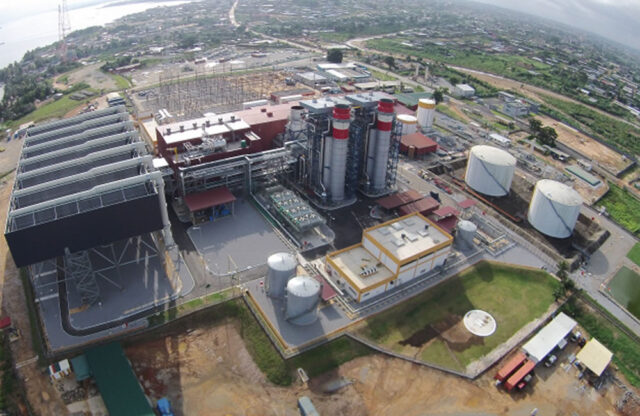
Siemens Energy has signed an agreement with Spanish EPC contractor TSK to provide the company’s highly efficient energy technology and services to Atinkou (formerly known as Ciprel V), a new combined cycle power plant to be built in Jacqueville, Côte d’Ivoire.

Owned by ATINKOU S.A., a subsidiary of Eranove, the power plant will have an installed capacity of 390 MW in combined cycle and introduces the first F-class gas turbine in the Sub-Saharan Africa. The plant is scheduled to begin operations in late 2022.

Siemens Energy’s scope of supply includes one SGT5-4000F gas turbine and one SST5-3000 steam turbine, each along with a generator, condenser and an SPPA-T3000 control system. Additionally, a comprehensive 12-year long-term service agreement (LTSA) has been signed between the end customer ATINKOU S.A. and Siemens Energy.

“Siemens Energy is proud to be supplying the very first, highly efficient F-class gas turbine to the Sub-Saharan region, thereby continuing our commitment to improve access to reliable and affordable energy in West Africa,” said Karim Amin, Executive Vice President of Siemens Energy’s Generation Division. “Supported by our state-of-the-art technology and services, this power plant will be the most efficient natural gas fired power plant in Côte d’Ivoire and in the region. It will help to reduce the area’s carbon footprint from power generation and support Côte d’Ivoire in its efforts to become a regional energy hub.”

“Since the signing of the concession with Ivorian authorities in December 2018, the Pan-African Industrial group Eranove– in charge of the design, financing, construction, operation and maintenance of this plant, carried by the company ATINKOU– is very proud to bring together partners like Siemens Energy and TSK. The Atinkou power plant will produce electricity for thousands of homes and industries to meet national and regional electricity needs generated by strong economic growth,” said Marc Albérola, CEO of the Pan-African Industrial Group Eranove.

The SGT5-4000F gas turbine provides high performance, low power generation costs, long intervals between inspections, and a service-friendly design. Optimized flow and cooling add up to high gas turbine efficiency and economical power generation in combined cycle applications.

In March 2020, Siemens was awarded a contract from the same EPC, TSK, to deliver an SGT-800 gas turbine, generator and other key components for Eranove’s 65 MW combined cycle Kékéli Efficient Power plant project in Lomé, the capital city of Togo in West Africa.

Fundacio Fluidra Unveils Plans to Build A “Social Pool” in Senegal

0
Fundacio Fluidra

Fundació Fluidra has announced it will undertake a new project consisting of building a swimming pool at a school in Thiaroye, on the outskirts of Senegalese capital Dakar, with the aim of helping over 2,000 children from the city learn to swim.

The project will be implemented through the partnership between KAG25 (a corporate vehicle channeling aid in Senegal), Fundació Fluidra, Fluidra Export, and Sensec, a local construction firm and Fluidra customer. Fundació Fluidra will fund the project, Fluidra Export will supply the necessary materials, and Sensec will be tasked with building it.

The pool will be semi-Olympic in size (25 x 12.5 meters), enabling all types of activities, including swimming competitions. It will be fitted with the latest connectivity technologies, optimizing operation, maintenance, and efficiency.

The pool managers will be able to tap all the related metrics to make it more sustainable and safer. A connected pool simplifies maintenance and facilitates social action.

The plan has been developed from the previous links between Fundació Fluidra and the Écoles Pies of West Africa partnering through the KAG25 joint venture to provide job training in intensive farming in the Karang region. Fundació Fluidra is aligned with UN Sustainable Development Goals 1, 2, 3, 4, and 8.

“We are building the pool to help as many children and young people as possible learn to swim and give them tools that could save their lives,” said Fundació Fluidra president Joan Planes.

A report from the World Health Organization says drowning is one of the top 10 causes of death for children across the world. It also puts death rates by drowning at 15 to 20 times higher in Africa than Europe.

With projects like this, Fundació Fluidra aims to boost the concept of the “social pool” that seeks to improve society through enjoyment of a swimming pool, in line with the Fluidra mission to “create the perfect pool and wellness experience responsibly”.

USAID Announces Over $95M in Humanitarian Assistance for the People of South Sudan

0

The United States announced more than $95 million in additional humanitarian assistance for the people of South Sudan who are affected by ongoing political conflict and are facing extreme food insecurity, including likely famine.

Funding includes more than $52 million from the U.S. Agency for International Development (USAID) and nearly $43 million from the U.S. Department of State. It brings the total U.S. humanitarian assistance to more than $482 million so far in Fiscal Year 2021.

With this new assistance, USAID will help provide emergency food and nutrition assistance, essential healthcare, shelter, safe drinking water, and sanitation and hygiene services to some of the nearly 4 million people impacted. When possible, the Agency procures food from South Sudanese farmers who were able to harvest their crops. This life-saving assistance will also support people who are internally displaced, as well as South Sudanese refugees in host communities in Uganda, Sudan, Ethiopia, Kenya, and the Democratic Republic of the Congo.

South Sudan is facing the highest levels of food insecurity and malnutrition since its independence in 2011. The upcoming May-to-July lean season is expected to be the most severe on record and has the potential to leave more than 7 million people, including more than a million children, in need of food assistance. Recent floods, political instability, and COVID-19 have further exacerbated a dire situation.

Humanitarian assistance will not solve the conflict, but it is vital to keeping civilians alive. Ultimately, a political solution is the only way to end the suffering of the South Sudanese people.

Indian Engineering Firm to Build 8MW Solar Power Plant in Mauritius

0
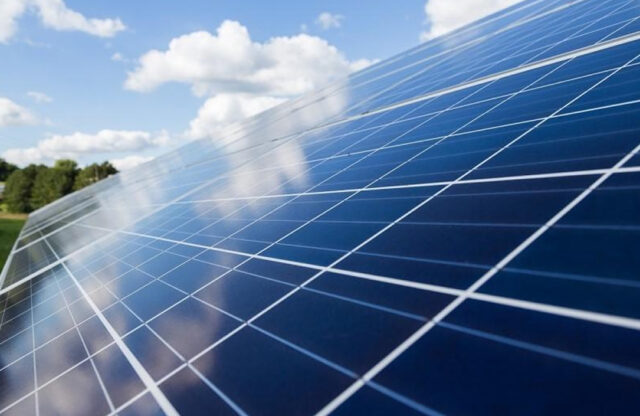
Solar Power Plant

An engineering firm based in Bengaluru, India, has been awarded a contract to build a major new renewable energy power plant on the island of Mauritius.

The project is for an 8MW Solar Photovoltaic (PV) power plant to be constructed at Tamarind Falls, Henrietta (Phase II), Mauritius.

The work is being contracted out via CEB (Green Energy) Co. Ltd., Mauritius, a wholly owned subsidiary of the Government of Mauritius’ Central Electricity Board (CEB).

The company which will be building the plant is the Solar Business Division of Bharat Heavy Electricals Limited (BHEL) of India. The Solar Business Division is based in Bengaluru, India. It and BHEL’s International Operations Division in New Delhi will be jointly coordinating all activities on the project.

BHEL won the contract via a competitive bidding process. The win builds on BHEL’s over four decades of power generation projects spanning 23 countries in Africa and a total of 2.1 GW of total power provided on the continent. BHEL’s recent extensive experience in development and promotion of solar power solutions for over 30 years in multiple forms – on the ground, on rooftops, atop water canals, and floating installations – reportedly also played a role in the award.

The final contract for the project was signed off during a recent visit by the Honorable Union Minister of External Affairs of India to Mauritius.

The Government of India is backing the project financially via its Line of Credit facilities.

Oil Spills in Nigeria Reveal The Ugly, Ruthless Face of Capitalism

0

Africa is a continent that is abundantly blessed with natural resources. But ever since imperialism showed its grim face to the continent through brutal colonial conquests, the control of such natural resources passed from the hands of Africans into those of gigantic European and American multinationals. The picture of natural resources in Africa is more of a curse as the huge profits end up in the pockets of a few, while environmental damage occurs at a dangerous, unprecedented scale.

The extent of environmental damage can be gleaned clearly through oil spills in Nigeria. Where oil was supposed to transform Nigeria into a more egalitarian society with equal access to social services and opportunities, there has been damage only. The people remain disempowered as the privatization of natural resources – which must benefit all citizens – continues unabated. Environmental degradation in Nigeria at the hands of oil multinationals is something that cannot be simply wished away. It is in all senses a matter of the utmost urgency.

In January 2021, a Dutch appeals court held that the Nigerian branch of the oil behemoth Shell was responsible for the damage caused by oil leaks in the Niger Delta. The subsidiary Shell Nigeria was ordered to pay compensation to farmers while the parent Anglo-Dutch company Royal Dutch Shell was told to install equipment (a leak detection system to one pipeline) to prevent further damage.

It was a landmark ruling by the Court of Appeal in the Hague following years of litigation and it frustrated the oil giant as Royal Dutch Shell expressed its “disappointment” with the ruling. It is a ruling which speaks volumes of the willful negligence occasioned by oil companies as they disregard every iota of morals and ethics for the attainment of super-profits.  The environment and its inhabitants have to bear the brunt of such negligence with their lives.

The argument that some of the leaks were due to the actions of saboteurs was considered by the court, but the matter still goes back to the responsibility of Shell – the latter must adequately protect the pipelines from sabotage. The court was not convinced that Shell’s saboteur argument had been proven “beyond a reasonable doubt.” The four farmers who instituted the proceedings argued that the leakages from underground oil pipelines had contaminated land and waterways, destroying their livelihoods and fundamental environmental rights in the process.

The ruling is a victory for the farmers and their communities, but questions of enforcement remain. The exact quantum of damages has not yet been ascertained. The verdict can still be appealed to a higher court. Shell’s oil exploration in the Niger Delta has done nothing to improve the lives of farmers despite the huge profits. People have been robbed “environmentally and economically.” In previous settlements, like the 2005 one, the compensation for villagers by the oil giant was measly.

This goes to reveal the extent of “foreign investment” and leaving the exploitation of natural resources to foreign private capital. To them [private foreign capital], the sanctity of the environment is an obstacle in their quest for profits on the world market. The same oil is not even processed in Nigeria. The conservation of the environment is of secondary importance to huge private capital, and it is seen as expendable (as long as the profits have been processed and acquired).

Oil spills in Nigeria have over the years undermined the livelihoods of people. Soil fertility levels have drastically reduced, water sources have been seriously contaminated, plant life has been destroyed, aquatic life has been destroyed while social infrastructure crumbles. The levels of water, land, and air pollution in the Niger Delta are scandalous. As oil exploration continues, poverty is perpetuated. Take for instance Oloibiri, where crude was first discovered in Nigeria in 1956. Social services are a remote possibility – there are no jobs, roads, schools, and hospitals.

Shell insists it will clean up the environment and maintains its line of defence that oil leakages are caused by sabotages. After they clean sites, vandals return to cause further damage and pollution, their argument as postulated in the press goes. But as one community leader Morris Lamiengha said to AFP, “It’s not completely true all the incidents are caused by sabotage. Some of them are due to equipment failures.” Under Nigerian law, oil firms are obliged to clean up all oil spills regardless of the cause. For some citizens, stopping oil exploration in Nigeria is the only way to put a permanent halt to this never-ending malaise.

It is not only Shell that has raped the Niger Delta. Other oil behemoths such as Exxon Mobil, Eni, Total, and Chevron have extensively damaged the ecosystem of the Niger Delta. It is almost as if the greatest nemesis of these companies is accountability. They desire to extract the benefits of the Earth without paying up for their omissions and commissions, amassing maximum profits at the minimum costs. They privatize the profits while socializing the harmful effects of environmental degradation and pollution. And this contradiction cannot be allowed to sustain.

Fishing settlements have been affected economically by the oil spills as marine life is annihilated. People in the gas-rich Niger Delta bemoan health concerns caused by oil spillages such as breathing problems and skin lesions. The invasion of water hyacinth is another major concern. Water hyacinth thrives in polluted environments and it can completely clog waterways such that navigation by fishing boats is impossible. It deprives sunlight and oxygen to marine organisms. Gas flaring is a common phenomenon, and it releases toxic elements into the atmosphere, aggravating climate change.

Capitalism has reached alarming amoral levels, where the sanctity of the environment and human life is desecrated. Oil spills in Nigeria over these years bear testimony to this. There should be stringent penalties for these companies imposed on them by the Nigerian government. An impediment to this is that a few bourgeois elites within Nigeria’s ruling establishment are colluding with these oil giants to enjoy the private profits of oil while inequality in the country is the order of the day. And the environment collapses.

But perhaps the question of the privatization of natural resources across the whole of Africa is one of ideology. This is a capitalist contradiction that can be resolved by a return to the solid ideologies of Pan-Africanism, where Africa is for Africans, and not for the elite in the global north who rip the continent apart; and where natural resources should inspire attempts towards an egalitarian society. Nigeria’s case is just but a microcosm of the macrocosm.

The Growth of IT Outsourcing in Africa (and Why It Matters)

0

Outsourcing is a fantastic strategy any business can employ to capitalize on the available resources, products, and services of other companies. Most businesses employ the help and knowledge of outsourced experienced professionals instead of hiring their own in-house experts. This helps maximize business performance, decrease company expenditures, and avoid recruiting and hiring cycles.

There are several services that are particularly useful to outsource, such as accounting, legal, and data entry. Information technology (IT) outsourcing is one of the most popular and useful for SME owners to consider. In sum, an IT support team helps your business get up and running or significantly improve current workflow by helping you implement and maintain your IT infrastructure. For example, an IT support company like EC-MSP assists clients in handling network setup and security, disaster recovery, third party support, relocation, and on-call help, just to name a few of the basic services offered.

This article focuses on the wide variety of IT outsourcing services offered, and how companies are now turning to Africa to outsource these IT needs.

Outsourcing to Africa

Africa is being recognized as an excellent outsourcing destination. With huge populations and many educated people ready for work, it’s becoming an increasingly viable option. There are also many young people in Africa compared to other continents; this means a large influx of younger folks will become of working age within the next decade.

Another asset for companies and clients outsourcing to Africa is the general population’s language skills. Many countries in Africa have a first language of either English or French, two of the most universally understood languages across the globe. In addition, Egyptians can speak Arabic and cater to clients based in the Mediterranean. Other commonly spoken languages in certain African countries are German, Spanish, Italian, Portuguese, and Dutch. Some African countries are also geographically close to potential clients in Europe, and that makes them even more attractive as prospective outsourcing partners.

Additionally, companies based in Africa can more readily offer outsourced remote services due to the rise in continental infrastructure. Recently, many African countries have been multiplying their average internet speeds, telecom providers are growing, and there’s greater access to technology across the continent.

When it comes to IT outsourcing, the countries most recognized for this service are South Africa, Kenya, Nigeria, Egypt, and Morocco. It’s predicted that Africa could replace India, China, and Southeast Asian countries for outsourced IT labor.

Specific Country Advantages for Outsourcing

Because employees in Morocco, Algeria, and Tunisia speak French, these countries are popular with France as outsourcing destinations. These countries are also close to France with similar time zones.

Kenya is home to many programmers, and infrastructure is growing to support technological advances. So much so, in fact, that Nairobi is now called “Silicon Savannah.”

Ghana and Mauritius are becoming popular for IT delivery and call centers.

South Africa is most recognized as a very competitive country for outsourcing. With extensive government support for business growth, an increasingly expansive telecommunications network, impeccable employee work ethic, and relatively low cost of labor, it’s quite hard to beat.

However, the most notable are Egypt and South Africa. In 2021, both countries are now considered among the world’s top outsourcing destination countries. Many big-name companies like Microsoft, IBM, and Dell have centers in Egypt. Additionally, both countries’ ‘cybersecurity game’ is top-notch according to global standards.

Top African IT Services: Software Development, Engineering, and Data Labeling

What Egypt and South Africa also have in common is their specialty in software development. Egypt is very successful in this arena – with impressive clients like Vodafone – and often partners with North American clients. However, South Africa truly dominates when it comes to software development; they’ve been ‘in the game’ the longest, and have very well-versed talented professionals available. Johannesburg is recognized as a hub for software development outsourcing companies.

Software engineering has become a major source of economic gain in Africa, as well. In addition, many African countries supply outsourced website and app development, SEO, and data analytics.

Another popular way companies are outsourcing to Africans is with data labeling, an important component of AI technology. It requires human judgment to identify information that may be associated with photos, written text, or videos. The label helps machines learn how to make these identifications for themselves – for example, knowing a photo has a dog in it. Recently, Silicon Valley giants like Microsoft, Google, and Salesforce use “AI training data” provided by Samasource. Samasource outsources to Kenya for data labeling, finding cost-effective labor there due to a low cost of living. For these larger companies, it’s especially beneficial to outsource these data prep tasks that can take up to 80% of labor time at the company itself.

Outsourcing IT Within Africa

Some believe that for Africa to continue gaining a foothold as an offshore outsourcing destination, it should outsource within, i.e. outsourcing IT services to other African businesses. There are several industries that are better prepared and motivated to utilize outsourced IT services within Africa. One is the finance industry, which is currently looking to improve database management without breaking the bank (pun intended!) Another example is the healthcare industry, which is adopting more advanced patient information systems to monitor record-keeping more efficiently and effectively. As health records become digitalized, these clinics and hospitals need aid from IT support firms across the continent.

The Future of African Outsourcing

Outsourcing specialized services simply allows businesses a greater opportunity for growth.

Outsourcing to foreign countries offers the great advantage of higher pay rates which result in more profit for Africans. While this insight has spurred offshore outsourcing for other countries like India or South Asia, it is only beginning to take hold in Africa. European businesses are realizing they can save 40-50% by outsourcing to Africa in comparison to other common outsourcing populations. Because labor is more cost-effective and its economy is growing, Africa is seeing a massive boost in its outsourcing appeal.

African governments also seem to be supporting this shift, recognizing the economic opportunity here. IT outsourcing has become particularly more prominent as infrastructure grows to support it, and African businesses and individuals alike adopt modern technology like cloud computing.

There are still improvements to be made in this area, but we can only imagine increasing growth. To aid this initiative, African governments can put policies in place to support, like important data protection laws. If this happens, we will likely see even more IT outsourcing opportunities arising for Africans on the horizon.

ADB Purchases Steel Bridges to Replace Infrastructure Destroyed in Cyclones

0
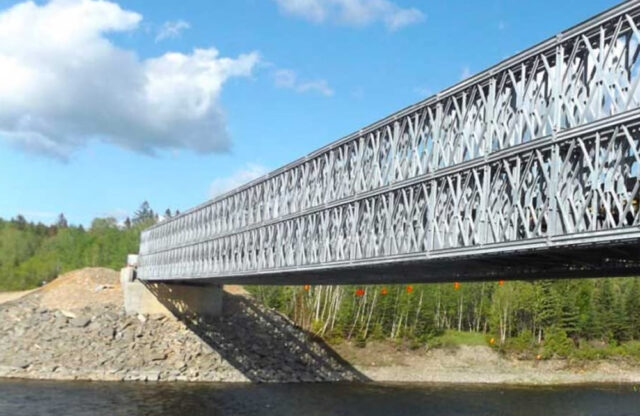
Steel Bridge

The African Development Bank has finalized the purchase of 26 modular steel bridges to replace infrastructure that was destroyed in weather disasters in Mozambique.     

The modular bridges are due to be installed in coming months after the appointment of local contractors. The goal is to restore transport connections to the isolated regions of Manica, Sofala, Nampula and Cabo Delgado. An estimated 500,000 people are expected to benefit.

With a service lifespan of up to 100 years, the bridges will provide a temporary solution in areas that are vulnerable to extreme weather while the government invests in climate-smart permanent bridges.

“We are delighted to be able to deliver this important contribution to Mozambique and respond to the recent climate disasters while investing to building back better,” said Pietro Toigo, the African Development Bank’s country manager for Mozambique. “The Bank will remain at the forefront of the fight to mobilize climate finance for adaptation and contribute to climate justice for the African continent.”

The bridges are funded under the Post Cyclone Idai and Kenneth Emergency Recovery and Resilience Program, which was approved in the wake of these two cyclones that struck Mozambique, Zimbabwe and Malawi in 2019 and affected around 3 million people in the three countries.

The program is being implemented over four years, ending in December 2023, at a total cost of UA 70.86 million ($100 million) of which UA 66.01 million is to be paid by the Bank and the remainder by the affected governments. The funding was provided by the African Development Fund, the concessional arm of the African Development Bank Group.

Central Mozambique has been hit by extreme climate events in recent years. Cyclones Idai and Kenneth passed through the same region of the country in March and April 2019, also affecting neighboring countries. Disaster struck again with Tropical Storm Chalane in December 2020 and Cyclone Eloise in January 2021.

Mozambique is regarded as one of the world’s most climate-stressed countries. In its 2018-2022 Country Strategy Paper for Mozambique, the African Development Bank identifies climate change as a key development challenge, and has directed roughly $120 million to strengthening the country’s climate resilience.

Gold Fields Secures Approval for 40MW Solar Power Plant

0
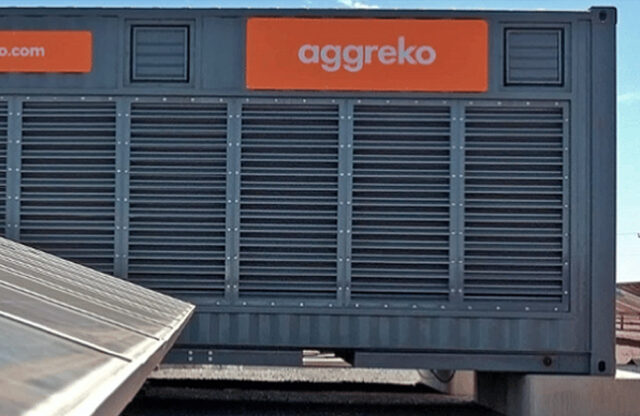
Aggreko

Gold Fields Limited welcomes the electricity generation licence approved by the National Energy Regulator of South Africa (NERSA) for the construction of a 40MW solar power plant at its South Deep mine.

The acting CEO of NERSA now has to authorise the license, a decision that should be forthcoming over the next two weeks. All the regulatory approvals to proceed with the project are then in place.

Gold Fields will update its definitive costings and finalise all the required internal processes to commence the project as soon as possible. The solar plant has the potential to provide around 20% of South Deep’s average electricity consumption.

Says Nick Holland, Gold Fields’ CEO: “The solar power plant will increase the reliability and affordability of power supply to South Deep, ultimately enhancing the long-term sustainability of the mine.

“The approval of this licence sends a strong, positive message to mining companies and their investors, potentially leading to decisions being taken to sustain and grow mining operations in the country, especially in deep-level, underground, marginal mines. Enabling companies to generate their own power also gives Eskom room to address operational issues at its power plants.”

Gold Fields’ energy objectives are based on four pillars – energy must be reliable, available, cost-effective and clean – which promote a shift to self-generation using renewable energy sources. “We are fully committed to making our contribution towards net-zero emissions,” says Holland.

During 2020, Gold Fields successfully implemented solar and wind power plants, backed by battery storage, at two of its Australian mines, Agnew and Granny Smith, and committed to renewables at its other Australian mines, Gruyere and St Ives, as well as the Salares Norte project in Chile when it starts operations in 2023. All its other mines are also reviewing renewable energy options.

Since full commissioning of the Agnew microgrid, renewable electricity averages over 55% of total supply at the mine. During 2020, renewable electricity averaged 8% for the Australia region and 3% of total Group electricity. Once the South Deep project is commissioned, renewable’s contribution to the Group total will rise to approximately 11%.