Home Blog Page 7

Rapid Filling of the Ethiopia Dam Increases the Already Aggravated Water Deficit in Egypt
0
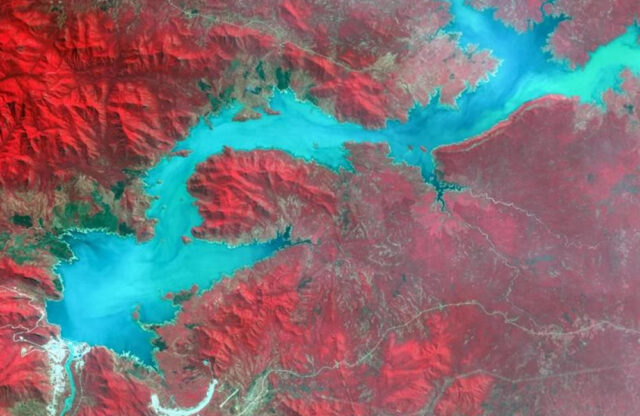
Ethiopia Dam

According to a new study conducted by the University of Southern California, rapid filling of Grand Ethiopian Renaissance Dam along the Blue Nile River could reduce water supplies to downstream Egypt by more than one-third. The situation, if not addressed will cause unemployment rates to reach from 14 to 25% and will cause agricultural sector losses of up to 51 billion dollars.

“Our study forecasts dire water supply impacts downstream, causing what would be the largest water stress dispute in modern human history,” said Essam Heggy, a research scientist at the USC Viterbi School of Engineering and lead author of the study. “Averaging losses from all of the announced filling scenarios, these water shortages could nearly double Egypt’s present water supply deficit and will have dire consequences for Egypt’s economy, employment, migration and food supply.”

Despite the risks, the study offers policy solutions for sustainability that could potentially minimize the downstream impacts and reduce tensions in the Nile River region. For example, the impacts could be partially offset by adjusting operations at the Aswan Dam downstream in southern Egypt, pumping more groundwater, cultivating different kinds of crops and improving irrigation systems.

So far, despite international negotiations, there’s been little progress in the decade-long dispute.

The crux of the controversy is Ethiopia’s $5 billion Grand Ethiopian Renaissance Dam nearing completion at the Nile headwaters. Now in the second phase of filling, it will be the largest hydropower project in Africa and would create a reservoir containing 74 billion cubic meters of water — more than twice the operational capacity of Lake Mead on the Colorado River.

It’s so vast that it will take years to fill, and depending on how long it takes, the water diversions could have devastating impacts downstream. Egypt and Sudan have water rights to the Nile, while Ethiopia was not allocated a quantifiable share. But as water and energy demand grows in the Nile River basin, Ethiopia is asserting its needs for hydropower and irrigated agriculture to promote development.

Some 280 million people in 11 countries in the basin depend on the waterway — a primary source of irrigation for more than 5,000 years. Egypt relies on the Nile for more than 90% of its water. The region’s population could increase by 25% in 30 years, increasing demand at a time when Egypt would expect less water from the Nile. Water rights along the Nile have been in dispute since 1959; today, the conflict threatens to escalate into a war.

The USC study examined various dam filling scenarios and water shortage impacts for Egypt. Based on the short-term filling strategies of 3 to 5 years, presently favored by Ethiopia, the water deficit downstream in Egypt could almost double; 83% of the additional water loss would be due to dam restraining flow and evaporation and 17% lost due to seepage into rocks and sand.

The study helps fill a gap in the dispute by reducing ambiguities about how dam filling scenarios would impact the water budget deficit in Egypt, as well as offering a feasibility index to the different potential solutions. As global warming and aridification accelerates, it underscores the need for more water research in arid lands, which is the core mission of the Arid Climates and Water Research Center at the USC Viterbi School of Engineering.

The study comes amidst a 10-year dispute between Egypt and Ethiopia over water supply on the Nile River. The parties seek an international solution, yet talks led by the U.S. State Department — and joined by the European Union and the United Nations — have resulted in little agreement after four years.

Meanwhile, tensions run high as negotiators try to avert armed conflict. Egypt has vowed not to allow the dam to impede its water supply, and it held joint military maneuvers with Sudan in May. Sudan has since petitioned the United Nations Security Council to hold an emergency session as soon as possible.

The dispute is emblematic of wider disputes over water scarcity as climate change affects developing countries experiencing rapid growth. Disputes along the Mekong, Zambezi and Euphrates-Tigris rivers, among others, show the potential for political instability and conflict.

Tips To Keep Your Employees Happy

0

1. Be A Good Employer

As a good employer, you should set clear expectations for your employees. You should inform them what needs to be done, the deadlines, and where their work is shown once they are done with their responsibilities. Tracktime24 can help you to outline deadlines, tasks, and responsibilities. With these expectations, you should be able to set clear boundaries, demonstrate healthy leadership, and provide the best direction. You need to spell out rules, policies, regulations, and procedures. It’s easy enough to accomplish this by having a proper employee manual in place.

Also, you should try using personal touch and talk to your employees one on one or in a group. Set expectations that are consistent with all your employees. You should include everything including break times, clocking in early, and much more. For instance, is it okay to clock in early and leave early? Are there mandatory breaks? Will your employees’ wages be docked if they take too long with lunch? If you outline more issues and expectations, you will have fewer problems and have productive workers.

2. Help Your Employees Feel Valued

You need to be more encouraging to your employees and give them praise whenever appropriate. You should always thank them by doing a good job and show them that you value them. If something goes wrong or if one of your employees makes a mistake, you shouldn’t punish the person. Instead, you should talk to the person, teach them correct procedures and offer encouragement or further teaching whenever necessary. By punishing your employee, you will be making things worse because your employer is likely going to get angry and bitter. Actually, they might end up sabotaging their work to get back at the company.

If there are further errors after correction, you can evaluate the person to make sure they are a good fit for the job. Remember, as an employer, you have an excellent opportunity to make a difference in the lives of your employees. Take the time to smile at them, ask them about their family, ask about their problems or interests too. If you feel that someone is depressed, you can help them get the necessary therapy. Note that, employees with depression will have higher absenteeism rates, decreased performance and increased health problems.

3. Create A Productive Atmosphere

The physical layout of your office is important if you want to maximize productivity. You need to give your employees enough room to work, provide the right supplies/materials, and a pleasant and comfortable environment. You should have ergonomic equipment that motivates your workers positively to help them with the needs they require for their job. Don’t forget about ecotherapy since it is an important element in a productive environment.
Some of the most important factors to note about ecotherapy include:

  • The environment should have live green plants. People will feel better about themselves, their jobs, and their duties when there is a connection to nature around them. Actually, workers who are near plants or windows will have higher job satisfaction, boss appreciation and coworker cooperation compared to those without. They are also happier. If you can’t have live plants, you can include murals or pictures of outdoor scenes.
  • Make sure your employees are breathing in healthy air. A lot of buildings have indoor air pollution. You should have air purifiers and change your air filters regularly. Also, you should allow your employees to keep their windows open.
  • Utilize real sunlight whenever possible. If there are no windows in the offices or workspaces, you should install full spectrum or light bulbs in all fixtures including the overhead fluorescent lights.
  • Make sure there are healthy food choices in the break room or cafeteria. Healthy food allows people to think better. It also improves their mood and boosts their energy levels. You should have healthy food challenges at work to encourage people to eat better. Make sure your restaurant brings in healthy food occasionally for catered lunches.
  • Allow your employees to personalize their workspace but within reason. Everyone should have a place they can call their own.

Finally, the workplace should be family-friendly. Allow your employees to take time off for their children’s school events. You should also allow them to stay home if their children are sick. They should also take their vacation days. If possible, you should offer child care on the premises or near it. Give your employees at least 13 weeks of maternity leave and paternity leave.

4. Get Everyone Involved

Make sure there is a clear and comprehensive employee manual. It should include procedures on how to handle various scenarios including family emergencies. Ask your employees for their ideas regarding the manual so they can feel like they belong to the company. Allow them to contribute their opinions and voice their concerns. Your company should be able to gain valuable information about products and concerns that will hurt the bottom line.

You should plan for special employee events where the family will be involved such as fairs, picnics, and workshops. If you create more sense of family in the workplace, your employees will become productive. Create a designated charity where people can donate money and time. That way, everyone can see the larger picture. Research shows that people feel better and their lives will improve when they volunteer. It will boost their overall performance too.

Why is Nigeria’s Central Bank Refusing to Let Go of the Naira?

0

Despite calls from the International Monetary Fund and the World Bank for deeper changes and protests from firms, Nigeria maintains regulation of its naira, the national currency. A free-floating naira, according to multilateral agencies, will help the economy survive future shocks. However, Nigerian authorities are concerned that inflation caused by a sudden devaluation would push millions of people into poverty even more than it is today. The central bank governor, Godwin Emefiele, denied the country was pursuing a new foreign exchange management scheme last week, while Vice President Yemi Osinbajo said the government would use a more flexible pace. In order to better analyze the situation, the article will review the major facts about naira and recent monetary policy from the government side.

The pressure on the Naira

The COVID-19 pandemic and oil price slump hit Africa’s largest economy, which relies on oil exports for 90% of its foreign exchange earnings, sending it into its second recession in four years. It barely avoided contraction in the fourth quarter, but a fall in oil sales resulted in a $14 billion balance of payments deficit last year, depleting its foreign reserves. President Muhammadu Buhari’s administration, which took office in 2015, has kept the currency excessively elevated as a source to express national pride.

In order to prevent a major official devaluation after the last oil price collapse in 2016, the Nigerian central bank developed a scheme of multiple exchange rates. The Nigerian Autonomous Foreign Exchange Rate Fixing, for example, is a market-determined rate for buyers and exporters (NAFEX). The government is seeking a $1.5 billion loan from the World Bank to cover a 5.6 trillion naira ($15 billion) budget deficit this year. However, the World Bank expects Nigeria to do more to align the official exchange rate of 381 nairas to the dollar with other prices, such as NAFEX.

The official rate of the naira was devalued twice last year by Nigeria’s central bank, weakening the exchange rate for retail users. After the devaluations, the bank has been increasingly adjusting the currency, restricting dollar access for imports, and introducing stringent forex policies to sustain the naira. Nigeria lifted interest rates to lure buyers after oil prices plummeted in 2014-16. However, after oil prices fell last year and foreign investment fled, the central bank cut treasury bill yields to increase the liquidity of the naira.

It is no surprise that the current economic situation and the national currency rate in Nigeria is a deterrent factor for the businesses and investments. However, surprisingly, it gives better opportunities for those who are involved in the forex market or the crypto-industry as the rate is fluctuating a lot. As a result, we face the increased demand for best online Forex trading brokers in Nigeria has dramatically increased. The dollar is quoted at 465 nairas in 12-month non-deliverable forward contracts, implying that the local currency is reportedly overvalued by about 18 percent.

When the currency is pressured to change, Patrick Curran, senior economist at emerging markets consultancy Tellimer, says it almost guarantees a loss on investment until returns outweigh the overvaluation. Nigeria’s debt is among the lowest-yielding in Africa, which the government is relying on to meet this year’s high funding needs by low-cost domestic borrowing. However, even if the currency problems are overcome, the historically low yields will discourage new inflows, according to Samir Gadio, head of Africa strategy at Standard Chartered Bank. Because of the low returns, foreign investors have dumped local properties.

Due to the current situation, to reduce imports, the central bank has provided low-cost credit to support manufacturing and agriculture. Since the naira plunged sharply on the black market, it also relaxed rules on diaspora remittances in order to increase dollar liquidity. So far, those interventions haven’t helped the economy, but the central bank has effectively sacrificed development on the altar of naira stability. This strategy has struggled to achieve the declared target of low and steady inflation, instead of exacerbating price rises by foreign exchange shortages and market deflation. Analysts predict that without a substantial increase in oil prices, the expense of imports and meeting offshore debt commitments would deplete Nigeria’s dollar reserves even further.

Summing It Up

Finally, to sum up, the situation in many countries in the post covid period is very different from the previous years. However, we cannot blame the current economic conditions in Nigeria only for the covid pandemic as the inflation in the country is going on for several years now. The reason for this might be mentioned to be the wrong planning of the economy or the unexpected events, but the pandemic had definitely influenced the economy as well.

This is due to the fact that even the USD was facing the rate of inflation and it had an effect on every currency, as well as on the naira. Moreover, to overcome the problematic conditions, the national bank has come up with the idea to reduce the import in order to promote the manufacturing and agriculture in the domestic market. In order to reduce the inflation rate in Nigeria, economists and experts believe that the main key will be to increase the oil price which is the major source of export from the country with a lot of benefits.

Boosting Your Real Estate Business

0

Making money from property has always been a good gamble because let’s face it, everyone needs a place to live, but recently, the competition has become vast, and it can be trickier for any given individual to keep their property business booming.

If you run a real estate business and you want to boost your bottom line, here are a few things you might want to do:

1. Boost your SEO

If you own a real estate business in 2021, you have a website, but how well is that website performing for you? If it is not bringing you much traffic, you could be losing out to your competitors, and that is where search engine optimization comes in., You want to make it so that when people Google house for rent near me or property for sale in Africa, for example, your website is one of the first listings that come up. When that happens, you are more likely to get that customer’s business than your competitors are. That is why you either need to learn the latest SEO techniques or have an SEO agency optimize your online presence for you. Your property may be offline, but your marketing is not.

2. Get out and get networking

Networking is great for boosting pretty much any business you can think of, but it is particularly good at helping entrepreneurs to grow real estate businesses. Why? Because real estate is an expensive business, and that means that clients only want to deal with people they trust. When they get to know you, and you show them just how trustworthy you are, they will be far more likely to rent an office from you or put in an offer for that property you just flipped and business will start to boom. So, start attending those conferences and trade events and make sure everyone knows who you are and what you do.

3. Diversify

You may have started out by buying properties to rent or purchasing run-down houses to flip and sell, but if you want to stay relevant, and profitable in 2021, you may need to diversify. For instance, you could get into the peer-to-peer lending market, whereby you lend individuals some of the money they need to invest in their own real estate, which they will then pay back plus interest, or you could invest in a real estate investment trust with a bunch of other entrepreneurs looking for a return – the options, when it comes to real estate – are endless.

4. Raise your rents

You need to be fair about this, but if you haven’t raised your rents in a while. See if they are still in line with the average. If they are a little low, increasing them is an easy way to boost your income, and tenants will mostly be fine with this if the rents are fair and you’re taking good care of the property.

5. Look to new markets

If you have a number of properties at your disposal, why not look at new ways of exploiting them. For example, if you’re renting out homes in a beauty spot to long-term tenants, you could make more money by turning them into holiday homes or if you’re making money by leasing office space, maybe you could earn more by converting them into apartments; it all depends on where your real estate is locate and what is hot at the minute. One thing’s for sure, if you stay the same, you will have a struggle to boost your business in the long-term, so always be on the lookout for new opportunities.

6. Invest overseas

Overseas property is often more affordable than property in the local area, so it can make sense to focus your real estate investments there but before you do so, be sure to check out the local rules and regulations because many countries put limits on what foreign nationals are able to do with property, and the last thing you want is to buy a property only for you not to be able to make any money out of it or even spend very much time there at all.

Real estate is a pretty sound investment as it goes, which is why so many people choose it as a business That being said, you cannot afford to rest on your laurels, and if you want to make as much money in your industry as possible, you need to be always looking at a new angle, like some of the ideas above.

Safic-Alcan Announces Extension of Distribution Agreement With PMC Organometallix

0

Safic-Alcan, a global specialty chemicals distributor headquartered in Paris La-Défense (France), announced the extension of its distribution agreement with PMC Organometallix Inc. to the African continent.

PMC Organometallix, Inc., a wholly owned subsidiary of PMC Group, N.A., Inc. has expanded its distribution agreement with Safic-Alcan to include the African continent. Effective immediately, Safic-Alcan will serve as an authorized distributor of PMC Organometallix’s FASCAT® catalysts and fine chemicals.

FASCAT® catalysts are inorganic and organometallic tin compounds providing optimal conversion and curing characteristics – making these organometallic materials essential in a wide variety of applications. FASCAT® catalysts are used in the manufacture of synthetic lubricants, monomeric and polymeric ester synthesis, automotive e-coat, crosslinking of siloxanes, urethanes and chemical intermediates.

“Building on our successful partnership with Safic-Alcan in continental Europe, we are pleased to extend our collaboration with Safic-Alcan to the African continent. Expanding our catalyst sales to the African market stems from our aim to grow our FASCAT® business in new markets in EMEA region where Safic-Alcan’s local presence, network and resources can have a considerable contribution to our growth,” stated Yanal Shekem, Regional Sales Director, EMEA at PMC.

“Our companies have built a successful cooperation in Europe, and we are excited to further strengthen this existing partnership and write with PMC Organometallix a new chapter in Africa. We are confident FASCAT® catalysts will allow our technical sales teams to enhance our regional product offering and better serve our African customers,” stated Jean-Marie Schmuck, Business Development Director Coatings and Construction at Safic-Alcan.

Kone to Equip the Tallest Building in Africa

0
Iconic Tower Egypt

KONE Corporation has won an order to deliver and install 60 custom-made elevators and escalators for a building known as Iconic Tower. Situated in Egypt’s New Administrative Capital, the tower is set to become the tallest building in the entire African continent.    

Egypt’s new administrative and financial capital is under construction just outside Cairo and is being designed with smart technologies as a focal point. Scheduled to be opened by the end of this year, it will cater for over 6 million people. Iconic Tower will be located within the city’s Central Business District (CBD), which is planned to include a total of 20 skyscrapers.

The 80-storey tower will rise to a height of 385 meters, including office, hotel and residential amenities. The main contractor for the building – and several other projects in the new capital city – is China State Construction Engineering Corporation (CSCEC), one of the world’s leading construction groups.   KONE’s delivery includes 36 KONE MiniSpace™ elevators, 13 KONE MonoSpace® elevators, seven KONE TranSys™ freight elevators and four KONE TransitMaster™ 120 escalators, all with finishes specially designed for this building. In addition, the KONE Destination Control System will help reduce waiting and traveling times and the KONE E-Link™ service will enable monitoring equipment performance in real time, from a single location onsite. The contract also includes maintenance services.    “Iconic Tower will become a significant landmark not only in the New Administrative Capital, but across Egypt and Africa. We are truly honored to provide our high-rise expertise and our people flow solutions for this development and together with our customers help the city set new standards for smart and sustainable buildings,” says Thomas Hinnerskov, Executive Vice President for KONE South Europe, Middle East and Africa.    The building is expected to be completed in February 2023 and it is being developed by New Urban Communities Authority. The main architect is Dar Al-Handasah.

USTDA, InfraCredit Announce Partnership to Bring U.S. Infrastructure Projects to Nigeria

0

The U.S. Trade and Development Agency signed a Memorandum of Understanding with Nigerian-based financial guarantor Infrastructure Credit Guarantee Company to bring high-quality U.S. infrastructure solutions to Nigeria.

“The foundation of any strong partnership consists of trust, mutual respect and collective prosperity. These principles are central to our relationship with InfraCredit,” said Enoh T. Ebong, USTDA’s Acting Director. “USTDA’s three decades of project preparation expertise is an excellent complement to InfraCredit’s financial guarantees.

Under our partnership, we will leverage each other’s resources to overcome many of the constraints that inhibit the bankability of infrastructure investments in Nigeria.”

Under the terms of the MOU, USTDA and InfraCredit will work together to identify infrastructure projects that could benefit from project preparation funding and subsequent credit enhancements. This collaboration will facilitate the development of bankable infrastructure projects highlighting U.S.-based solutions and bring them to market for InfraCredit’s investment-catalyzing guarantees. The sectors of cooperation highlighted in the MOU include clean energy, information and communications technology, transportation, agribusiness and healthcare infrastructure.

“USTDA’s project preparation and partnership-building activities have supported InfraCredit in executing well-structured, bankable infrastructure projects that can access long term domestic institutional investments in Nigeria’s debt capital market. We believe this relationship is catalytic in strengthening local capacities and promoting domestic resource mobilization for infrastructure finance in Nigeria” said Chinua Azubike, Chief Executive Officer of InfraCredit

Currently, USTDA and InfraCredit are collaborating with Nigeria’s Hotspot Network Limited on the deployment of up to 2,000 cellular base stations that would expand digital connectivity in rural Nigeria. A USTDA-funded feasibility study on the project is currently underway for InfraCredit’s financial guarantee.

Since 1992, USTDA has funded nearly 80 project preparation activities in Nigeria.

15 Nation Group in West Africa to Launch Joint Currency

0
Cedero Ecowas

The Economic Community of West African States (ECOWAS) commission announced on June 19 that the nations of the group will be converting to a single currency for their region by 2027.

The decision was announced by Jean-Claude Kassi Brou, president of the ECOWAS Commission, during a live news conference held as the group’s summit in Ghana completed on Saturday.

ECOWAS is comprised of the following nations: Benin, Burkina Faso, Cabo Verde, Côte d’Ivoire, The Gambia, Ghana, Guinea, Guinea Bissau, Liberia, Mali, Niger, Nigeria, Senegal, Sierra Leone, and Togo.

The creation of the single currency for ECOWAS is intended to ease trade barriers between the member states, strengthen their economies through the creation of a currency all the countries support, and to foster overall economic growth.

The plan for the unified currency was created several years ago but its implementation was put on hold after the coronavirus turned the world upside down from 2020 to the present.

“Due to the shock of the pandemic, the heads of state had decided to suspend the implementation of the convergence pact in 2020-2021” Brou said.

With the pressures of the pandemic expected to ease later this year or into 2022, Brou said the group now has “a new road map and a new convergence pact” which will conclude with the launch of the new currency in 2027.

The name of the new currency will be the Eco.

The transition to the new currency could be complicated.

The dominant economy in West Africa by far is that of Nigeria. It uses a balanced float methodology to keep its existing currency, the Naira, at a stable exchange rate.

Eight others in the group, headed by Côte d’Ivoire, a major cocoa producer and headquarters for the powerful multilateral African Development Bank, have tied their currency for some time to the France-supported CFA franc. The CFA, known in this part of the region as the West African Central African currency, is guaranteed by the French treasury and has a constant exchange rate with the Euro.

The remaining other 6 nations in ECOWAS manage their currencies separately.

Pulling this together in a unified whole will take some time, which is why the launch of the ECO is still six years away.

Zamil Steel Egypt Enters Into Contract with China Railway Construction Engineering Group

0

Zamil Steel Buildings Co., Egypt, a producer and supplier of pre-engineered steel buildings, steel structures, and other steel products, has been awarded a contract by China Railway Construction Engineering Group for the Light Rail Transit project in Cairo, Egypt.

Under the terms of the contract, Zamil Steel Egypt will supply custom-made steel structures for the overhead catenary system and all supporting units for the mechanical, electrical, and plumbing works, using around 2,120 metric tons of steel, for the light rail transit (LRT) project, which will connect El Salam City and the New Administrative Capital through 10th of Ramadan City in Egypt.

The 90-kilometer high-speed rail line will enter passenger service in October 2021, with a capacity of 500,000 commuters per day. It guarantees speedy transportation between Cairo and the new cities (Obour – Mostakbal – Shorouk – New Heliopolis – Badr – Industrial Zone and the 10th of Ramadan – the New Administrative Capital) with a total of 16 stations.

Mapping Africa’s Leap into becoming one of World Betting’s Most Exciting Markets

0

These days, the world of betting is bigger and better than it ever has been before. Betting operators are constantly on the lookout to develop their products in ways that will ensure their users are satisfied beyond measure, which is certainly paying off, especially across Africa.

Africa can be thought of as world betting’s new and exciting prospect. Many operators have turned their attention to the sprawling continent, as it holds so much promise from a betting perspective.

Historically, it has been European countries that have received the most attention from online betting operators, as nations like Italy, Sweden, Germany and the UK each have rich betting cultures that have come to shoulder the sporting events that are so widely supported.

With rich betting cultures often come clear and easy to follow regulations that are well laid out for operators to act upon. This is part of the reason European countries have been at the forefront of the iGaming revolution.

While many big name betting operators have now turned their attention to Africa, it is important to note that there have been plenty of influential betting sites that have come from the continent, each offering their own unique products to their local markets.

For example, SportPesa in Kenya, Bet9ja in Nigeria, and Hollywoodbets in South Africa each offer their respective markets a betting suite that is targeted to meeting the needs of locals from a betting perspective, something that outside international operators can only achieve in a limited capacity.

While the rise of operators is one of the reasons that can be used to explain the betting boom in Africa, certain features of the continent itself makes it an absolute prime destination for those looking to make a couple of wagers.

For one, based on census data, inhabitants of Africa have an average age of 19.7. While potentially surprising information, it points directly to the fact that betting has seen a considerable upturn throughout the continent.

Younger people are simply more likely to engage in risk taking behaviour, such as betting. The risk in betting is what makes it so thrilling, and why it is often younger people, between the ages of 18 and 30 who generally engage more in the practice.

What’s more is that younger people are more influenced by sporting heroes than older generations. Generally, sportsmen have the ability to almost cast spells on younger people, as youth tend to idolise these sporting stars. This develops a vested interest in the sport, which paves the way for wager making.

Another factor that can be linked to Africa’s subsequent betting boom is the fact that mobile smartphones have managed to penetrate the market. Nowadays, betting online does not require laptops or other elaborate devices, but rather only requires a smartphone and an internet connection.

What’s clear is that betting in Africa presents an incredibly exciting prospect for everyone from operators, affiliates, and all those involved in the iGaming industry. We have only seen the tip of the iceberg, as more and more nations begin to emerge as giants of the industry.