Home Blog Page 4

Department of Labor Awards $4.5M Grant To Combat Child Labor in Mica Mining in Madagascar

0
Mica Mining

The U.S. Department of Labor announced the award of a $4.5 million cooperative agreement with Pact Inc., an international nonprofit organization, to combat child labor in mica-producing communities in Madagascar.

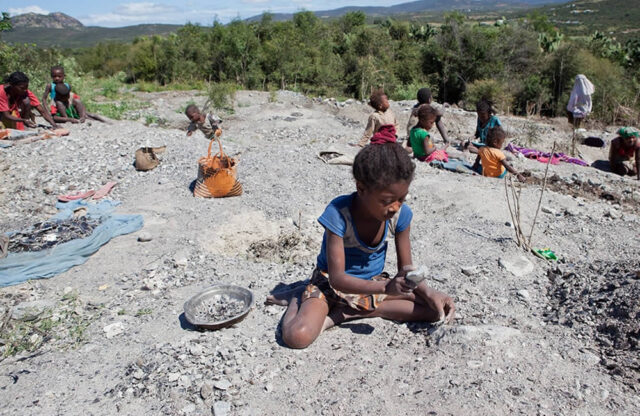
In the Anôsy region where mica mining occurs – where the poverty rate is 96.7 percent – an ongoing drought has contributed to a near famine. The coronavirus pandemic and the drought have devastated the region’s agricultural harvests and increased the cost of staple foods. The price of mica and the incomes of the families who mine it have also decreased as a result of the pandemic. Amid these dire conditions, Malagasy families feel that they have no choice but to send their children to work in and around the mines to buy food and fulfill basic needs.

An estimated 10,000 children endure unsafe working conditions currently in Madagascar’s informal mica industry. Typically, boys work underground digging to extract mica ore; some have suffocated to death in poorly ventilated mines. Above ground, girls haul and process mica and face frequent pressure from mica collectors to engage in sex for money. These children often develop respiratory illnesses from mica dust particles. All of this happens in a country where inadequate labor laws are poorly enforced.

Companies in China buy Madagascar’s mica for use in manufacturing a variety of products, including automobiles, cosmetics and electronics, many of which find their way to U.S. consumers.

Administered by the Bureau of International Labor Affairs, Pact Inc.’s Madagascar Shines project will:

  • Improve resiliency of mining families in mica-producing communities by providing approximately 1,800 children with educational services and 2,200 adults with livelihood services.
  • Increase the capacity of government officials to coordinate the child protection measures in the mica supply chain, including establishing a code of conduct for mica mining.
  • Support the efforts of civil society organizations and the media to improve public awareness around the issue of child labor in the mica supply chain.
  • Promote the formalization of the mica sector and design a traceability system, fostering a sustainable mining industry that does not use child labor.

Hitachi Energy to Connect Gulf of Suez Wind Farm with Egypt’s National Power Grid

0
Hitach Energy

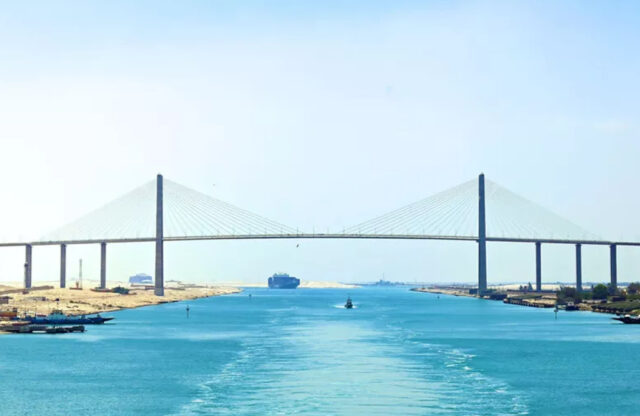
Hitachi Energy is delivering to Vestas, a global supplier of wind turbines1 and engineering, procurement and construction (EPC) contractor, a grid integration solution to connect the 250 megawatt Gulf of Suez 1 wind farm in Egypt, owned by the New and Renewable Energy Authority (NREA), to the national power grid. 

The solution will collect all the power generated by the 70 Vestas wind turbines and feed it safely and reliably into the high-voltage power grid for transmission across the country, helping to advance Egypt’s energy system to be more sustainable, flexible and secure. It will ensure the power is transferred constantly at the correct voltage and frequency, even under variable wind conditions when the power generated fluctuates.

Gulf of Suez 1 is part of the Egyptian government’s plan to produce 20 percent of its installed capacity from renewable sources by 2022 and 42 percent by 2035. The wind farm will generate around 1,000 gigawatt-hours of clean energy and avoid the emission of 560,000 tons of carbon dioxide a year, while producing enough renewable energy to power almost 300,000 Egyptian homes.

“We are proud to be contributing to Egypt’s efforts to transition to renewable energy,” says Niklas Persson, Managing Director of Hitachi Energy’s Grid Integration business. “Our grid integration and power quality solutions and expertise ensure variable energy sources like wind power are transferred smoothly and reliably into national power transmission systems, advancing a sustainable energy future for all.”

Hitachi Energy worked closely with Vestas to determine the most safe and reliable grid integration solution for the plant. The solution includes a gas-insulated substation of modular pre-assembled and pre-tested design for fast and simple installation.

Hitachi Energy is one of the world’s leading grid integrators of renewable energy, typically connecting around 2 gigawatts of wind power alone to power transmission systems annually. Our expertise and scope of supply covers the complete value chain from power consulting and system studies to design and engineering, project management, manufacture, installation, commissioning and service – all in compliance with grid code regulations and local requirements and standards.

Gulf of Suez 1 is one of several wind farms either in operation or under development in the Gulf of Suez, where wind speeds are ideal.

Guide to Renting a Car in Kenya

0
Kenya Car Travel

The process of renting a car in Kenya is sometimes expensive, time-consuming and full of hidden fees and surprising requirements. Shopping for the best price and ensuring you understand the rules and regulations before and after you use the car will help.

Below is how a client can rent a car in Kenya

  1. Make a Reservation

Many major rental car agencies gladly accept walk-up customers, but companies sometimes rent out their entire inventory and are left unable to service new customers. To ensure that a vehicle is available to rent, place a reservation for the rental using the company’s website as far ahead of time as possible. As an added bonus, customers with reservations are usually charged a lower rate than walk-up customers.

Compare prices online

Compare their rates for their most basic economy-size cars. Find the best deal for your location and the period of time in which you’ll need a rental.

Before you decide on an agency, look into and/or ask about their additional fees. These fees can change what agency provides the best deal all things considered. Some common fees include:

  • Underage-driver fees: Additional charge for a driver under 25.
  • Airport surcharges: Additional charge for picking up a rental at the airport.
  • Mileage fees: Additional charges for going over a certain miles per day cap.
  • Additional driver fees: Additional charges for having more than one person drive the rental.

Consider the size you will need. You can rent a car in any size, from compact to SUV.

Keep in mind that the definitions of terms like “compact” and “luxury-sized” can vary. Most agency websites will include examples of models or how many passengers can fit in each car size.

Add features that you will need with your rental car. These might include a GPS system or car seats for the kids. These additions can be factored in while you’re going through the online rental process. Different car models will have different options, so keep that in mind as you choose a car size and model.

  1. Present Payment and License to Rental Agency

Upon arriving at the car rental location, the agent behind the desk will verify the reservation and request two items: a valid driver’s license and a major credit card. The driver’s license is used to validate the renter’s identification, license status, age, and address (in case the car is not returned), and the credit card is generally charged a “hold” in the amount of the rental (rental companies use this hold to ensure they will be paid when the car is returned).

  1. Review the Rental Agreement

Rental agreements vary from company to company, and should be carefully reviewed before taking the keys to the rental car. Verify how many miles are allowed per day many, but not all, companies offer unlimited mileage allowance and other nuances, such as when the car must be returned, any grace periods, and additional fees that may be incurred.

  1. Review the Damage Insurance

A part of the contract that requires special attention is the loss and damage insurance. Most companies offer special insurance at the time of rental that pays for repair of any damage, though this coverage often comes at a hefty charge. In many cases, the credit card used to reserve and rent the vehicle offers similar coverages as a free benefit. Before accepting or declining the car rental agency’s insurance, be certain to become familiar with the free benefits offered by the credit card cardholder agreement. You should also check with your own car insurance company, as many policies afford you the same protection on a rental car as you have on your own car.

  1. Accept the Keys

With the contract signed, the car rental agent will offer keys to the rental car. Many companies simply assign a vehicle at random based on the class of car reserved, though some companies allow their customers to select a car from a designated portion of the lot. Before you drive off the lot, quickly review the car, both inside and out. If the gas tank isn’t full, if you see somebody damage, if something isn’t working properly, be sure to inform the rental agent. Otherwise, you might be held responsible for those problems once you return the car. If everything’s in order, off you go. 

  1. Check the car carefully before you leave the car lot

You want to make sure any scratches, dents or problems are documented so you are not held liable for these when you return the car. Be thorough here. You want to look for problems both big and small. Make sure the windows work properly. Make sure there’s no loose part, dysfunctional lights, leaks, or anything that could be considered damage. If there is, record and take a picture or video of it.

  1. Check the policy before crossing state or national boundaries.

Be sure to tell the rental company if you’re crossing a country border in the rental. You’ll need special insurances that can be purchased. Depending on the agency, there may be additional fees for crossing state lines as well.

  1. Returning time

Fill the car with gas

Some rental car contracts give you the option of returning the car without a full tank of gas, but you will be charged extra. Try to find a gas station a few miles from the drop off location. But be aware that the gas stations that are closest to the rental location will likely have the highest prices.

Clean out the inside of the car

Do not leave any trash behind for the agency to clean out, or you will be charged. Make sure you check both the front and back seats thoroughly and remove all of your possessions before you leave the car. Check under all the seats for any items that might have rolled under there.

Bring the car back to the rental agency at the agreed upon date and time. Do not be late; some agencies will charge you for another full day if you bring the car back even 30 minutes later than you said you would. Check with the agency beforehand to find out their exact policy on late returns.

Also be aware that some agencies will even charge a fee for returning the car too early. Once again, it’s best to ask for their policy regarding this sometime before the time comes to return the car.

Hand over the keys and wait for your receipt. If you want to pay with a different card or with cash, make sure they take the charge off the card you initially used.

Conclusion

Renting a car in Kenya for a driver guided safari or self-drive offers the most ideal solution to all visitors’ travel plans. However, the process to secure a rental in Kenya can get a bit complicated especially when it comes to finding the right car hire service provider for a particular car. Contact www.kenyacarrental.com for better car rental services in Kenya.

United States and Nigeria Sign Cultural Property Agreement

0
US Nigeria Agreement

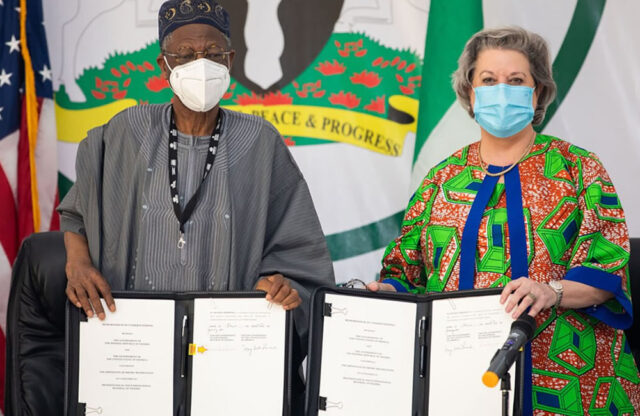
U.S. Ambassador to Nigeria Mary Beth Leonard and Minister of Information and Culture Lai Mohammed signed a bilateral cultural property agreement on January 20, 2022, in a ceremony in Abuja attended by members of the Nigerian government and the U.S. Mission.

This agreement will enhance our strong cooperation in preserving Nigerian cultural sites and museum collections through the U.S. Ambassadors Fund for Cultural Preservation. Over the past decade, the United States has partnered with the Nigerian government and state institutions to fund projects totaling over a million dollars to strengthen Nigeria’s cultural heritage management capacity.

This agreement solidifies our shared commitment to combat looting and trafficking of precious cultural property by enabling the United States to impose import restrictions on certain categories of Nigerian archaeological and ethnological material and establishes a process for the return of trafficked cultural objects, which will reduce the incentive to loot sites in Nigeria. The agreement will also foster interchange between U.S. and Nigerian cultural institutions with the aim of increasing public awareness of Nigeria’s rich and diverse cultural heritage.

The United States is unwavering in its commitment to protect and preserve cultural heritage around the world, and to prevent trafficking, which is often used to fund terrorist and criminal networks. The cultural property agreement was negotiated by the State Department under the U.S. law implementing the 1970 UNESCO Convention on the Means of Prohibiting and Preventing the Illicit Import, Export and Transfer of Ownership of Cultural Property. The United States has signed cultural property agreements with several countries in the region, including Egypt, Libya, Algeria, Mali, and Morocco.

USTDA Promotes Clean Energy Access for Nigerian Companies

0
Minigrid

The U.S. Trade and Development Agency announced it has awarded a grant to Nigeria’s Daybreak Power Solutions Limited, a subsidiary of African renewable energy company Daystar Power Group, for a feasibility study to help optimize clean energy supply to business entities in the country.

Daybreak Power Solutions selected Colorado-based Rocky Mountain Institute (RMI) to carry out the study.

“USTDA has long worked with our partners in Nigeria to help expand energy access and advance climate resilience,” said Ambassador Vinai Thummalapally (ret.), USTDA’s Acting Director. “Our support for this project will offer Nigerian businesses a clean energy solution for their power needs and facilitate partnerships with U.S. companies that supply high-quality infrastructure solutions.”

USTDA’s study will assist Daybreak Power Solutions with developing 20 solar-plus-storage minigrids that will supply power to Nigeria’s grid when it is operational and provide power directly to Nigerian businesses when the grid is down. The minigrids will provide a clean and reliable alternative to diesel back-up generators and produce up to 40 megawatts of solar power. The study will develop the technical designs of the minigrids, select the sites for deployment, and finalize the project’s business model.

“We are thrilled to partner with RMI and USTDA on this landmark project to explore win-win opportunities for industrial manufacturers, solar energy providers, and distribution companies in Nigeria,” said Jasper Graf von Hardenberg, CEO and Co-Founder of Daystar Power Group.

This activity supports USTDA’s Global Partnership for Climate-Smart Infrastructure, which connects U.S. industry to major clean energy and transportation infrastructure projects in emerging markets. It also supports the U.S. government’s Power Africa and Prosper Africa initiatives.

DR Congo to Build Port to Support Mineral Import/Export Industry

0
DRC Signing Ceremony for Port of Banana

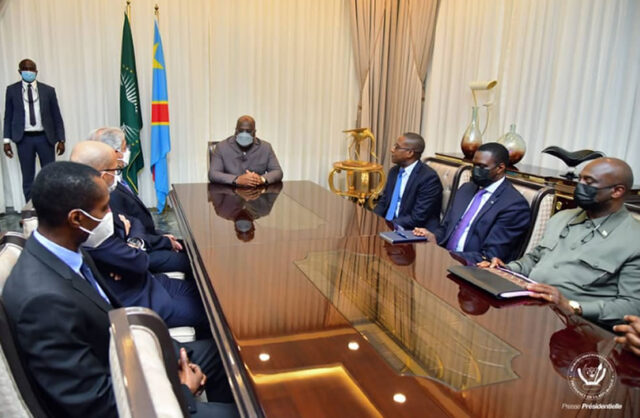
DP World of Dubai, United Arab Emirates, just announced it had been awarded the contract to construct an important new seaport for the Democratic Republic of the Congo (DRC) starting in 2022.

The project, which is estimated to cost US $1 billion, will be built on the Democratic Republic of the Congo town of Banana.

The new Banana Port will be the country’s first deep-sea port. It will replace neighboring ports at Tanzania’s Dar es Salaam and Kenya’s Mombasa facilities. Having the capability to manage the whole operation is key to expanding the DRC’s booming exports of copper, cobalt, tin, tungsten, and tantalum.

Most of those exports are shipped to China. A sizeable percentage of the rarest of those materials are guaranteed for shipment to China under previously negotiated agreements with Beijing.

As a first step in the construction process, DP world will be building a 2,000-foot-long quay, along with dredging a clear port area for vessels drawing 60 feet in depth. At completion it will be capable of handling the deepest-draw container vessels used anywhere in the world.

At completion, the port will include a 75-acre yard to store containers for both outbound and inbound use, plus facilities for managing inspections and other operations needs at the facility.

The finished Banana Port will be capable of shipping approximately 450,000 TEU per year.

Under the terms of the agreement, DP World will reserve exclusive rights to develop and manage the concession for the port for a 30-year term. Ownership of the port will be split 70% for DP World and 30% for the DRC government.

“This agreement represents the vision to provide DRC with a modern, world-class port and logistics infrastructure to support the tremendous opportunities for trade in this country. The port will enhance the country’s export capabilities and give it affordable access to international markets,” said DP World CEO Sultan Ahmed bin Sulayem on the announcement of the contract.

The contract to build the port was signed directly between the DRC government and DP World.

Holcim Unveils Africa’s Largest 3D-Printed Affordable Housing Project

0

Holcim announces Africa’s largest 3D-printed affordable housing project in Kenya, developed by its joint venture 14Trees in partnership with CDC Group, the UK’s development finance institution.

Building on Holcim’s world-first 3D-printed school in Malawi, the Mvule Gardens housing complex is scaling up affordable housing in Kenya to be part of bridging the country’s infrastructure gap.

This project was made possible by Holcim’s proprietary ink, TectorPrint, giving the walls structural function to bear the load of the building. This breakthrough will accelerate the scale-up of 3D printing for affordable housing.

Jan Jenisch, CEO Holcim: “We are excited to be building one of the world’s largest 3D-printed affordable housing projects in Kenya. With today’s rapid urbanization, over three billion people are expected to need affordable housing by 2030. This issue is most acute in Africa, with countries like Kenya already facing an estimated shortage of two million houses. By deploying 3D printing, we can address this infrastructure gap at scale to increase living standards for all.”

Tenbite Ermias, CDC Africa Managing Director: “14Trees is pioneering the use of leading edge technology to address one of Africa’s most pressing development needs – affordable housing – to create life-changing infrastructure for whole communities.”

The Mvule Gardens in Kilifi, Kenya, is one of the largest 3D-printed affordable housing projects in the world. It is part of the Green Heart of Kenya regenerative ecosystem, a model for inclusive and climate-resilient cities. Its advanced sustainability profile won an IFC-EDGE Advanced sustainable design certification, which recognizes resource-efficient and zero-carbon buildings.

Holcim’s joint venture 14Trees is dedicated to addressing Africa’s shortage of affordable housing with 3D printing and smart design while creating skilled local jobs. As proven in Malawi, the technique can reduce the environmental footprint of a house by more than 50% compared to conventional methods, while the walls can be built at record speed in just 12 hours compared to almost four days with conventional building techniques.

MASS Design Group, an American and African-based architecture practice, designed the Mvule Gardens to advance affordable, sustainable and replicable housing units adapted to Kenya’s environment.

MCC and Africa50 sign MOU to Advance a New Global Infrastructure Platform

0

The Millennium Challenge Corporation (MCC) and Africa50 signed a Memorandum of Understanding (MOU) to initiate a new phase in the launch of the Millennium Impact for Infrastructure Accelerator (MIIA) Africa.

The new MIIA-Africa platform is designed to spur and attract investments in Africa for bankable infrastructure deals with measurable social and economic impacts. To do so, MIIA-Africa will support project preparation, tackling a major constraint to unlocking the available pools of capital for the benefit of infrastructure development in Africa. Investments through MIIA-Africa will cover projects across sectors such as water and sanitation, agriculture, health, education, transportation, power, and telecommunications.

Design work for MIIA-Africa has now been completed and MCC and Africa50 are actively soliciting infrastructure projects that have the potential to become part of the project pipeline.

The MIIA team will deepen its engagement with the private sector by issuing requests for information on potential MIIA projects.

“MCC is pleased to advance the MIIA-Africa collaboration, leveraging the agency’s track record in financing and delivering impactful infrastructure projects in Africa, all well-aligned with the goals of the Build Back Better World initiative” said MCC Acting CEO Mahmoud Bah. “Africa50’s reach and impact on the continent ensures this collaborative effort has the potential to identify projects with substantial economic opportunities on the continent.”

Africa50 CEO Alain Ebobissé added “Africa50 is very pleased to reinforce its existing partnership with MCC. This important new milestone in the MIIA-Africa programme will help increase the pipeline of bankable projects and attract further capital into African infrastructure. Africa50 will contribute its strong expertise in project development and finance to accelerate the delivery of such projects and support the continent’s sustainable economic growth.”

MIIA-Africa is one of MCC’s innovative finance tools to mobilize private capital to maximize the impact of highly developmental projects that spur sustainable and inclusive economic growth and reduce poverty. As an independent U.S. government agency, MCC works around the world with the best-governed developing countries, providing grant funding to unlock economic potential. About two-thirds of the agency’s portfolio is in Africa.

Africa50 is an infrastructure investment platform that contributes to Africa’s growth by developing and investing in bankable infrastructure projects, catalyzing public sector capital, and mobilizing private sector funding, with differentiated financial returns and impact. Africa50 currently has 31 shareholders, comprised of 28 African countries, the African Development Bank, the Central Bank of West African States (BCEAO), and Bank Al-Maghrib.

$14M Research Grant Seeks to Transform Western Africa Rice Crops to Withstand the Climate Crisis

0
Namibia Desert

A $14 million grant from the Adaptation Fund, an international capital source focusing on helping the world adapt to the climate crisis, is about to help a major part of Africa adapt some of its key food crops for the much hotter world of the future and its weather extremes of drought and flooding.

The contract award which will make this possible is a four-year grant awarded to Cornell University and its Climate Resilient Farming Systems program. It will be focused on adapting the current rice crops to be more resilient to global heating and increase production of the staple staple crop for smallholder rice farmers across 13 West African countries.

The Scaling up Climate Resilient Rice Production in West Africa (RICOWAS) project’s goal is to apply principles of the novel Climate-Resilient Rice Production (CRRP) approach, in order to increase rice productivity, create rice self-sufficiency, and adapt to climate change in West Africa.

The Sahara and Sahel Observatory will oversee the overall project, while the Rice Regional Center of Specialization, hosted by the Institute of Rural Economy in Mali, will manage it on a regional level. Working in partnership with the rice center, the Cornell program will provide technical assistance, scientific insights and support.

RICOWAS represents a follow-up to a World Bank project that was implemented from 2014 to 2016 and continues this work across Benin, Burkina Faso, Côte d’Ivoire, Gambia, Ghana, Guinea, Liberia, Mali, Niger, Nigeria, Senegal, Sierra Leone and Togo through national institutions in each country.

“Climate change doesn’t stop at the national borders,” said Erika Styger, who leads the Climate Resilient Farming Systems program in the Department of Global Development in the College of Agriculture and Life Sciences and is a principal investigator of RICOWAS. The project’s teams will coordinate across diverse governments, language barriers, and climate and agroecological zones to collaborate across the region, Styger said. Togo, for example, contains three climate zones.

“By creating an enabling framework to work and exchange [across these countries] we can create a regional community of practice and reinforce each other’s capacities,” she said.

The CRRP approach is based on the System of Rice Intensification (SRI) methodology in combination with location-specific Sustainable Land and Water Management (SLWM) practices, and if indicated with Integrated Pest (and disease) Management (IPM).

SRI is based on an agronomic framework that includes: encouraging early and healthy plant establishment; minimizing competition among plants; building up fertile soils rich with organic matter and beneficial soil biota; and carefully managing water to avoid flooding and water stress. By applying these principles together, rice plants are healthier and more productive with deeper, larger roots and more, fuller seeds (grain).

The principles remain the same for all rice systems and climate zones, though the practices to implement them may vary based on location. By combining SRI with SLWM and IPM practices, farmers will be equipped with the best techniques to adapt to climate change while increasing their rice productivity.

West Africa produces more than two-thirds of sub-Saharan Africa’s rice, mostly by low-income smallholders. In recent years population growth and rising per capita rice consumption has outpaced production and has led to increased imports from Asia that account for close to half of the rice consumption in the region. Prices have also been volatile, subject to sharp and steep hikes.

Along with climate change, these pressures led the Economic Community of West African States to launch a 2013 effort aiming to achieve rice self-sufficiency by 2025. RICOWAS is part of that effort.

Endangered Species at Risk as Chinese Traditional Medicine Sales Boom in Africa

0
Pangolin Curled Up

As China spreads its backwards culture into Africa, the market for African versions of traditional Chinese medicines has exploded. With that has come the mass killing of native African species for their body parts.

Traditional Chinese Medicine (TCM) is an odd part of the Chinese economic invasion of the world. It brings with it beliefs in medical treatments which originated in some cases millennia ago, long before understanding even of basic anatomy and how to treat illnesses even of the simplest kinds were well understood. While there are some aspects to it that are valid and highly useful, there are also aspects that are based on erroneous beliefs and are highly destructive.

In Africa, relying on traditional medicines created by their own ancestors is a fundamental part of the culture of some nations. They are also made from a variety of animal parts to gain their supposed medicinal power, just as TCM are.

So, it is an easy sell to bring TCM into the continent, as well as to market it in a similar way, arguing for the long-term historical relevance of old knowledge, even if what the Chinese are peddling in these medicines has no real healing power.

Bringing in the medicines also involves, for the companies China is establishing on the continent to make and sell them, locally sourcing ingredients like those in the traditional medicines fabricated in Asia. As it turns out, these “authentic” reconstructions of CTMs – now being sold to yet another massive potential market of the uneducated in Africa – serve also to include many unproven ingredients which are either toxic, include parts from endangered species, or both. By doing so, they are endangering the lives of those species on an even broader scale than ever before while also putting the lives of those who take the medicine at risk.

That is the conclusion of Lethal Remedy, a just published report by the United Kingdom-based Environmental Investigation Agency (EIA).

The spread of Chinese Traditional Medicine manufacture, use, and sale is embedded in China’s global Belt and Road business initiative, a strategic venture under which China is attempting to integrated much of the global business market within just a few days’ shipping time of the PRC (People’s Republic of China).

As the report notes, “Major TCM companies and countless clinics of already been established across Africa, with further plans to construct full supply chains for sourcing to sales.”

The invasion of Africa which this involves has been managed carefully on multiple levels, including:

  • Signing official agreements between African nations and the PRC to develop TCM products and sales.
  • Working to get individual countries to pass local laws endorsing the making and use of TCM products in the countries there. Namibia and South Africa are noted as key examples.
  • Taking advantage of the pandemic panic among the peoples of Africa to create an effective marketing campaign for these non-medicines as something to take while potentially dying of the coronavirus. These campaigns also include treatments to be taken despite having no evidence of the presence of the coronavirus.

In terms of statistics, currently it is known that some 21,000 medical professionals and at least 2,000 people now claiming to be trained practitioners of TCM are present on the continent. 45 countries provide the bases of operation for these people, in countries such as Cameroon, Malawi, Tanzania, Uganda, Zambia, and Zimbabwe.

These have been established over decades in some locations, with a boom period in recent years. It is part of China’s explicit marketing plan for the region.

Though the so-called medicines have mostly no ability to ease pain, slow the spread of disease, or cure anything, the poor and uneducated are an easy target for the Chinese marketing assault which has made TCM sales so successful.

According to the EIA report, the TCM makers have pulled multiple pages out of their use of ingredients such as body parts and bodily fluids from species ranging from Chinese tigers to the Asian pangolin, transplanting them into the local market by replacing them with similar elements from lions and the scales of the African variant of the pangolin.

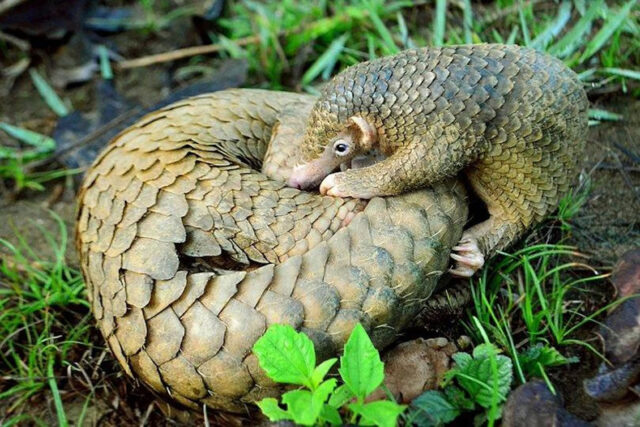
Common to both traditional African medicine (TAfM) and TCM are parts of species such as the rhino, hedgehog, tortoise, and pangolin.

The elephant, in its Asian form at least, may not be listed among the ingredients lists in the global Pharmacopeia, but the EIA notes that there are at least four registered patent medicines which use elephant ivory as shavings or powder, to treat everything from sore throats, seizures, and boils. Elephant skin is also used by traditional Chinese medical practitioners to help heal routine wounds, ulcers, and even hemorrhoids. Some of the Chinese manufacturers even source these parts all the way from endangered African elephants, in the form of ivory, elephant skin, and hair. That is also all happening legally – except for the ivory – as written into the Convention on International Trade in Endangered Species (CITES), with Botswana, Namibia, South Africa, and Zimbabwe all noted as legally authorized to export such materials.

For the TCM makers setting up shop in Africa, direct access to those elephant parts plus availability of ingredients from the other common parts, whether endangered or not, makes the African market appealing as a new source of mass exploitation of animals even if it pushes many of them close to extinction in the process.

Among other creatures being taken in the wild and sometimes bred just for body parts and bodily fluids for the African form of TCMs are seahorses, the tokay gecko, leopards, African rhinos (for their horn), saiga (for their horn), local endangered versions of tortoise, hedgehog, and porcupine.

For African nations which are in dire need of hard currency, inviting the Chinese in to take advantage of their people and to make and sell products which can kill off animals while posing a genuine danger to those taking the medicines is taken by many countries as a fair exchange, despite the damage it does to all. South Africa and Namibia, just as two examples, have gone so far as to formally recognize traditional Chinese medicines as legitimate treatments within those countries’ treatment protocols. Other countries, such as South Africa, have now legalized captive breeding of wild large cat species such as lions or leopards, for the purpose of harvesting their parts for TCMs.

In South Africa, a November 2019 memorandum from the Northern Cape government uncovered by the Environmental Investigation Agency authorizes the sale of Rhino horn “in order to expedite the process of legalizing commercialization …for medicinal purposes.”

Besides the obvious evils of potentially wiping out endangered species, marketing useless medicines made of those species, and encouraging the public to take these medicines at a high risk to themselves, there is yet another reason the EIA warns that theses medicines should be blocked from manufacture and banned for sale. That is the potential risk of spreading zoonotic diseases, illnesses such as the coronavirus which likely was derived from similar viruses found in Chinese bats and crossed species to infect humans, broadly across Africa.

None of this will stop without the African governments themselves stepping up and demanding the end of foisting these dangerous and exploitative concoctions known as traditional Chinese medicines on the people. With those governments more than happy to be bribed with money and more from Beijing to allow this to happen, no one should count on those governments doing anything about this anytime soon.

With total sales of traditional Chinese medicine in 2021 estimated to hit 75.3 billion Chinese yuan (US $11.81 billion) by the end of 2021, with an estimated annual compound sales growth rate of about 5 percent just in China’s core home market, and with high gross margins, no one should look to the PRC to do anything on their end to stop this abuse of nature and the public who happily consume these fake medicines.

One of the factors that is allowing TCM to flourish in Africa is the predatory nature and failure of western medicine and its forced vaccination program. Many Africans simply don’t trust western medicine or the evil billionaires behind it. At the same time, practitioners skilled in TCM can often more accurately diagnose ailments, even if they can’t prescribe an effective treatment.