Home Blog

Shell Ordered to Pay Damages for Almost 3000 Nigerian Oil Spills
0
Nigeria Oil Spills

It took 13 years, but finally a Netherlands appeals court directed criminal corporation Royal Dutch Shell to pay punitive damages for ongoing oil spills happening over four decades that caused death, devastating illness, and long-term environmental damage in Nigeria.

The decision was a groundbreaking one, representing the first time ever that a Dutch company was tried in a Dutch court for damages it had caused in another country. It will also go down in history as one with compensation and actions required in the verdict that will force further actions years into the future.

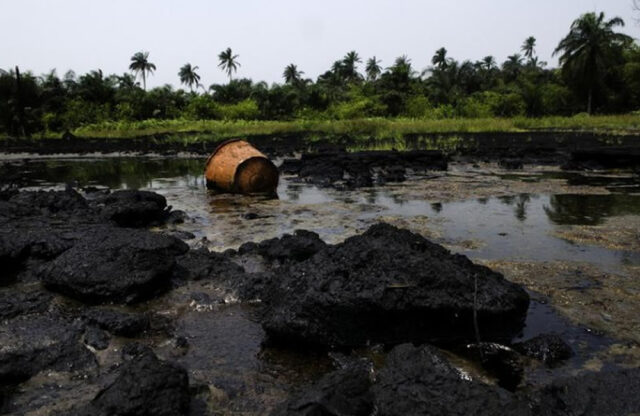
The initial oil spills that launched case took place via pipelines and drilling sites operated by Royal Dutch Shell and its affiliates in Nigeria’s Ongoniland between 1976 and 1991. During that fifteen-year period, the facilities and oil transport systems recorded 2,976 separate oil dumps totaling over two million barrels of oil. Though some of the initial sources of those spills were repaired, corroded pipelines left in place by the Dutch fossil fuel giant continued to leak over land, creeks, and larger open waterways all the way to present day.

Friends of the Earth International (FOEI), one of the parties to the eventual litigation that finally forced Shell to justice for its crimes, said about what happened that the “horror of the vast stretch of black, lifeless landscape stretching out in front of us is something that has to be seen to be believed”.

With the poor who lived along side the spills suffering from illnesses derived from eating, drinking, and bathing with contaminated food and water after the initial damages had occurred, many Ogoni activists had taken to the streets to protest what Shell had wantonly caused in the region. Shell’s power in driving decisions in the African nation was so powerful that one of the leaders of that activist movement, the late Ken Saro-Wiwa, was eventually executed by Nigeria’s military forces in 1995 in a bloody attempt to silence him and his allies.

In 2008, backed by FOEI’s Netherlands affiliate Milieudefensie sued for justice and corrective action on behalf of farmers Eric Dooh from Goi, Elder Friday Alfred Akpan from Ikot Ada Udo, and Chief Fidelis A. Oguru and Alali Efanga from Oruma, all living in the Niger Delta. The defendants in the case included both Royal Dutch Shell and the Petroleum Development Company of Nigeria (SPDC – Shell’s subsidiary in Nigeria).

The venue for the case was in the Netherlands itself.

A major point for the case was whether the Netherlands oil giant would ever be held to account for its role in creating destruction elsewhere in the world.

As the case was filed, Donald Pols, director of Milieudefensie, justified the logic of trying Shell in the Netherlands for a crime committed overseas as a much-needed check on the power of multinationals. “Big companies can do whatever they want in a country like Nigeria,” he said at the time.

“The Dutch government hardly sets any rules for the way in which multinationals can operate abroad,” he continued. “Because these regulations are lacking, the lives of ordinary citizens can be destroyed completely. If such regulations existed, a lawsuit such as this would not have been necessary. I call on the government to take action on this matter.”

As the case proceeded, a lower court ruled that only SPDC was responsible for the spills covered by the lawsuit. That decision, which basically bought into Shell’s protests that it had no direct involvement in Nigeria, and at first looked like it might stick. As appeals continued, that lie was exposed after extensive discovery of internal documents from Shell and on-the-ground investigations in Nigeria itself. In 2013, an important interim verdict ruled that Royal Dutch Shell itself must be held ultimately liable for the damages caused by the spills.

Since that time, in view of the total damages caused and the high risks such a decision might entail on this and other similar cases in the future, Royal Dutch Shell continued to appeal. During the same period, further evidence was gathered proving that Shell’s previous attempts to clean up the oil from the earliest spills was inadequate even by the Dutch company’s own standards.

The case evolved to one where Milieudefensie added to its demands compensation for farmers having lost livelihoods because of the environmental damage. They also wanted Shell ordered to repair existing pipelines and install other improvements to minimize future spills from the same oil distribution network.

Yesterday the 13-year case brought by the four farmers was finally decided by the highest court in the Netherlands. It ruled that Royal Dutch Shell’s Nigerian subsidiary SPDC – and Shell itself — must pay punitive damages for the oil spill contamination which continued for over four decades. Those damages included compensation for lost wages, expenses of cleanup, and further penalties for attempting to evade its responsibility, for oil spills in the villages of Oruma and Goi.

The appeals court also ordered Royal Dutch Shell itself liable to install new pipeline equipment to bring a halt to further destruction by leaks yet to come from the same lines. This will specifically include installation of new leak detection systems in pipelines in Oruma.

It ordered this with a recognition that Shell has breached its required “duty of care” in the region.

Eric Dooh, the father of one of the farmers who had filed the original case and died later, declared soon after the ruling was announced that, “Finally, there is some justice for the Nigerian people suffering the consequences of Shell’s oil.”

“It was a bittersweet victory,” Dooh went on, “since two of the plaintiffs, including my father, did not live to see the end of this trial. But this verdict brings hope for the future of the people in the Niger Delta.”

Milieudefensie director Donald Pols called the court decision “fantastic news” and praising that now “Shell has to compensate for the damage.”

“This is also a warning for all Dutch transnational corporations involved in injustice worldwide,” Pols declared. “Victims of environmental pollution, land grabbing, or exploitation now have a better chance to win a legal battle against the companies involved. People in developing countries are no longer without rights in the face of transnational corporations.”

In its statement on the case, Shell said it was “disappointed” about the verdict. Even after all the evidence had presented, the company said yet again that it was “sabotage” that the oil spills happen and that they should not have been found guilty.

It is true that there was some sabotage of Shell pipelines, caused by those who Shell oppressed and were oppressed by the corrupt Nigerian government on behalf of Shell. The sabotage was a desperate, misguided and destructive way of striking out against Shell when nothing else worked.

And it is not just Nigeria where Shell has caused devastation. The company has always been completely rotten to the core. It is a prime example of a fascist corporation.

The company was founded as a colonial enterprise in 1890 to loot oil from Sumatra and in 1900 its leadership took an even harder shift to racism and fascism when psychopath Henri Deterding took the helm. Deterding was a devout support of Hitler, Mussolini and Franco. Shell was a war profiteer in WW I and WW II, supplying fuel to both sides. Shell financially supported the rise of the Nazi party and even sent its own Jewish employees off to concentration camps.

Deterding was Dutch but initially buried at his Nazi estate in Germany in 1939 with a full Nazi ceremony. Despite his support for Britain’s enemies, the British Queen knighted him.

Shell long made no attempt to hide its fascist nature. It flew the Nazi flag at its headquarters for many years and in 2015 named one of its ships the Pieter Schelte, after a convicted Dutch Nazi war criminal. The ship’s name was eventually changed after global outrage but for a long time the ship-builder, funded by Shell, refused to change the name.
10 Ways to Encourage Very Young People To be Entrepreneurs

0

With a growing youth population and high unemployment, it is important to encourage more young people to take entrepreneurship as a career to fully harness Africa’s demographic dividend.

Over the past decade, the Anzisha Prize has gained insight in various ways in which more young people may be encouraged to take the entrepreneurship career route.

Here are some of the ways they have identified through their research and stakeholder engagement;

1. Plant the seed early 

In a 2016 study conducted in Morocco, researchers investigated the impact of entrepreneurship education and training in children between the ages of 11-12. In their conclusion, they suggested that it was possible to start imparting entrepreneurship training in middle childhood.

2. Bring Entrepreneurship into the Classroom

Educators can work towards designing a curriculum that fosters the growth of entrepreneurial skills and mindset across all courses. This approach ensures that entrepreneurship is taught across the board and does not segregate to a few students who get to participate only in Student Venture Programs.

3. Student Venture Programs

The Africa Leadership Academy’s inhouse SVP program is a testament of how well-designed simulation of a real-life economy nurtures entrepreneurial spirit in young people. SVP’s help students grow their entrepreneurship skills through practice. Through the program, students start and manage a business. This allows them to learn all the mechanics involved in running a business at an early stage. The Anzisha Prize has published a guide that guides educators in designing a Student Venture Program that is suited to their context. You can download the guide here.

4. Parental Support is Important

It is important for parents to be a leading voice towards advocating for entrepreneurship as a career choice. Parents need to raise awareness to their children about entrepreneurship. The role of the parent is important in also being supportive of children who choose entrepreneurship as a career choice. In its publication, Parenting The Boss, Anzisha shares insights from parents of entrepreneurs about their experiences in helping their children achieve success.

5. Celebrate Success Stories  

During the 2019 Anzisha Prize Forum, investors noted that it was important to publicise stories of very young entrepreneurs in Africa to a wider audience. They explained that the current narrative leans more towards the idea that investing in VYEs in Africa is risky and often does not go well for investors. This negative perception not only affects investors, but it can also impact potential entrepreneurs, educators or parents. Celebrating youth entrepreneurship success stories reduces negative perceptions when stakeholders understand what can be achieved by very young entrepreneurs.

6. Effective Implementation of Policies

Several African governments have policies that focus on SMEs and youth entrepreneurship. However, these policies have been ineffective due to persistent bureaucracy and corruption which stifle entrepreneurship. Anzisha reports that its own research in Cameroon and Cote d’Ivoire has shown that current policies, practices, and regulations appear to enhance corruption, which ultimately stifles entrepreneurial growth and job creation opportunities. Governments need to work on policy implementation that reduces arbitrage opportunities and supports job creation.

7. Create Safe and Supportive Ideation Spaces 

Offering very young entrepreneurs admission into incubators and accelerators alleviates the risk and fear that comes with taking the leap into entrepreneurship alone. Anzisha also provides accelerator support for VYEs through its annual Anzisha Prize Fellowship. The two-week initiative offers one-on-one coaching, shadow initiatives and introduces young entrepreneurs to stakeholders who are crucial for their business growth.

8. Patient and Supportive Finance

Public and private institutions need to adapt their investment offerings to suit very young entrepreneurs and facilitate their success. Investors need to be aware of the unique context in which very young entrepreneurs start and operate their businesses.

Their circumstances make it hard to access finance under the traditional terms and conditions that financiers often want to be met.

A patient and supportive approach to financing VYE’s may encourage the start of more youth-led businesses.

9. Offer Mentorship and Guidance

The journey of starting a business is demanding and it is a bit harsh to expect very young entrepreneurs to go through it alone. It is important to facilitate mentorship for youths who are taking the entrepreneurship route. Mentoring programmes can ensure that very young entrepreneurs do not only get inspiration when the going gets tough, but they can also tap into the wealth of experience and lessons that have been accumulated by experienced entrepreneurs.

10. Increase Collaboration Among Potential Very Young Entrepreneurs

The rise of innovation hubs and co-working spaces has increased the rate of collaboration among entrepreneurs. It is important to support more potential entrepreneurs to join coworking spaces as they help them unlock the value of their business. Very young entrepreneurs can benefit through peer learning and sharing of creative talent in coworking spaces.

A Combined Effort

It requires a combined effort from stakeholders within the VYE ecosystem to ensure that more young people are encouraged to be entrepreneurs. The pandemic has even increased the fears that young people may have of starting a business. Stakeholders need to ensure that young people increasingly see the opportunity for entrepreneurship rather than a disaster in the change that has taken place.

Business Ventures Require Patience – Here Is Why

0

Building a business to success is a matter of patience, and it does stand to reason if you think about it. It takes time, it takes some due diligence, and it takes patience.

Commitment to success is realising that you cannot do things immediately and that some things just need time. As Casino Bonuses Finder product owner Tony Sloterman says, creating a sustainable business requires your unfaltering dedication and knowing when not to rush things. Today, we take a look at the sticking points that any successful business venture needs to prosper.

1. Have a Game Plan

The first thing to do when planning to start a business is to have a “game plan.” This may seem a little flippant on the face, but it’s the basis of any successful business. You need to know what you want to achieve, what your long-term goals are, and how you want to get there.

You don’t have to account for every contingency, but you will do well to think of a few potential options that may backfire — as such, having a business plan is crucial to any success. Just wanting to do something may not be enough, and that is why you should probably have a look at a more sustainable long-term strategy.

2. Don’t Rush into Anything to “Save Time”

We are often tempted to “save time” in life and go for one option, which we know is not ideal, but it’s “not too bad either.” Well, in business, you want to make sure that its mentality is a thing of the past and that you are focusing your efforts on creating a stable and sustained model.

You want to avoid the shortcuts because shortcuts usually have an unsavoury way of pouncing back at you and costing you more time and effort. Once again, patience should be your guiding principle in how you manage things on this occasion, and that is precisely what you should do.

3. Take Your Time Selecting Employees

To make sure that your business succeeds, you will need the right people working on the job. That is why the selection of personnel is essential. If you find the right people early on, you will have a great basis of operation.

You will have loyal people who are willing to go the extra mile and see the business prosper because it adds value to their own income and livelihoods. But even later on, when you are hiring after the business has been set up, you need people who will be happy to do their daily workload without avoiding or dodging work and generally focus on getting things done.

It’s important to be patient with your employees as well and realise that you cannot expect them to go the whole distance just like you would. Then again, that is why patience is a virtue in a business.

What if you are impatient, to begin with? Remind yourself of the upsides of spending a little more time preparing things rather than acting rashly and regretting it later. Patience is the best way to build your business, and that is a fact.

8 Best Investment Apps in May 2025

0

Nowadays, everybody is looking for the opportunity to invest with different varieties of investment apps. And most importantly, investing doesn’t only save your money but brings your financial life back on track. With an investment app, you will have full control over your finances by keeping track of your spendings and returns.

That’s not all because you have different investment opportunities to invest your money in. For example, the GKFX platform provides investment opportunities through the trading of currencies. You can read the Vantage broker here for more information about their services!

The below investment apps are thoroughly evaluated based on their security and features. These apps might not be from popular investment brands, but they have made remarkable breakthroughs in providing unique investment opportunities to users. Whether you’re a professional or a beginner looking for an investment app, you can get started from the below lists that includes:

1. Invstr

Invstr is among the best investment apps for beginners with a series of education tools. Invstr brought real-life investing into its app with immense features that would benefit users. The app is specifically designed to enlighten investors and beginners about stocks. Unlike other investment apps, Invstr has engaging stock games that give users the opportunity to make money.

2. Wealthbase

Wealthbase is a new investment app with different varieties of stock games. It gives users the ability to have fun, while they make money. In this investment app, you can play engaging games with friends. And most importantly Wealthbase has a social media area where friends post information about stocks. Wealthbase can be accessed through web and mobile apps. You can also check Pepperstone Minimum Deposit for Minimum deposit requirements.

3. Wealthfront

Wealthfront is the best investment app for portfolio management. Wealthfront has different varieties of Robo-advisors that manage the account of investors at a flat fee. The Robo-advisors can manage different varieties of accounts such as taxable and IRA accounts. The fee they charge investors ranges from 0.25% to 0.95% annually. However, the minimum account balance is $500.

4. Acorns

Acorns bring users to the investment world with seamless features to broaden their experience. With Acorn you have the opportunity to start investing from a small amount. You can also link your credit and debit card to start investing. Their fee is charged monthly ranging from $1 to $5. They allow you to create different varieties of investment accounts. Apart from Acorns, you can also check forex brokers list, if you are looking for an investment or trading platform.

5. Betterment

Betterment is similar to Wealthfront where investor’s accounts are managed by a Robo-advisor. Betterment provides a professional set of managed portfolios using ETFs. They have the best socially investing services. Their management fee is 0.25% annually or a fixed fee of 25$ for any investment above $10,000 yearly. There’s no minimum balance for opening an account on Betterment.

6. Robinhood

Robinhood is an investment app that offers smooth trading services to investors. Its application interface is very engaging and detailed for a smooth trading experience. With the Robinhood apps, investors can trade stocks, ETFs, options, and cryptocurrency for free without any hidden charges. Their minimum account balance required for opening an account remains $0.

7. Webull

Webull is very popular among other investment apps because of its low-cost trading. With Webull, investors can easily trade stocks, ETFs, options, and cryptocurrencies. They charge low exchange fees but offer no commissions for stocks, ETFs, options, and crypto trading. Their minimum account balance remains $0.

8. Stockpile

Stockpile is an engaging app that allows users to buy fractional shares of business around the world. They offer investors the opportunity to buy low shares without charging any monthly fee. They provide different varieties of exceptional features to investors such as allowing investors to send gift cards to friends and families, which can be redeemed as stock.

Conclusion

Nowadays, everybody is looking for the opportunity to invest with different varieties of investment apps. And most importantly, investing doesn’t only save your money but brings your financial life back on track. Take a look at the best investment apps in May 2021 to start making money from investing.

Are Casino Sites Legal to Play In Africa?

0

Africa is the place where gambling is allowed legally. Any type of gambling was banned for a long time and then got started in 1995/96. All thanks to the National Gambling Act when the casinos got a chance to come back.

Casino Gaming in Africa Online

When talking about Africa’s gambling, nothing much can be said. Online slots have always remained popular in Africa, but the legalities are unfriendly. No doubt, various online operators offer to gamble for African players, but many of them have restrictions. This is because there was no gambling in 2004. The update in 2011 stated that online gambling is not allowed in the country.

Online Gambling Guide for African Players

If you are a native but have just entered the world of gambling, there are certain things about which you should be aware before trying your hands on this fun. While talking about online casinos, make sure to be careful while choosing one, as gambling is considered illegal and many operators don’t allow gambling. Go through the game selection, licenses, and security. Everything should be legit and worth your money and time. You can always check the reviews of the best casinos and a list of legal casino sites at casinosites.org.

Gambling Safety & License in Africa

We have mentioned it above, and saying it again – safety should be a major concern, especially when you are considering playing online. At the same time, selecting the casino where you will play, research, take your time, and look for the regulatory operators and licenses.

How to Look For the Great Product: Bets and Games

The product matters a lot – the bets, games, rooms, raffles, and the experience you gain while playing. Various gambling sites in Africa are there and you have to know which is best. Look for the casino that offers games of your choice. Even if there are the best bonus options, it’s not worth it as you have no interest.

Best Gambling Bonuses in Africa

It is essential to look for the operators with the best selection of games, but we can talk about the bonus as well. Online gambling in Africa has various hidden nooks and alleys about which you must know. Fun is good, but what can be better than extra cash coming straight in the pocket? Go through the terms and conditions carefully while claiming the bonus.

Responsible Gambling & Preventing Addiction

It is crucial to be responsible, especially while playing at the casino. Various African citizens struggle with gambling addiction or have just started to play and have early symptoms. What’s positive is that the National Gambling Board offers certain measures which help in fighting gambling addiction and abuse. There are also many self-exclusion programs open for African gamblers, which can prove to be helpful for them. The period is usually 6 months, but it can also be shorter or longer, everything depends upon what suits you.

Conclusion

Get the best knowledge about online gambling and its legalities. We hope we have covered it all. So, what are you waiting for? Happy gambling!

Are There Companies Offering 4×4 Safari Rentals

0

When organizing a safari expedition in East Africa, selecting the appropriate vehicle is crucial for an unforgettable experience. The terrain, wildlife, and roads differ significantly—from arid paths to rugged hills and muddy river crossings. Consequently, numerous travelers opt for Africa car rentals that are engineered to navigate challenging landscapes while ensuring safety, comfort, and independence during their travels. However, do companies exist that specialize exclusively in 4×4 rentals for safaris? The answer is a resounding yes!

Why Choose a 4×4 Vehicle for Your Safari?

Safaris frequently lead you away from paved roads into untamed and secluded areas. A standard vehicle may struggle or even become immobilized, whereas a 4×4 vehicle is designed to navigate challenging terrains such as dirt roads, steep inclines, and riverbeds. These vehicles are equipped with powerful engines, elevated ground clearance, and four-wheel drive systems that enable you to explore national parks, game reserves, and hidden treasures without restrictions.

In addition to their technical advantages, 4×4 safari vehicles provide features such as pop-up roofs for wildlife observation, generous storage space for camping equipment, and occasionally rooftop tents. This transforms your safari into not merely a journey but a comfortable and immersive experience in the great outdoors.

Top Companies Specializing in 4×4 Safari Rentals

Self Drive Uganda

Self Drive Uganda, a prominent company in East Africa, specializes in the rental of 4×4 vehicles that are ideally suited for the diverse safari destinations in Uganda. Whether you are organizing a gorilla trek in Bwindi Impenetrable Forest, a game drive in Queen Elizabeth National Park, or exploring the expansive savanna grasslands of Murchison Falls, Self Drive Uganda provides a broad selection of 4×4 vehicles, including Toyota Land Cruisers, Prado SUVs, and durable pickups.

They offer fully serviced vehicles equipped with safari accessories such as GPS, recovery kits, camping gear, and spare tires. Additionally, Self Drive Uganda assists travelers with route planning and emergency support, establishing themselves as a reliable choice for self-drive safaris in the area.

Self Drive East Africa

Encompassing a broader area that includes Kenya, Tanzania, Uganda, and Rwanda, Self Drive East Africa provides an extensive fleet of 4×4 vehicles specifically designed for safari excursions. Their inventory features Toyota Land Cruisers, Hilux pickups, and luxury SUVs, all engineered to navigate the rugged terrains of East Africa.

Self Drive East Africa takes pride in its customer service, offering round-the-clock assistance and vehicle delivery to airports or lodges. Additionally, they supply rooftop tents and camping kits for those travelers wishing to merge the independence of self-driving with the thrill of camping beneath the stars.

4×4 Africa

Focusing on East and Southern Africa, 4×4 Africa is a distinguished rental service that specializes in 4×4 vehicles designed for safari and overland adventures. Their fleet is prepared to navigate the most challenging terrains found in regions such as Tanzania’s Serengeti, Kenya’s Masai Mara, and even the more secluded areas like the Okavango Delta.

4×4 Africa provides a range of vehicle options, including extended Land Cruisers and double cabin pickups equipped with rooftop tents. Additionally, they offer supplementary items such as fridge/freezers, recovery gear, and GPS navigation systems. Their strong reputation for maintaining high-quality vehicles and delivering exceptional customer service has made them a preferred choice for both independent travelers and professional overlanders.

Car Rental Tanzania

Tanzania boasts some of Africa’s most renowned safari locations, such as the Serengeti and Ngorongoro Crater. Car Rental Tanzania focuses on 4×4 rentals that are ideal for these legendary parks. Their fleet features robust Toyota Land Cruisers and Hilux pickups, which can effortlessly traverse dirt roads, river crossings, and steep slopes.

Additionally, Car Rental Tanzania provides customization options, including rooftop tents and camping equipment, perfect for travelers wishing to discover Tanzania at their own pace. Car Rental Tanzania also offers valuable extras like vehicle insurance and border permits, ensuring that tourists enjoy a stress-free safari adventure.

Car Rental Congo

For individuals interested in discovering the untamed terrains of Central Africa, Car Rental Congo provides 4×4 vehicles designed for challenging landscapes in locations such as Virunga National Park and Kahuzi-Biega National Park. Their vehicles are sturdy and prepared to handle the muddy, uneven roads that are typical in the area.

Car Rental Congo assists travelers by offering GPS devices, spare tires, and comprehensive vehicle maintenance. Their expertise in 4×4 rentals positions them as a dependable ally for anyone wishing to safely explore the distinctive wildlife and scenery of the Congo basin.

Benefits of Using Specialized 4×4 Rental Companies

Selecting a company that specializes in 4×4 safari rentals offers numerous benefits. Firstly, their vehicles undergo regular servicing and inspections to ensure they are suitable for safari conditions, thereby minimizing the likelihood of breakdowns in remote areas. Secondly, these companies frequently provide valuable accessories such as camping equipment, roof racks, and navigation tools. Thirdly, they possess in-depth knowledge of safari routes, border crossings, and park regulations, allowing them to offer expert guidance to travelers.

Additionally, companies such as Self Drive Uganda, Self Drive East Africa, 4×4 Africa, Car Rental Tanzania, and Car Rental Congo provide insurance and emergency assistance, which are crucial for safe travel in isolated regions. Their customer service teams are often available to assist with route planning, vehicle training, and advice on safe driving practices on African roads.

Conclusion

Indeed, there are certainly companies that focus on 4×4 rentals specifically for safaris, and these companies play a vital role for those wishing to independently explore East and Central Africa.

Renting a 4×4 vehicle from reputable companies such as Self Drive Uganda, Self Drive East Africa, 4×4 Africa, Car Rental Tanzania, and Car Rental Congo guarantees that you will have the appropriate vehicle, support, and peace of mind for your journey.

With the liberty to travel wherever you desire, at your own pace, and the assurance that your vehicle is equipped to navigate the rugged terrain, a self-drive safari with a 4×4 rental transforms into a genuinely personal and memorable experience. Therefore, prepare your luggage, select your ideal 4×4, and get set to discover Africa’s magnificent wilderness in both style and safety.

Where to Go Gorilla Trekking this Year

0
Gorilla Trekking Trip

Gorilla trekking is one of the most captivating wildlife experiences in the world, offering an up-close encounter with one of our closest relatives. This adventure is primarily available in East Africa, where the dense forests and high altitudes provide a perfect habitat for mountain gorillas. In East Africa, gorilla trekking is offered in three countries: Uganda, Rwanda, and the Democratic Republic of the Congo (DRC). Each country provides a unique experience, with varying landscapes, gorilla populations, and trekking conditions. In this comprehensive guide, we will explore gorilla trekking in these three East African countries.

Uganda

Bwindi Impenetrable National Park

The world known Bwindi Impenetrable Park, located in southwestern Uganda, is the most famous destination for gorilla trekking in the country. The park is a UNESCO World Heritage Site and is home to nearly half of the world’s remaining mountain gorilla population, with an estimated 459 gorillas.

Trekking Experience

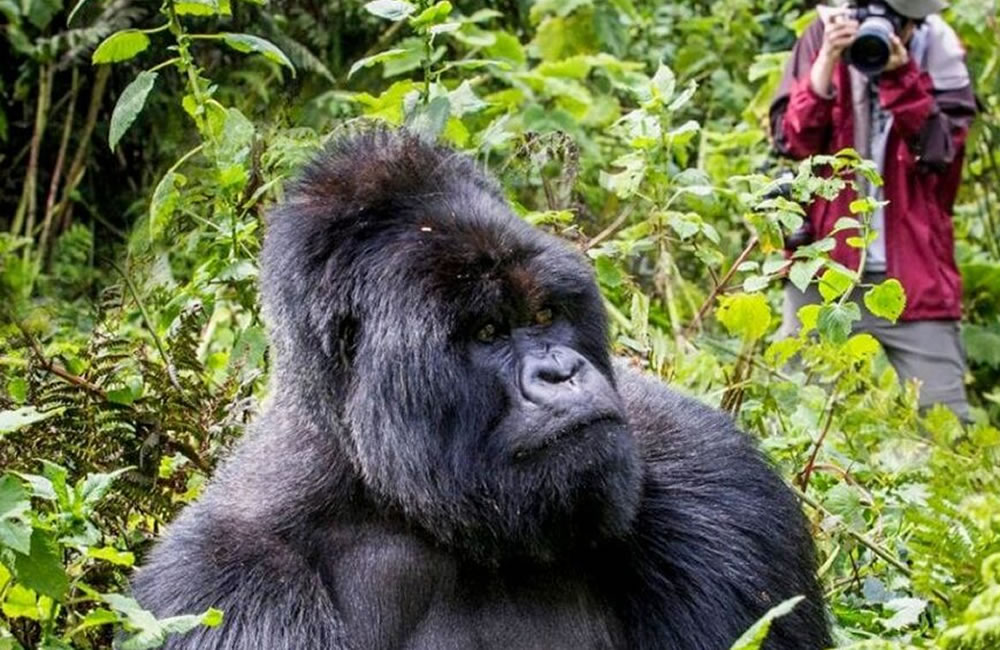
Trekking in Bwindi is challenging due to its steep terrain and dense vegetation. The experience starts early in the morning with a briefing at the park headquarters. Small groups of trekkers, usually limited to eight people, are then assigned to different gorilla families. The trek can last from a few hours to a full day, depending on the location of the gorillas. Once the gorillas are located, visitors are allowed to spend one hour observing and photographing them.

Best Time to Visit

The best time to visit Bwindi for gorilla trekking is during the dry seasons, which run from June to September and December to February. During these periods, the trails are less muddy and easier to navigate.

Mgahinga Gorilla National Park

Mgahinga Gorilla National Park, located in the Virunga Mountains, is another destination for gorilla trekking in Uganda. The park is smaller than Bwindi but offers a unique experience with its scenic volcanic landscapes.

Trekking Experience

Similar to Bwindi, the trekking experience in Mgahinga begins with a briefing at the park headquarters. Treks can be strenuous due to the high altitudes and rugged terrain. However, the reward of encountering a gorilla family in their natural habitat is well worth the effort.

Best Time to Visit

The best times to visit Mgahinga are the same as Bwindi, during the dry seasons from June to September and December to February.

Rwanda

Volcanoes National Park

Volcanoes National Park in northwestern Rwanda is one of the most renowned gorilla trekking destinations in the world. The park is part of the larger Virunga Massif, which spans three countries: Rwanda, Uganda, and the DRC. The Volcanoes Park Rwanda is home to several habituated gorilla families, making it an excellent choice for gorilla trekking.

Trekking Experience

The trekking experience in Volcanoes National Park is well-organized, with a maximum of eight trekkers per gorilla family. The trek begins with a briefing at the park headquarters in Kinigi, where visitors are assigned to different gorilla groups. The duration of the trek varies, but once the gorillas are found, trekkers spend one magical hour with them.

Best Time to Visit

The best time to visit Volcanoes National Park is during the dry seasons from June to September and December to February. During these months, the trails are more manageable, and the weather is more predictable.

DR Congo

Virunga National Park

Virunga National Park, located in the eastern part of the DRC, is one of Africa’s oldest and most diverse national parks. The park is a UNESCO World Heritage Site and is home to a significant population of mountain gorillas. Virunga offers a more adventurous and less crowded gorilla trekking experience compared to Uganda and Rwanda.

Trekking Experience

Gorilla trekking in Virunga starts with a briefing at the park headquarters. Trekkers are then divided into small groups and assigned to different gorilla families. The trek can be challenging due to the park’s rugged terrain and dense forest, but the experience of encountering a gorilla family in such a remote and pristine environment is truly unforgettable.

Best Time to Visit

The best time to visit Virunga National Park is during the dry seasons from June to September and December to February. These periods offer better trekking conditions and a lower risk of heavy rains.

Kahuzi-Biega National Park

Kahuzi-Biega National Park, located in the eastern part of the DRC, offers a unique gorilla trekking experience with its population of eastern lowland gorillas. Although not as well-known as mountain gorillas, eastern lowland gorillas are equally fascinating and offer a different perspective on gorilla trekking.

Trekking Experience

The trekking experience in Kahuzi-Biega is similar to other parks, with a briefing at the park headquarters followed by a guided trek into the forest. Trekkers spend an hour with the gorillas once they are located. The terrain in Kahuzi-Biega is less rugged than in the Virunga Mountains, making it a slightly easier trek.

Best Time to Visit

The best time to visit Kahuzi-Biega is during the dry seasons from June to September and December to February, when the trails are more accessible. 

Conclusion: Gorilla trekking in East Africa offers a unique and unforgettable experience, providing a rare opportunity to observe these magnificent creatures in their natural habitat. Uganda, Rwanda, and the Democratic Republic of the Congo each offer distinct trekking experiences, with varying landscapes, gorilla populations, and challenges. As one of the most impactful wildlife experiences, gorilla trekking also plays a crucial role in conservation efforts, supporting the protection of these endangered animals and their habitats.

A Prenuptial Agreement: All You Need To Know

0

A prenuptial agreement, antenuptial agreement, or premarital agreement (commonly referred to as a prenup), is a written contract entered into by a couple prior to marriage contraction or a civil union that enables them to select and control many of the legal rights they acquire upon marrying, and what happens when their marriage eventually ends by death or divorce.

However, it’s crucial that you establish the difference between a prenuptial and postnuptial agreement, whereas we have defined the former in the opening paragraph, the latter is similar to prenuptial agreements, except that they are entered into after a couple is married. When divorce is imminent, postnuptial agreements are referred to as separation agreements

Luckily, you’ve come to the right place. This article will provide some basic information about prenups including how prenuptial agreements are entered into and by whom. In this article, you can also find out about the rights acquired and remedies available in case of separation by divorce or death.

Couples enter into a written prenuptial agreement to supersede many of the default marital laws that would otherwise apply in the event of divorce, such as the laws that govern the division of property, retirement benefits, savings, and the right to seek alimony (spousal support) with agreed-upon terms that provide certainty and clarify their marital rights.

This premarital agreement may also contain waivers of a surviving spouse’s right to claim in what is known as an elective share of the estate of the deceased spouse.

In some countries, including Kenya, South Africa, and Nigeria, the prenuptial agreement not only provides for what happens in the event of a divorce or death but also protects some property during the marriage, for instance in case of bankruptcy.

WHO MAY NEED A PRENUP

Contrary to popular opinion countrywide and across Africa, prenups are not just for the rich. While prenups are often used to protect the assets of a wealthy fiancé, couples of more modest means are increasingly turning to them for their own purposes. Here we bring you some reasons why some people should consider contracting a prenup prior to marriage:

Pass separate property to children from prior marriages. A married couple with children from prior marriages may find it conducive to use a prenup to spell out what will happen to their property when they die so that they can pass on separate property to their children and still provide for each other, if necessary. Without a prenup, a surviving spouse might have the right to claim a large portion of the other spouse’s property, leaving much less for the kids.

Clarify financial rights. Couples with or without children, wealthy or not, may simply want to clarify their financial rights and responsibilities during marriage.

Avoid arguments in case of divorce. Or they may want to avoid potential arguments if they ever divorce, by specifying in advance how their property will be divided, and whether or not either spouse will receive alimony. (A few African countries won’t allow a spouse to give up the right to alimony, however, and, in most others, a waiver of alimony will be scrutinized heavily and won’t be enforced if the spouse who is giving up alimony didn’t have a lawyer.)

It’s important that we acknowledge that the law on prenups has not taken a clear shape.

We shall keep updating this article from time to time.

Trump’s Travel Ban on 12 Countries Goes Into Effect Early Monday

0

U.S. President Donald Trump’s order banning citizens of 12 countries from entering the United States goes into effect at 12:01 am ET (0401 GMT) on Monday, a move the president promulgated to protect the country from “foreign terrorists.”

The countries affected by the latest travel ban are Afghanistan, Myanmar, Chad, Republic of the Congo, Equatorial Guinea, Eritrea, Haiti, Iran, Libya, Somalia, Sudan and Yemen.

The entry of people from seven other countries – Burundi, Cuba, Laos, Sierra Leone, Togo, Turkmenistan and Venezuela – will be partially restricted.

Trump, a Republican, said the countries subject to the most severe restrictions were determined to harbor a “large-scale presence of terrorists,” fail to cooperate on visa security, have an inability to verify travelers’ identities, as well as inadequate record-keeping of criminal histories and high rates of visa overstays in the United States.

He cited last Sunday’s incident in Boulder, Colorado, in which an Egyptian national tossed a gasoline bomb into a crowd of pro-Israel demonstrators as an example of why the new curbs are needed. But Egypt is not part of the travel ban.

The travel ban forms part of Trump’s policy to restrict immigration into the United States and is reminiscent of a similar move in his first term when he barred travelers from seven Muslim-majority nations.

Officials and residents in countries whose citizens will soon be banned expressed dismay and disbelief.

Chad President Mahamat Idriss Deby Itno said he had instructed his government to stop granting visas to U.S. citizens in response to Trump’s action.

“Chad has neither planes to offer nor billions of dollars to give, but Chad has its dignity and its pride,” he said in a Facebook post, referring to countries such as Qatar, which gifted the U.S. a luxury airplane for Trump’s use and promised to invest billions of dollars in the U.S.

Afghans who worked for the U.S. or U.S.-funded projects and were hoping to resettle in the U.S. expressed fear that the travel ban would force them to return to their country, where they could face reprisal from the Taliban.

Democratic U.S. lawmakers also voiced concern about the policies.

“Trump’s travel ban on citizens from over 12 countries is draconian and unconstitutional,” said U.S. Representative Ro Khanna on social media late on Thursday. “People have a right to seek asylum.”

(Reporting by Trevor Hunnicutt; Writing by Mary Milliken Editing by Sandra Maler)

Uganda Airlines Launches First Ever Flight to London

0
Uganda Airlines

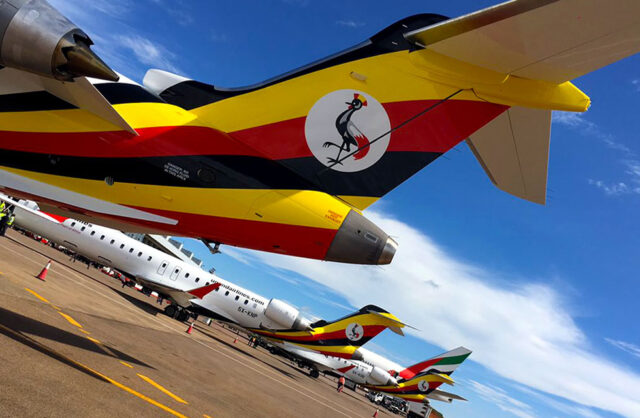
Uganda Airlines has made a historic return to Europe, successfully completing its first flight to the United Kingdom in decades. On Sunday, the airline’s Airbus A330-800neo touched down at London Gatwick Airport after taking off from Entebbe International Airport at 10:05 a.m., marking the start of direct flights between Uganda and the UK.

This is not the first time Uganda Airlines has flown to London. During the days of former president Idi Amin, the airline operated flights to London Gatwick. However, in 1989, those flights stopped as the country went through a period of political and economic instability. The recent revival of this route is not just a new development—it is a return to the skies and a powerful symbol of progress for Uganda.

Leading the inaugural flight was the Minister of Works and Transport, General Edward Katumba Wamala, along with a high-level delegation of Ugandan government officials. These included Minister of Trade Francis Mwebesa, officials from the Uganda Tourism Board, Kampala Capital City Authority, and the Presidential Advisory Committee on Exports and Industrial Development. The team is in the UK to strengthen ties, attract investment, and promote Uganda as a destination for tourism and trade.

UK High Commissioner to Uganda Kate Airey was also aboard the flight. She praised the new route as an exciting opportunity for both countries. According to her, this direct flight comes at the right time, when Uganda and the UK are looking to deepen their trade and economic relationship. She noted that members of the British Chamber of Commerce were already on board, eager to explore business prospects in Uganda.

General Wamala made it clear that the mission is about encouraging partnerships and economic growth. “We are not going to London to ask for donations,” he said. “We are going to seek investment. We will speak directly with people who can bring their businesses to Uganda. You are going out there to promote trade. We have what the UK and the world need—you must not come back empty-handed.”

The flight was piloted by Senior Captain Sam Masaba and Captain Clive Okoth. Upon arriving in London, the delegation received a warm and emotional welcome from the Ugandan community living in the UK. Many wore traditional outfits, waved national flags, and greeted the delegation with open arms and heartfelt joy.

The direct route from Entebbe to London is expected to significantly boost the number of travelers and goods flowing between the two countries. The convenience of flying directly between the UK and Uganda will make it easier for tourists, investors, and business people to connect with Uganda, supporting the growth of tourism and trade.

Ramathan Ggoobi, Permanent Secretary in the Ministry of Finance, emphasized how important this new route is for Uganda’s development. He said the flight will not only grow tourism and business but also help Uganda access new knowledge and technologies. He added that more international destinations are being considered for future Uganda Airlines routes.

Uganda Airlines CEO Jenifer Bamuturaki expressed her gratitude to everyone who played a role in making this launch successful. She invited travelers to consider flying with Uganda Airlines between Uganda and the UK, promising quality service and a reliable connection.

The airline will now operate four flights a week to London Gatwick. With this direct route, Uganda is once again opening itself up to the world and showing that it is ready to grow, connect, and thrive on the global stage.